
Search Results
Keyword:Switzerland

ITM and SpiroChem Announce Strategic Collaboration to Advance Novel Radiopharmaceutical Development
Garching/Munich, Germany and Basel, Switzerland, September 8, 2026 – Radiopharmaceutical biotechnology company ITM Isotope Technologies Munich SE and Swiss collaborative research organization SpiroChem AG today announced a strategic drug discovery partnership focused on a novel radiopharmaceutical candidate within ITM's pipeline. The specific target and financial terms of the collaboration were not disclosed. Under the agreement, the parties will combine their respective capabilities to advance candidate discovery and optimization. SpiroChem will leverage its drug discovery platform, macrocycle library, and screening engine to lead hit identification and optimization, while ITM will provide...
2026-09-09
No Evidence of Mirror Neutrons Found in Swiss PSI Ultracold Neutron Experiment
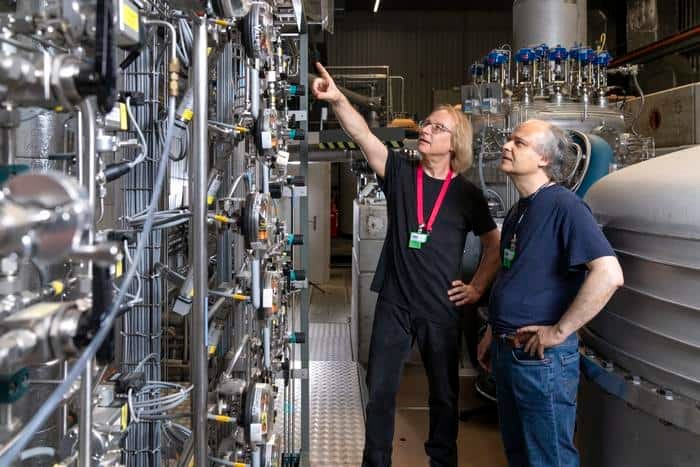
The Ultracold Neutron Physics Group at the Paul Scherrer Institute (PSI) in Switzerland recently stated that its research team found no evidence of spontaneous transformation of ordinary neutrons into mirror neutrons in a high-precision experiment. The researchers said the result essentially rules out the main parameter space previously suggested for anomalous neutron-mirror neutron oscillation signals, and also weakens the possibility that mirror neutrons could be a component of dark matter. Bernhard Lauss (left) and Géza Zsigmond examined approximately 2.5 billion neutrons at the ultracold neutron source at the Paul Scherrer Institute (PSI). They essentially ruled out the hypothesis of spontaneous transformation of neutrons into mirror neutrons. (Image courtesy of Paul Scherrer Institute PSI/Ma...
2026-09-07
CERN Accelerator Complex Enters Full LS3 Shutdown for Upgrades, Paving the Way for the High-Luminosity LHC Era
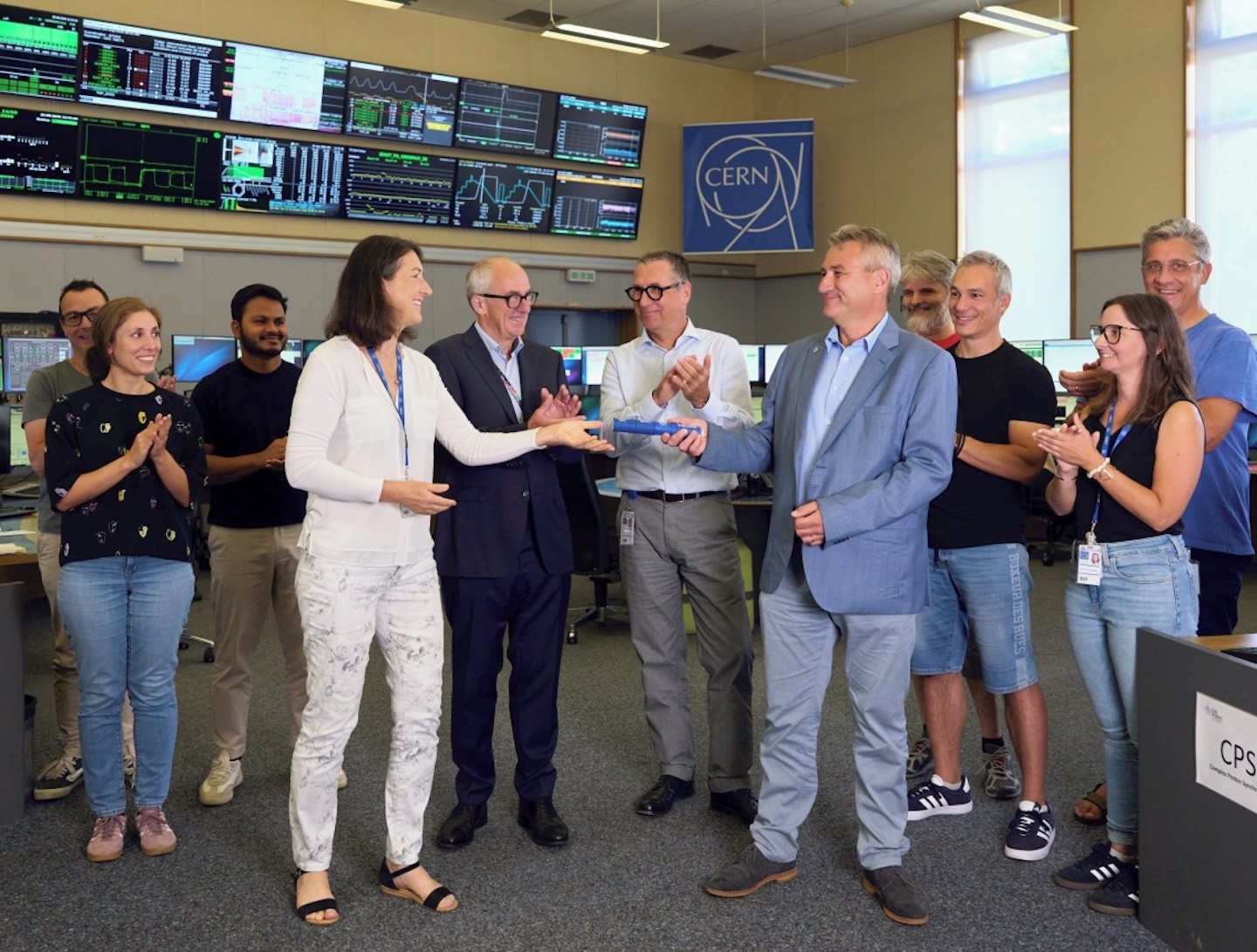
On the morning of August 31 local time, the injector complex and the Antimatter Factory at the European Organization for Nuclear Research (CERN) ceased operation after completing their final beam deliveries, officially entering the third Long Shutdown (LS3) phase. Earlier, the Large Hadron Collider (LHC) had been closed in June, marking the flagship accelerator as the first to kick off LS3 upgrade work at the center. Bettina Mikulec (left), head of the Operations Group at CERN, handed a symbolic baton—a miniature superconducting magnet from the LHC—to Jean-Philippe Tock (right), head of the LS3 Coordination Group, with CERN Director-General Mark Thomson (second from left) and Oliver Brüning (third from left), head of Accelerators and Technology, in attendance.
2026-09-01
Molecular Partners Advances DLL3 Radiopharmaceutical MP0712 to Higher Dose Cohort
Swiss clinical-stage biotechnology company Molecular Partners AG recently announced its business progress and financial results for the first half of 2026. The company stated that its DLL3-targeting radioactive DARPin therapy MP0712 has advanced to the second therapeutic dose level in a U.S. multicenter Phase 1/2a clinical study, and patient enrollment for the new dose cohort is currently underway. MP0712 is a radiopharmaceutical targeting the tumor-associated antigen DLL3, carrying a therapeutic alpha-emitting radionuclide lead-212 (Pb-212) payload, co-developed by Molecular Partners and Orano Med, primarily for small cell lung cancer and other neuroendocrine tumors. According to the company's disclosure, the first dose cohort of MP0712...
2026-08-26
CERN Large Hadron Collider Data Challenge Models of Oxygen and Neon Nucleus Structure
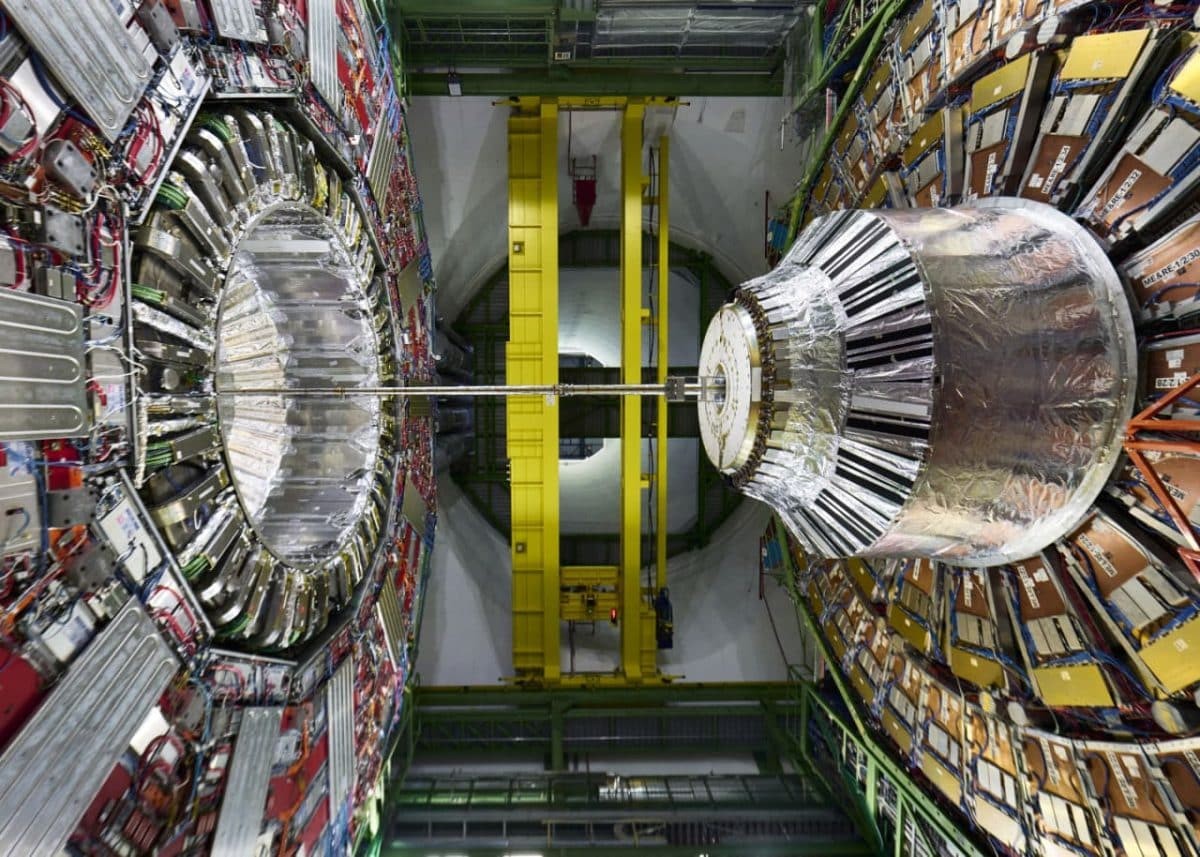
Physicists at the European Organization for Nuclear Research (CERN), analyzing a new batch of collision data from the CMS detector at the Large Hadron Collider, have found that oxygen and neon nuclei do not behave entirely as predicted by existing models in high-energy collisions. This result indicates that the scientific community's understanding of the shapes and internal structures of certain light nuclei still requires further refinement. In high-energy nuclear collisions, a quark-gluon plasma is briefly formed in the collision region. This state of matter decays rapidly, but the collective flow characteristics of its particles can be used to infer the collision geometry and indirectly provide information about nuclear structure. Researchers believe that symmetric collisions of light ions help better control the initial collision conditions, making them suitable for studying collective responses in small systems.
2026-08-24
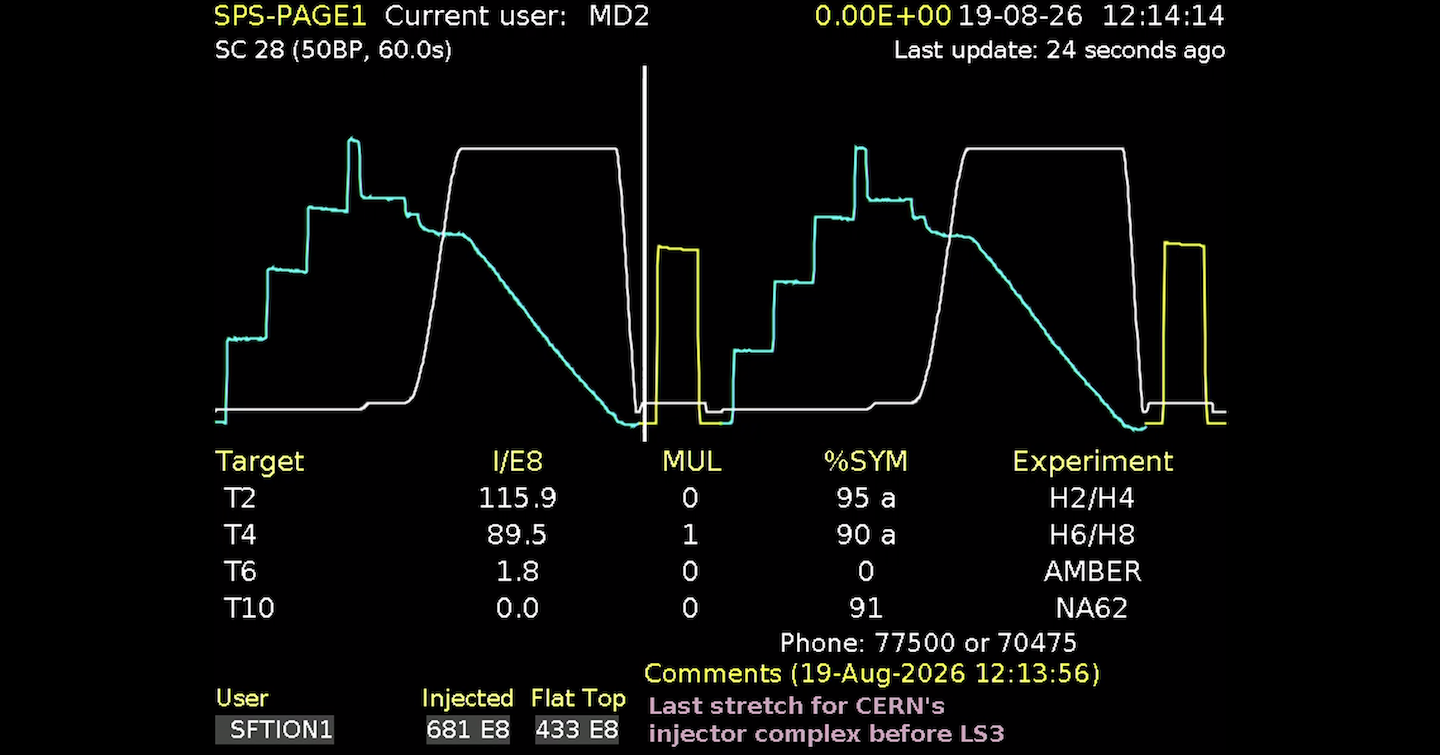
CERN Injector Complex Enters Final Beam Run Phase Before LS3
The CERN accelerator complex is entering its final operational phase before the third Long Shutdown (LS3). With the Large Hadron Collider (LHC) having already entered LS3, the injector complex and associated facilities will continue high-intensity beam operations until 6:00 a.m. on Monday, August 31, after which the operations team will hand over control to the LS3 coordination team, marking the formal transition of the entire accelerator complex into the shutdown maintenance phase. August 19, 2026, page one of the SPS. The third run of the injector complex is drawing to a close. (Image: CERN) During the final week-plus of operations, CERN will continue delivering proton and ion beams to physics experiments.
2026-08-21
Large Hadron Collider experiments reveal neon nucleus may be bowling-pin shaped
A recent experimental result from the Large Hadron Collider at CERN suggests that the internal structure of the neon-20 nucleus may not be approximately spherical as commonly depicted in traditional textbooks, but rather closer to a "bowling pin" shape. This finding provides new experimental clues for studying deformation of light atomic nuclei and collective behavior in high-energy nuclear collisions. Atomic nuclei are composed of protons and neutrons, determining the elemental identity of atoms and carrying most of their mass. Although nuclei are often simplistically depicted as spherical, nuclear physics research has shown that some nuclei exhibit pronounced non-spherical deformation, such as the pear-shaped nuclei mentioned in previous studies. Accurately understanding these shapes helps physicists...
2026-08-21
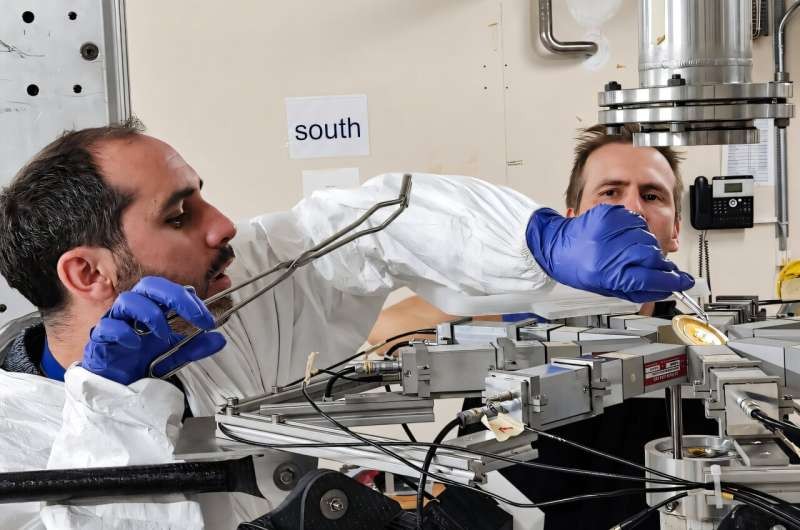
CERN measures niobium-94 neutron capture for the first time, shedding new light on the mystery of molybdenum abundance in ancient stardust
The n_TOF collaboration at CERN recently reported that researchers have for the first time measured the probability of neutron capture by niobium-94. The results, published in Physical Review Letters, provide new experimental evidence for explaining the anomalous abundance of molybdenum-94 in presolar grains. The EAR2 facility in the n_TOF experiment at CERN produces intense neutron beams, opening new possibilities for nuclear research. Credit: CERN Niobium-94 is a niobium isotope containing 41 protons and 53 neutrons, occupying a critical juncture in the nuclear reaction chain that produces heavy elements in dying stars. Researchers are interested in it because niobium-94 is very close to molybdenum-94, differing by just one fewer proton and one more neutron. Under the high-temperature, high-pressure conditions inside stars, niobium-94 may either transform into molybdenum-94 through beta decay or form niobium-95 through neutron capture. The competition between these two reaction pathways directly affects scientists' understanding of the origin of molybdenum-94.
2026-08-20
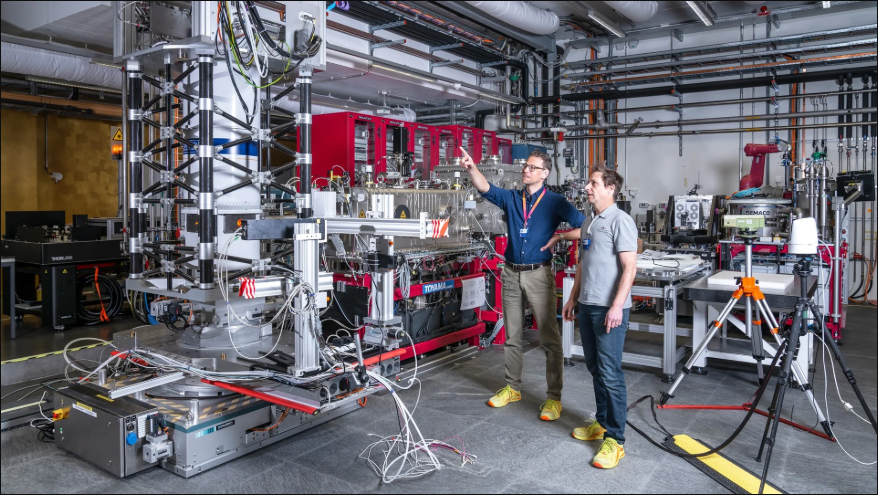
SwissFEL Achieves Ultralow-Temperature X-ray Observation of Quantum States
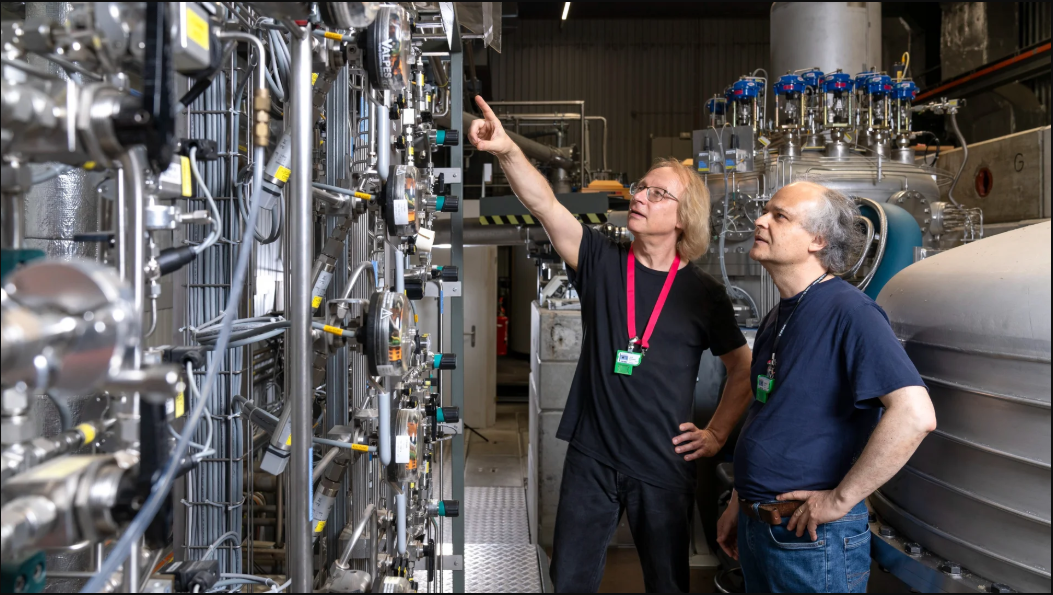
Researchers at the Paul Scherrer Institute (PSI) in Switzerland recently reported that the Cristallina experimental station of the Swiss Free-Electron Laser (SwissFEL) can now observe quantum states that only emerge at extremely low temperatures using X-ray scattering at temperatures close to absolute zero. Simon Gerber (left) and Bill Pedrini (right) at the Cristallina experimental station of SwissFEL. With the help of a custom-built cryostat connected to the beamline (far left), quantum states can now be studied at extremely low temperatures. Paul Scherrer Institute PSI/Markus FischerAccording to the team, they recently achieved a low temperature of 35 millikelvin in experiments...
2026-08-17

Neutron and X-ray tomography reveal hydrogen-rich regions in Martian meteorite "Black Beauty"
An international team of researchers from Denmark, Sweden, and Switzerland recently conducted a three-dimensional non-destructive analysis of a slice of the Martian meteorite NWA 7034 "Black Beauty" using neutron tomography and X-ray tomography, discovering macroscopic hydrogen-rich regions within it. The study suggests that these hydrogen-rich features provide evidence of early water-rock interactions on Mars. The findings have been published in Geophysical Research Letters. Black Beauty is a brecciated meteorite from Mars that was ejected into space by an impact event and eventually landed in the Sahara Desert in Morocco. Weighing approximately 320 grams, the meteorite contains material up to 4.48 billion years old, making it one of the oldest known Martian crustal fragments...
2026-08-17
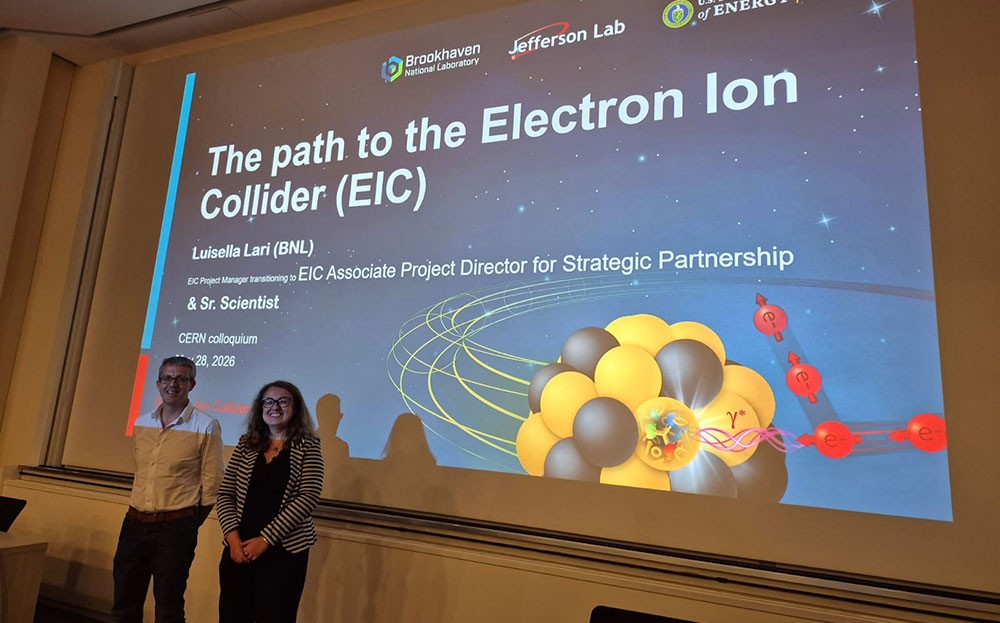
EIC and CERN Strengthen Cooperation to Advance International Scientific Exchange for the Electron-Ion Collider
August 12, 2026 - The collaboration between the Electron-Ion Collider (EIC) project and the European Organization for Nuclear Research (CERN) is deepening further. On May 28, CERN hosted a workshop themed around the EIC to introduce the project's scientific goals, construction progress, and future research opportunities to its international scientific community. Luisella Lari (right), Deputy Director for Strategic Partnerships of the Electron-Ion Collider (EIC) project, poses with Matthew Chalmers, organizer of the CERN lecture series, after delivering a talk titled "The Road to the Electron-Ion Collider" at CERN. Luisella Lari, senior scientist on the EIC project, delivered a talk titled "The Road to the Electron-Ion Collider" at the workshop.
2026-08-13
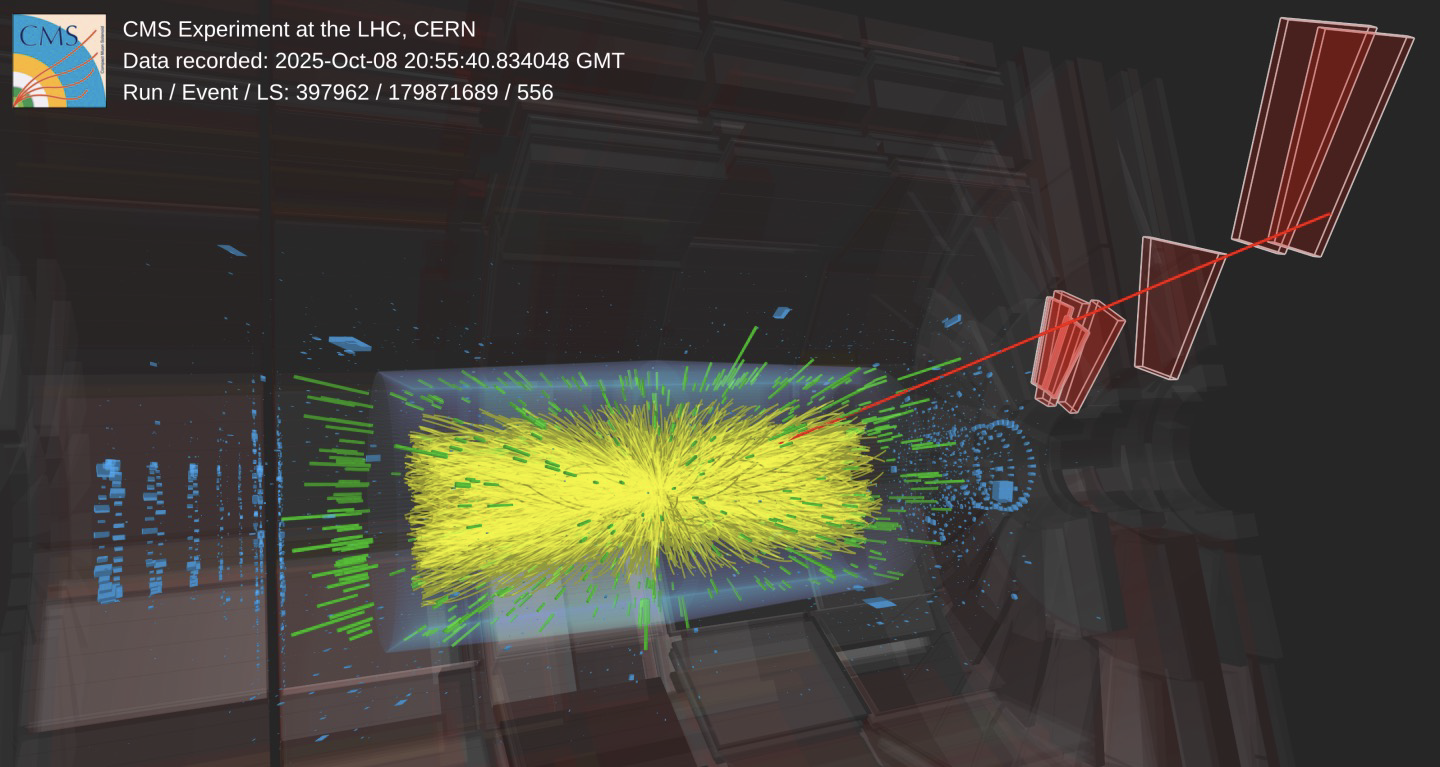
CMS completes high-pileup collision test, validating particle reconstruction algorithms for High-Luminosity LHC operation
In 2025, the Large Hadron Collider (LHC) conducted a dedicated test over several days to simulate high-intensity collision conditions closer to those expected during future operation of the High-Luminosity Large Hadron Collider (HL-LHC). The Compact Muon Solenoid (CMS) experiment team used this opportunity to test whether existing particle tracking, identification, and reconstruction software, along with a new class of machine learning methods, can adapt to the more complex collision conditions of the HL-LHC era. During LHC operation, each crossing of proton beams produces multiple proton–proton collisions simultaneously, a phenomenon known as pileup. The current Run 3 features approximately 65 simultaneous interactions, while the HL-LHC is expected to reach 140 to 200. To...
2026-08-10
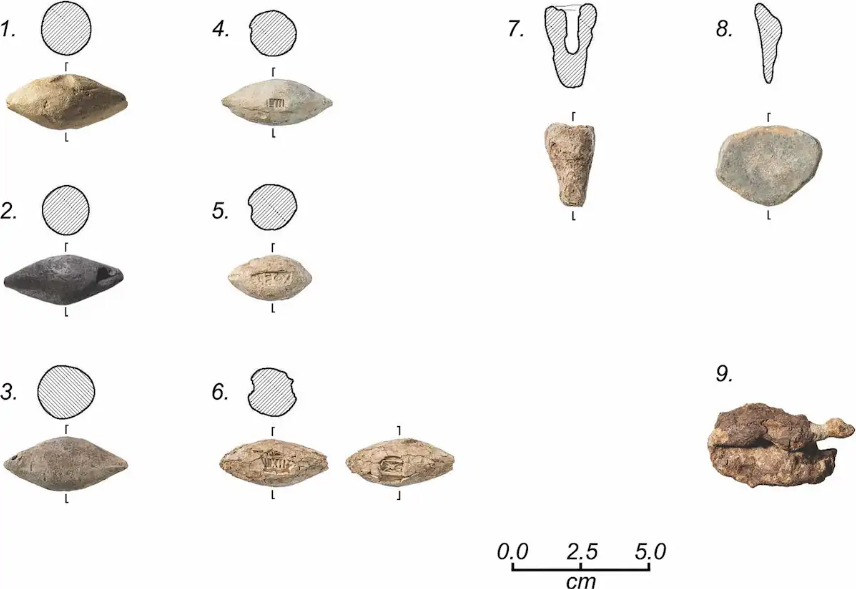
Lead isotope analysis of Roman sling bullets points to two supply routes in the Alpine conquest campaign
A lead isotope study of Roman lead sling bullets suggests that the Roman army's conquest of the Alps under Augustus may not have proceeded along a single continuous route, but rather involved different units or different supply systems. The objects studied come mainly from the Crap Ses site in the Surseiva valley of the canton of Graubünden, Switzerland, as well as from Brigantium and Tasgetium near Lake Constance further north. Over the past 25 years, archaeologists have discovered marching camps, battlefields, observation posts, small fort remains, as well as swords, shields, hobnails, coins, and nearly 500 lead sling bullets near Crap Ses. Many of these bullets bear inscriptions of the Third Legion...
2026-08-04
Swiss PSI Ultracold Neutron Experiment Finds No Signs of "Mirror World" Oscillation
The Paul Scherrer Institute (PSI) in Switzerland announced on July 28 that its researchers detected approximately 25 billion neutrons in an ultracold neutron experiment and found no signs of neutrons spontaneously transforming into mirror neutrons. The results constrain, with high certainty, the theoretical possibility of neutrons disappearing into the so-called mirror world. The mirror world hypothesis posits that every elementary particle in the real world may have a corresponding mirror particle, such as mirror electrons, mirror protons, and mirror neutrons. Such particles interact extremely weakly with ordinary matter, potentially connecting primarily through gravity or rare oscillations of neutral particles, and have therefore also been considered as dark matter candidates...
2026-08-03
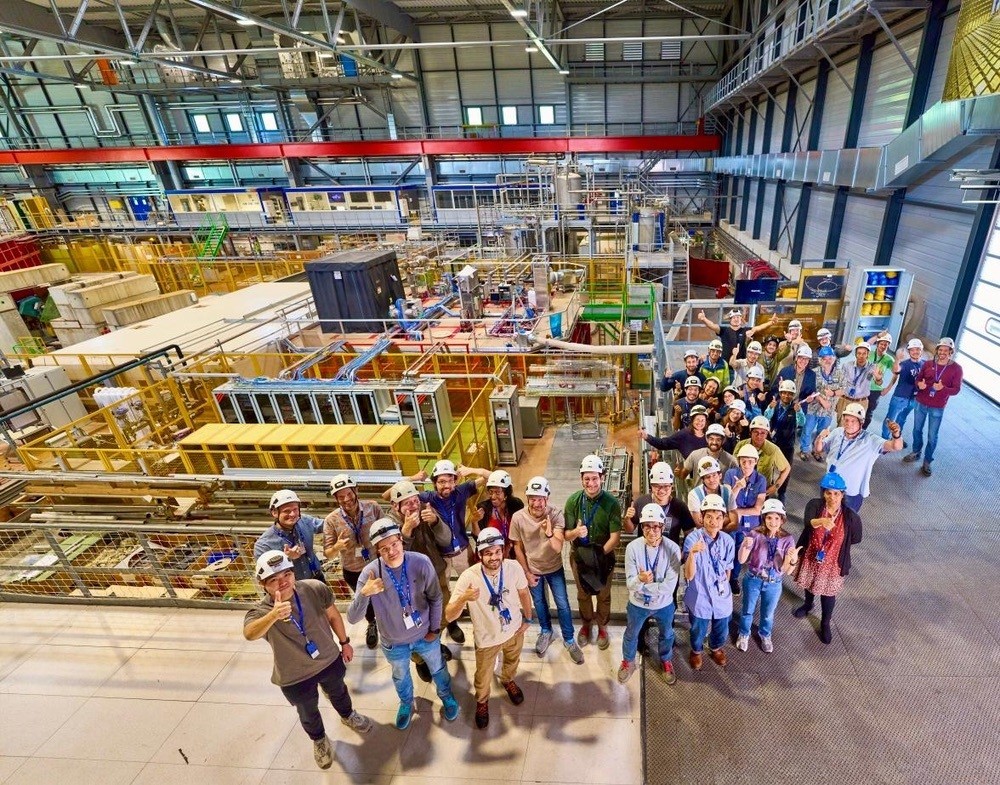
DUNE Prototype Detector Undergoes 300 kV Pressure Test at CERN
The Deep Underground Neutrino Experiment (DUNE), an international collaborative project led by the Fermi National Accelerator Laboratory under the U.S. Department of Energy, is conducting pressure tests on the prototype detector ProtoDUNE at CERN's Neutrino Platform to verify the long-term stability of the relevant detection technology under extreme operating conditions. DUNE is designed as a large-scale neutrino research experiment aimed at studying the properties of neutrinos and their role in the evolution of the universe. The experiment will install large liquid argon time projection chamber detectors approximately one mile underground at the Sanford Underground Research Facility in South Dakota, USA. Once the detectors are filled with liquid argon and sealed, internal components will be difficult to access for extended periods...
2026-08-03