
Lead isotope analysis of Roman sling bullets points to two supply routes in the Alpine conquest campaign
 Scan to share
A lead isotope study of Roman lead sling bullets suggests that the Roman army's conquest of the Alps under Augustus may not have proceeded along a single continuous route, but rather involved different units or different supply systems.
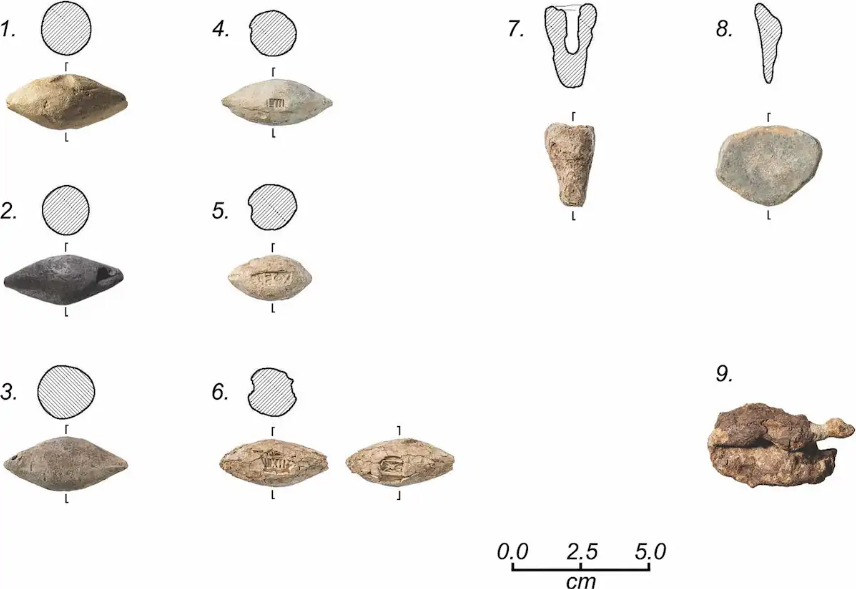
The objects studied come mainly from the Crap Ses site in the Surseiva valley of the canton of Graubünden, Switzerland, as well as from Brigantium and Tasgetium near Lake Constance further north. Over the past 25 years, archaeologists have discovered marching camps, battlefields, observation posts, small fort remains, as well as swords, shields, hobnails, coins, and nearly 500 lead sling bullets near Crap Ses. Many of these bullets bear the names of the Third Legion, Tenth Legion, or Twelfth Legion—such sling bullets marked with legion insignia are relatively rare in Roman archaeological material.
In the analysis conducted by researchers from the University of Southampton, the University of Basel, and other institutions, 47 sling bullets, two lead tent weights, and two irregular lead ingots were selected as samples. The team extracted material from the core of each sample, dissolved it, and determined the lead isotope composition using a high-precision mass spectrometer to trace the metal's origin.
The results show that the samples fall into two clearly distinct groups. The bullets from Brigantium and Tasgetium have a relatively homogeneous isotope composition with low radiogenic values, an average weight of about 80 grams, and no legion inscriptions; the bullets from Crap Ses show greater variation in isotope composition but cluster into groups, with higher radiogenic values, an average weight of about 50 grams, and inscriptions of the Third, Tenth, or Twelfth Legions. Statistical analysis indicates that the differences between the two groups are primarily due to inter-group variation.
After comparing the isotope signatures with data from major lead mining districts of the Roman world in the first century BC, the researchers concluded that the lead in the Crap Ses bullets most likely originates from the Almería–Cartagena volcanic belt in southeastern Spain, possibly mixed with lead from the Sierra Morena or the Iberian Pyrite Belt of Huelva. The isotope signatures of the bullets from the Lake Constance region are consistent with the Sierra Morena lead mines, and may also overlap with certain deposits in the French Massif Central, but the researchers consider that historical and archaeological context favors an Iberian origin.
This finding has direct implications for determining the marching routes of the Roman army. If the same troops that fought in the Surseiva valley had continued north to Lake Constance, their ammunition would in theory have come from the same batch of lead; however, the isotope results do not support this. The researchers therefore believe that the military activities in the Lake Constance region may have been carried out by a different detachment, or that the same units obtained new ammunition from a different supply system in subsequent operations.
The study also found that the lead tent weights from the Crap Ses site share the same isotope signature as the local sling bullets, indicating that the related lead equipment may have come from the same centralized supply point. The research team believes that lead isotope analysis provides new evidence for understanding the supply organization, ammunition production, and marching routes of the Roman army in the Alpine campaign. Even lead bullets left behind in mountain passes can preserve key information about metal sources and the movements of military forces.
Disclaimer: Information republished from partner media, institutions or other websites is provided for reference and communication purposes only. It does not imply endorsement of its views or verification of its accuracy. Please contact us if any content infringes rights or requires correction.