
CERN Injector Complex Enters Final Beam Run Phase Before LS3
 Scan to share
The CERN accelerator complex is entering its final operational phase before the third Long Shutdown (LS3). With the Large Hadron Collider (LHC) having already entered LS3, the injector complex and associated facilities will continue high-intensity beam operations until 6:00 a.m. on Monday, August 31, after which the operations team will hand over control to the LS3 coordination team, marking the formal transition of the entire accelerator complex into the shutdown maintenance phase.
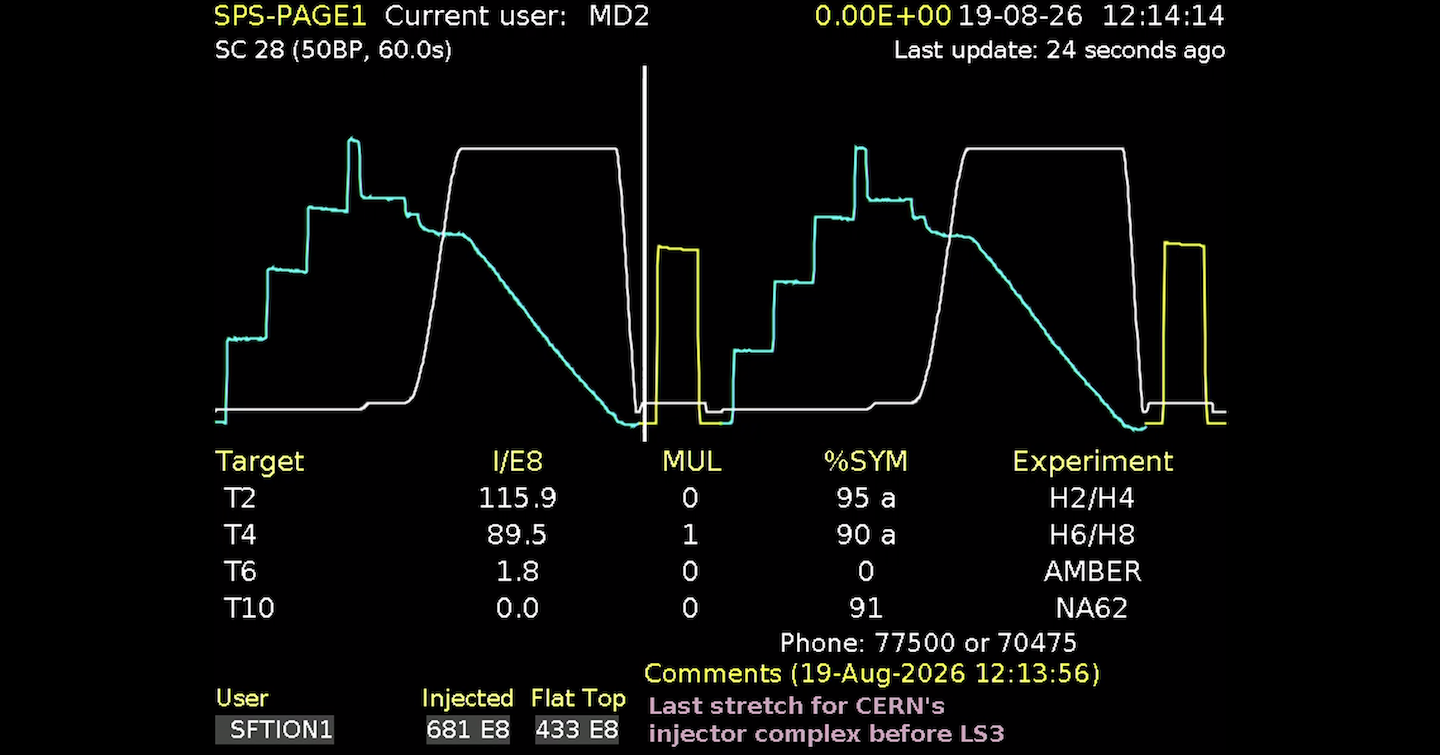
August 19, 2026, page one of the SPS. The third run of the injector complex is drawing to a close. (Image: CERN)
During the final week-plus of operations, CERN will continue delivering proton and ion beams to physics experiments. The North Area will receive lead-ion beams to support experimental programs ahead of the shutdown maintenance. In addition, a special beam test has been scheduled for the end of the run: lead-ion beams and low-energy proton beams will be sent to the HiRadMat (High-Radiation to Materials) facility for the first time, to assess whether the facility can expand its research scope in the future, creating new possibilities for testing materials and equipment under extreme beam conditions.
This final phase of operations is equally critical for beam physicists, operators, and equipment specialists. Teams are using the remaining beam time to carry out measurements, gathering data relevant to doctoral research, technical studies, and final adjustments during the shutdown. These data will support the preparation of the accelerator complex for the fourth run.
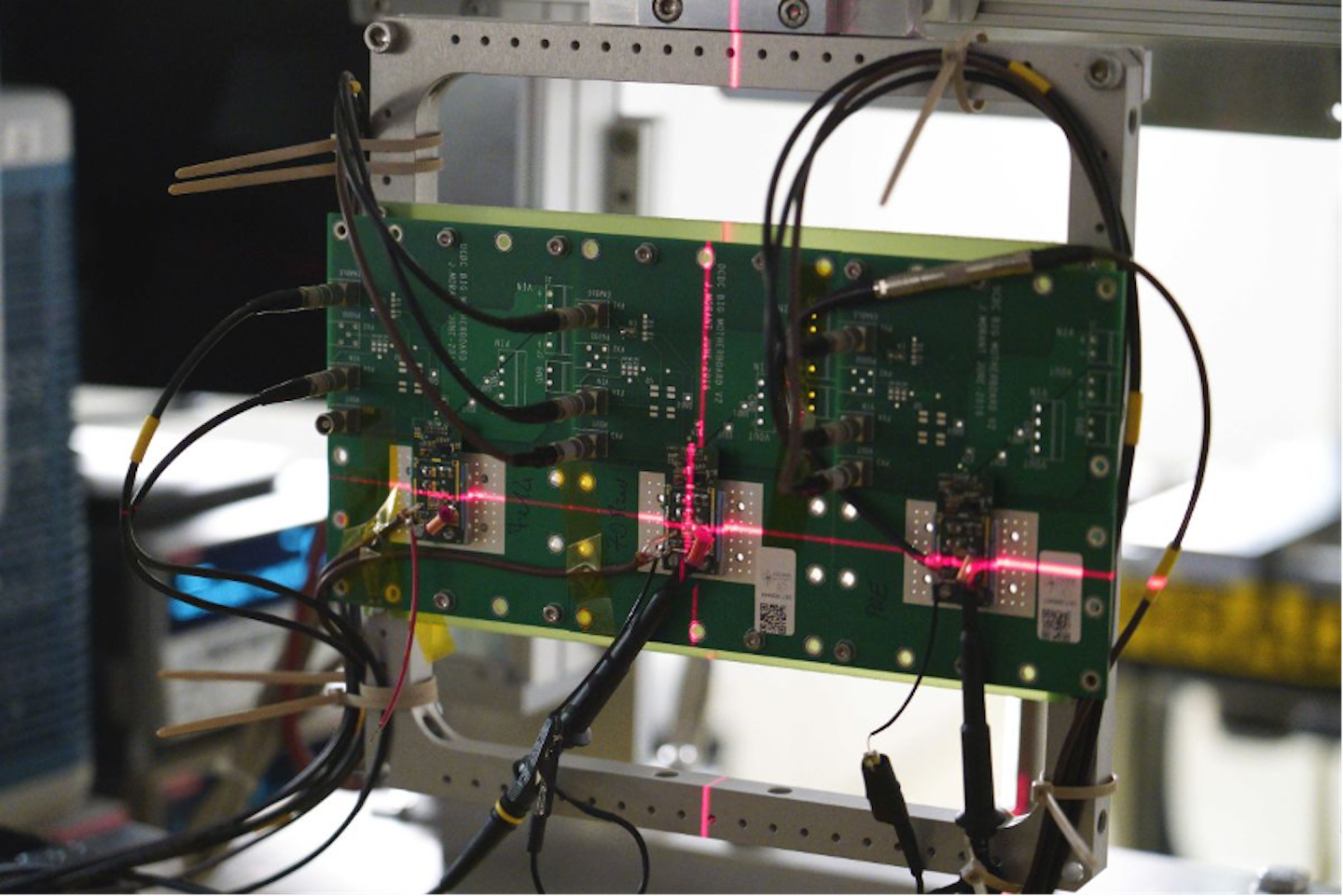
On August 19, the EU-funded HEARTS (High-Energy Accelerators for Radiation Testing and Shielding) project commenced physics operations in the CERN East Area. During operations, the Proton Synchrotron (PS) delivers lead-ion beams of varying energies and intensities to the T8 beamline in the East Area, providing users with controlled irradiation conditions for validating microelectronic component performance. The test targets are oriented toward applications such as satellites, spacecraft, and detectors for major CERN experiments.
To meet testing requirements, the beam must be controlled with high precision in terms of stability, intensity, spill quality, and spot uniformity. A larger spot size facilitates uniform irradiation of microelectronic components, while accurate knowledge of the irradiation dose is essential to the reliability of test conclusions. Different beam energies also enable the study of radiation tolerance of materials and devices at various depths.
August 19, 2026, page one of the SPS. The third run of the injector complex is drawing to a close. (Image: CERN)
As planned, the CERN accelerator complex will gradually resume operations after LS3. Linac4, the PS Booster, and ISOLDE are expected to restart first in early 2028. For now, the operations team's focus remains on making full use of the final beam time before the shutdown, accumulating the necessary data for subsequent maintenance, upgrades, and the new run.
Disclaimer: Information republished from partner media, institutions or other websites is provided for reference and communication purposes only. It does not imply endorsement of its views or verification of its accuracy. Please contact us if any content infringes rights or requires correction.