
Search Results
Keyword:particle accelerator
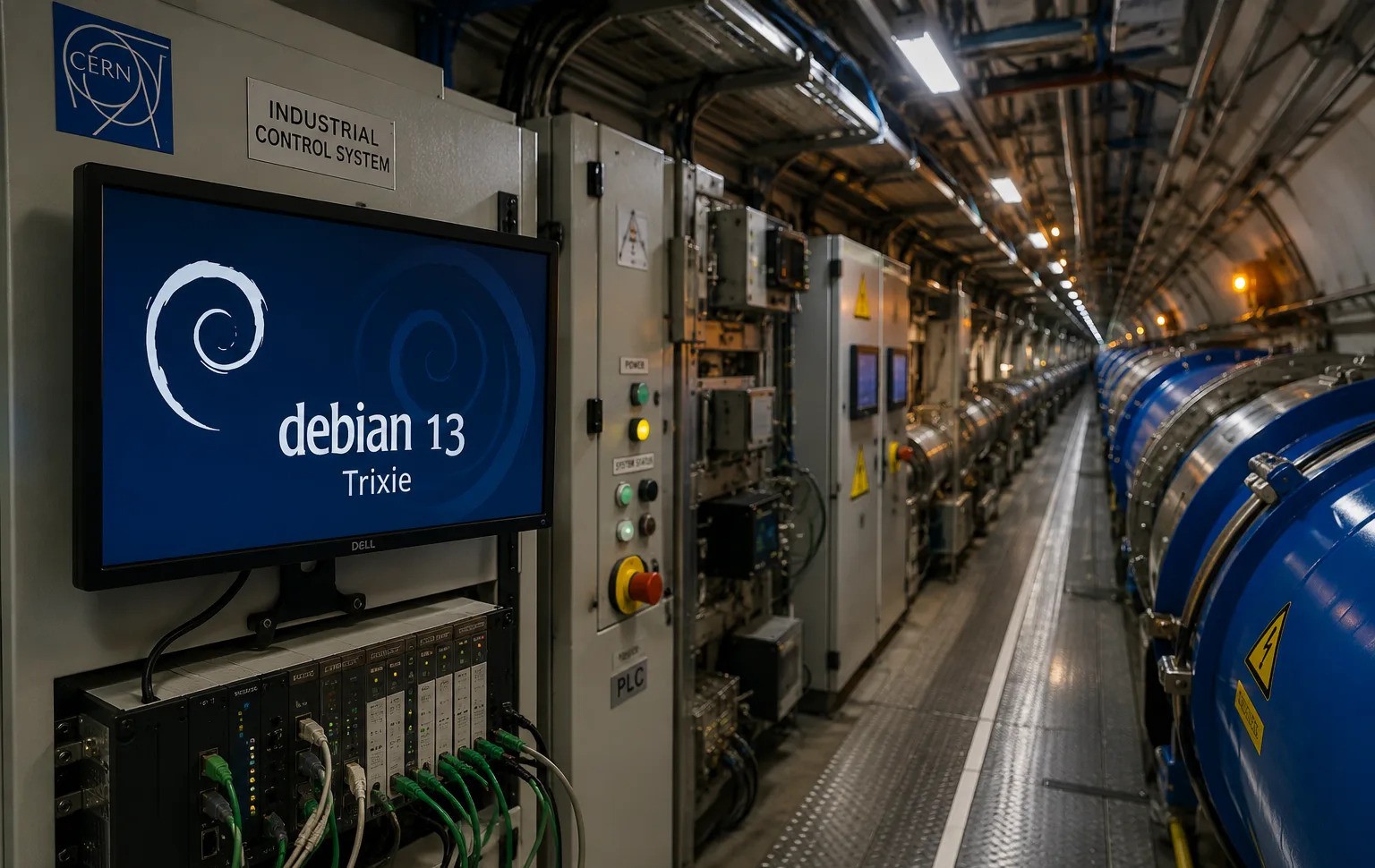
CERN Accelerator Control Systems to Migrate to Debian 13
Representatives from the European Organization for Nuclear Research (CERN) stated at the MiniDebConf conference that they plan to migrate over 2,200 industrial and embedded computers used to control their accelerator complex from RHEL to Debian 13 by the end of 2026. The systems involved include control computers for the Large Hadron Collider as well as several independent experimental facilities. CERN also clarified that this migration applies only to accelerator control-related equipment and will not affect data centers or experimental systems. Those data centers and experimental systems will continue to use RHEL/AlmaLinux. According to reports, CERN engineers had previously considered migrating the relevant systems to CentOS Stream, but...
2026-09-08

CERN removes first giant beam absorbers from LHC, making room for High-Luminosity Large Hadron Collider upgrade
CERN recently completed a complex transport operation, moving the first two giant components from the Large Hadron Collider (LHC) tunnel to the surface, making room for the operation and upgrade of the future High-Luminosity Large Hadron Collider (HiLumi LHC). The equipment removed this time consists of two beam absorbers, also known as TAN absorbers. Each absorber is about 5 meters long and weighs about 30 tons, made of iron, copper, and marble, primarily used to protect accelerator magnets from damage caused by neutral particles generated along the beam direction during collisions. A relevant official stated that this type of equipment is among the heaviest and largest devices that need to be removed from the LHC during this shutdown period...
2026-09-03
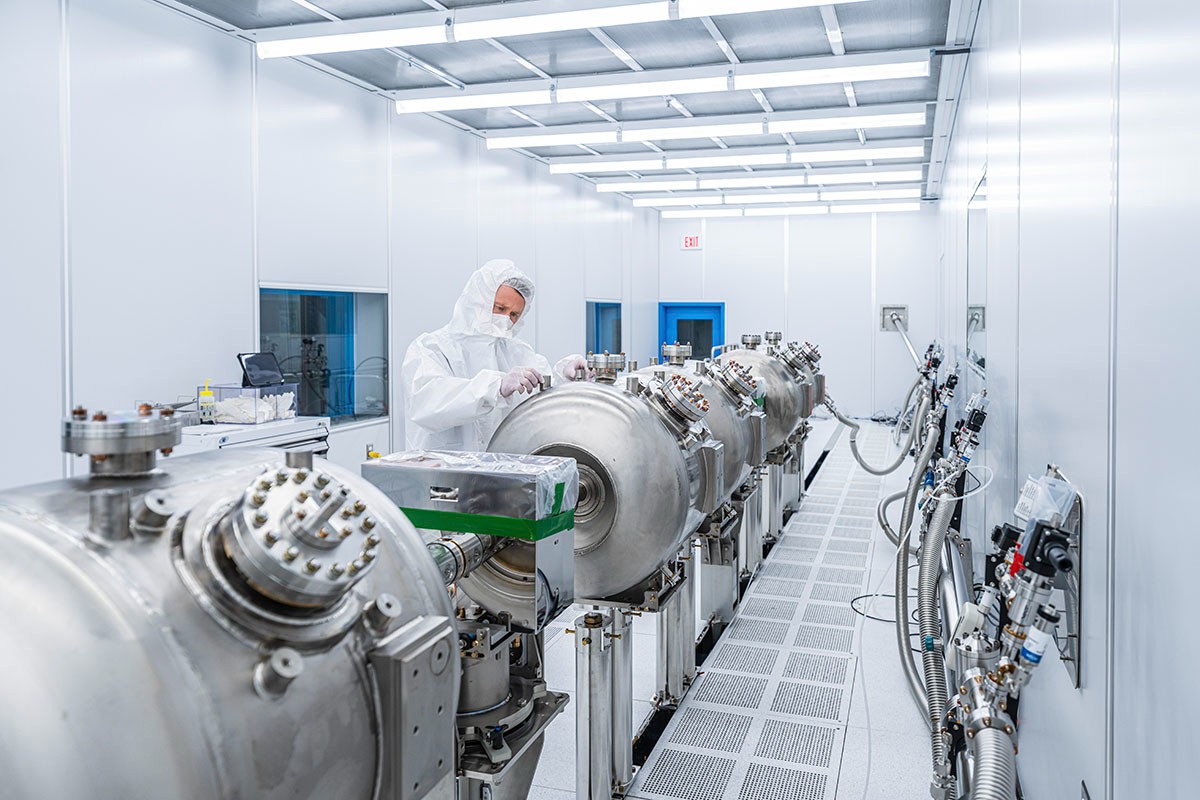
U.S. Department of Energy Selects Fermilab to Lead AI Project to Enhance Superconducting Radio-Frequency Cavity Control in Particle Accelerators
The U.S. Department of Energy's Genesis Program recently selected an artificial intelligence project led by Fermi National Accelerator Laboratory, supporting its collaboration with national laboratories, universities, and industry to use AI and machine learning technologies to improve resonance control in particle accelerators. The project aims to enhance accelerator operational performance and beam stability while reducing energy consumption and operating costs. Superconducting radio-frequency cavities are being assembled and tested, ready for installation on the Proton Improvement Plan-II at the Fermilab Accelerator Complex. By finely tuning the resonant frequency of the cavities, scientists can optimize acc...
2026-08-21
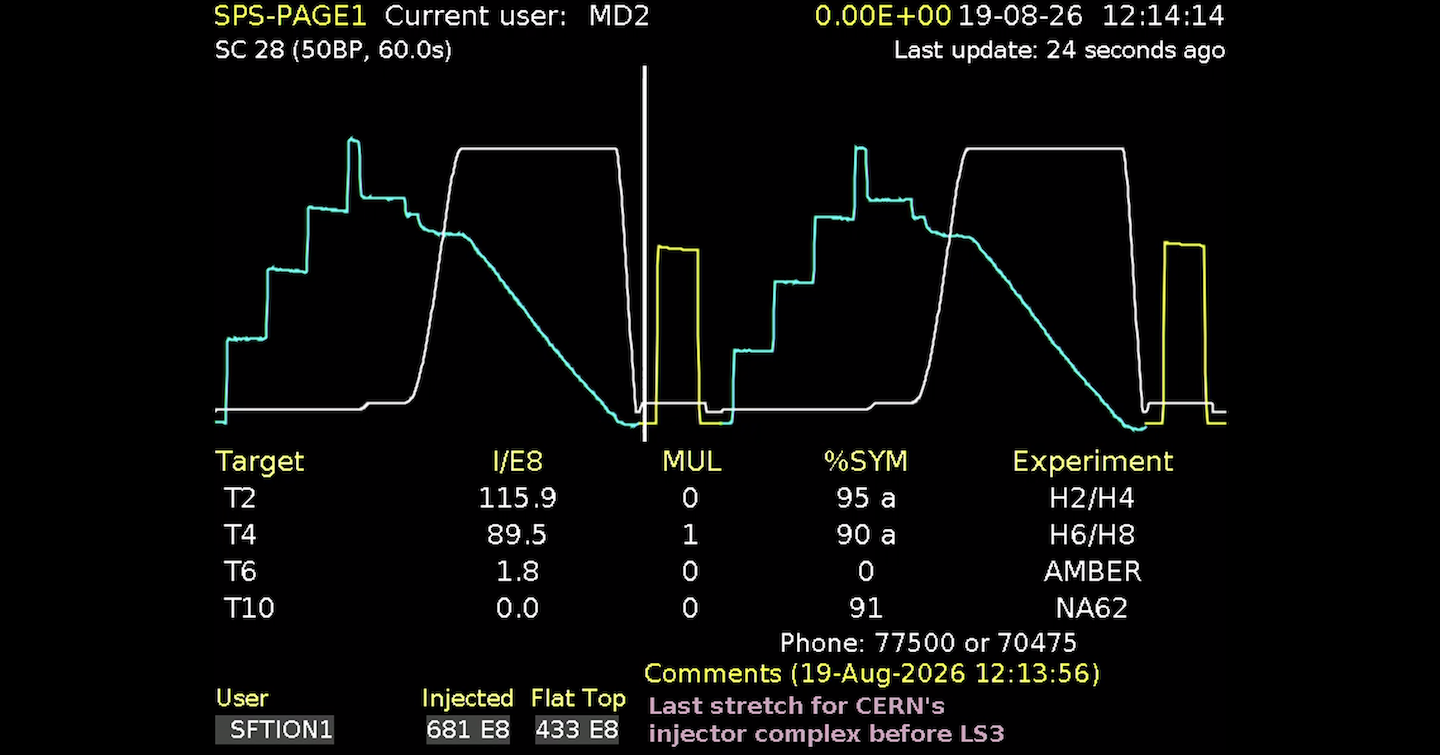
CERN Injector Complex Enters Final Beam Run Phase Before LS3
The CERN accelerator complex is entering its final operational phase before the third Long Shutdown (LS3). With the Large Hadron Collider (LHC) having already entered LS3, the injector complex and associated facilities will continue high-intensity beam operations until 6:00 a.m. on Monday, August 31, after which the operations team will hand over control to the LS3 coordination team, marking the formal transition of the entire accelerator complex into the shutdown maintenance phase. August 19, 2026, page one of the SPS. The third run of the injector complex is drawing to a close. (Image: CERN) During the final week-plus of operations, CERN will continue delivering proton and ion beams to physics experiments.
2026-08-21
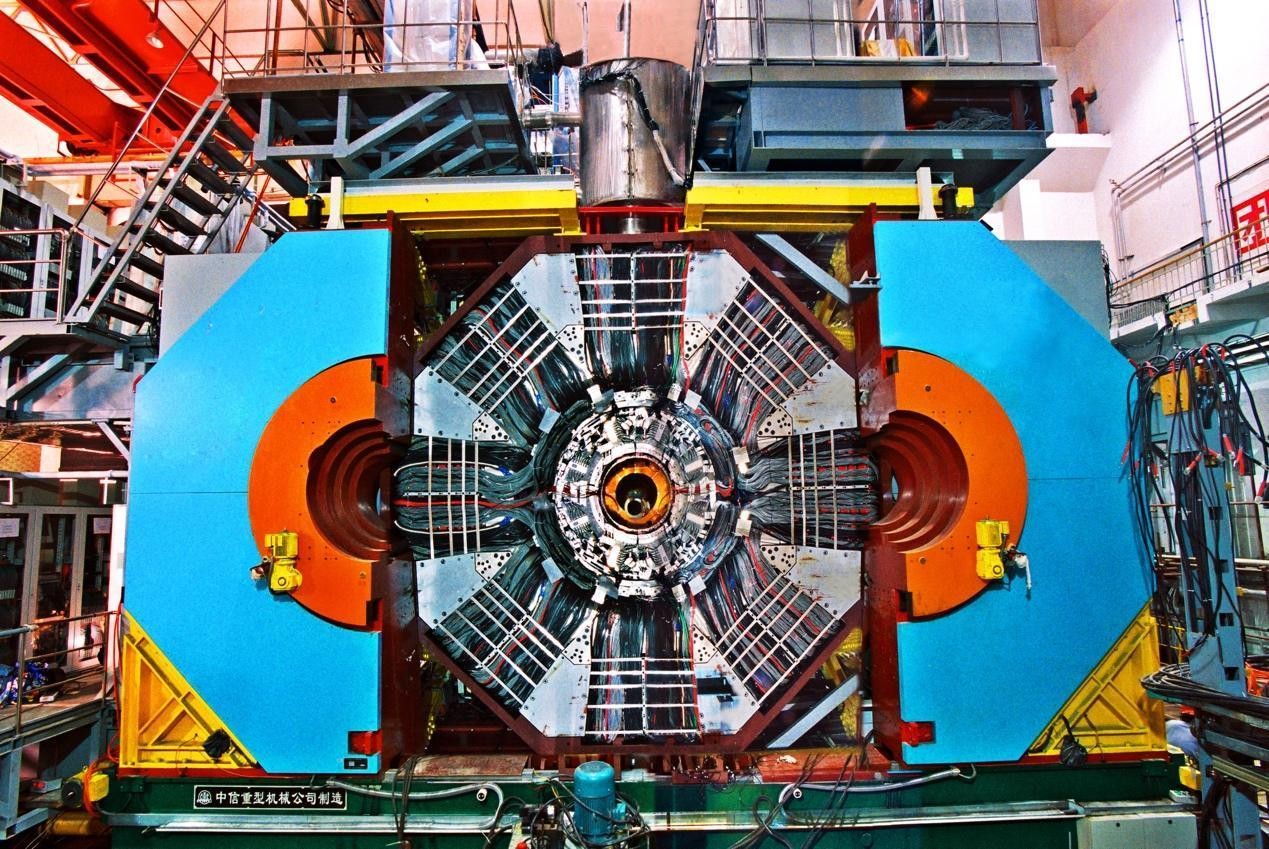
"Smashing Out" More New Particles Unknown to Humanity — Exploring the Upgraded Beijing Electron-Positron Collider After Its Second Renovation
Beside Yuquan Road in Beijing, beneath an ancient courtyard surrounded by lush greenery, lies a giant scientific facility shaped like a badminton racket — the Beijing Electron-Positron Collider. Inside this 240-meter-circumference ring-shaped device, electrons and positrons can be accelerated to near the speed of light and smashed head-on into each other. By studying the microscopic particles produced in these collisions, scientists explore the fundamental laws governing the microscopic world, verify existing physical theories, and search for unknown new particles. Recently, a reporter visited this facility to uncover the secrets of this national heavyweight that has just completed its second major upgrade. After this renovation, key indicators such as collision energy and collision luminosity have been significantly improved, achieving a historic breakthrough in core performance. Since its completion...
2026-08-11
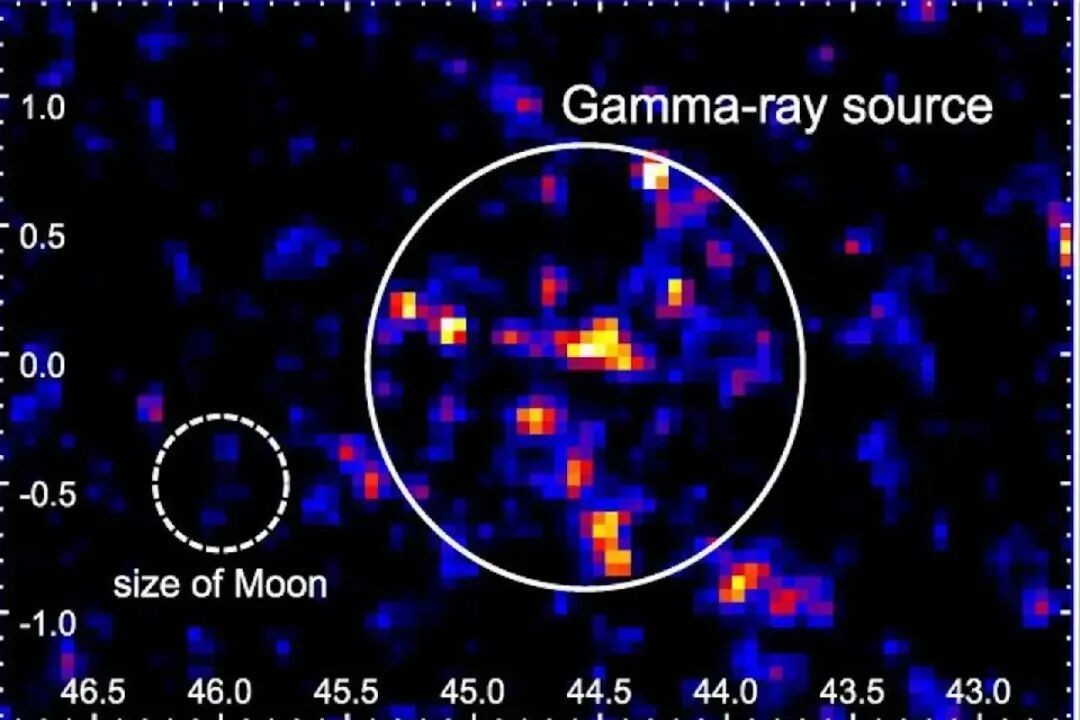
"Triple-Arrow Assault" Confirms a Cosmic "Natural Accelerator" Ejecting Protons at Energies 100 Times That of the Large Hadron Collider
Astronomers, using three observation facilities operating in different wavelength bands, have confirmed a mysterious celestial body in the direction of the Aquila constellation in the Milky Way as a natural cosmic accelerator. This object is continuously ejecting high-speed particles with energies far exceeding any man-made accelerator on Earth, equivalent to 100 times that of the Large Hadron Collider (LHC). This discovery provides key clues for tracing the origin of the highest-energy cosmic rays in the Milky Way, and the research findings were published in the latest issue of The Astrophysical Journal. A size comparison between the gamma-ray source (large circle) and the Moon (small circle). Image credit: The Astrophysical Journal. PeV (peta-electronvolt) energy cosmic rays are high-energy diffuse gamma-ray radiation, and...
2026-08-11

Moffitt Cancer Center Activates Proton Therapy Center in Florida, USA
Moffitt Cancer Center recently held a ribbon-cutting ceremony, announcing the official opening of the Richard M. Schultz Family Foundation Proton Center at the Moffitt Speros Outpatient Center. Located in the Speros Global R&D Park in Pasco County, Florida, it is recognized as the first proton therapy center in the Tampa Bay area. Moffitt Cancer Center stated that the activation of the proton therapy center will provide local patients with more precise radiotherapy options. Built in collaboration with IBA, a particle accelerator technology company, the center will use proton therapy to deliver targeted radiation to tumors, improving tumor targeting accuracy while minimizing impact on surrounding healthy tissues. According to reports, the...
2026-07-30