
Neutron and X-ray tomography reveal hydrogen-rich regions in Martian meteorite "Black Beauty"
 Scan to share
An international team of researchers from Denmark, Sweden, and Switzerland recently conducted a three-dimensional non-destructive analysis of a slice of the Martian meteorite NWA 7034 "Black Beauty" using neutron tomography and X-ray tomography, discovering macroscopic hydrogen-rich regions within it. The study suggests that these hydrogen-rich features provide evidence of early water-rock interactions on Mars. The findings have been published in Geophysical Research Letters.
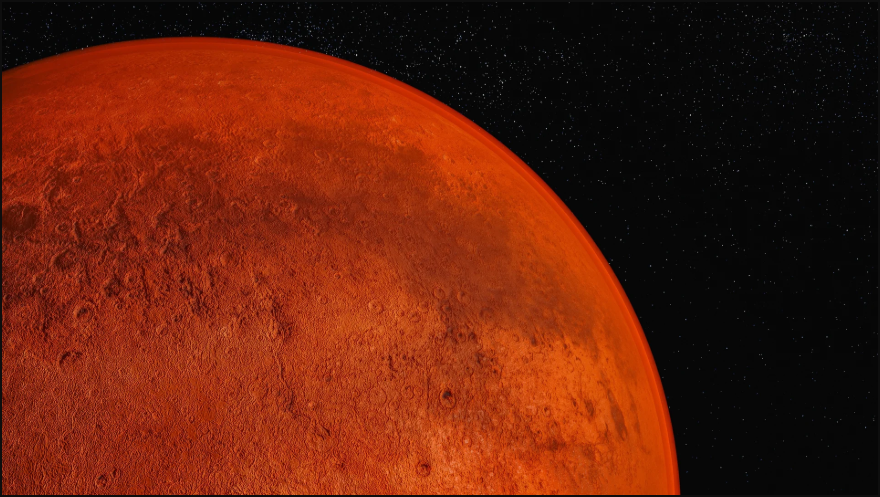
"Black Beauty" is a brecciated meteorite from Mars that was ejected into space by an impact event and eventually landed in the Sahara Desert in Morocco. Weighing approximately 320 grams, the meteorite contains material up to 4.48 billion years old, making it one of the oldest known Martian crustal fragments. Previous studies have shown that this meteorite is rich in water or trace signatures related to water, but those studies were largely limited to bulk water content estimates or localized micrometer-scale mineral observations, making it difficult to reveal the spatial distribution of hydrated minerals within the sample.
In this study, a slice of "Black Beauty" measuring 12×8×2 millimeters was sent to Switzerland for analysis. The researchers conducted neutron tomography at the Swiss Spallation Neutron Source SINQ and combined it with X-ray tomography to reconstruct the internal structure of the sample. X-rays are better suited for revealing the distribution of heavier elements such as silicon and iron, while neutrons are particularly sensitive to hydrogen. The complementary nature of the two techniques enabled the research team not only to observe the dense rock structure inside the meteorite but also to identify the locations of hydrogen-bearing materials.
The study found that hydrated traces in the meteorite are not uniformly dispersed but exist as high-concentration "hot spots" visible to the naked eye, primarily located within older rock fragments. These hydrogen-rich regions account for approximately 11% of the total water content in the examined sample. The researchers believe this indicates that water existed on early Mars and may have reacted with the young crust during high-energy geological processes such as volcanic activity or impact events, subsequently being preserved in the form of hydrated minerals.
The research team stated that this work marks the first three-dimensional non-destructive mapping of hydrogen in Martian rocks. Although the sample size in this study was relatively small, the same methodology can be applied to larger samples in the future and is expected to play a role after rock samples from Mars or other celestial bodies are returned to Earth. Swiss research facilities offering neutron tomography and high-resolution X-ray tomography can provide technical support for such planetary sample studies.
Disclaimer: Information republished from partner media, institutions or other websites is provided for reference and communication purposes only. It does not imply endorsement of its views or verification of its accuracy. Please contact us if any content infringes rights or requires correction.