
CERN Large Hadron Collider Data Challenge Models of Oxygen and Neon Nucleus Structure
 Scan to share
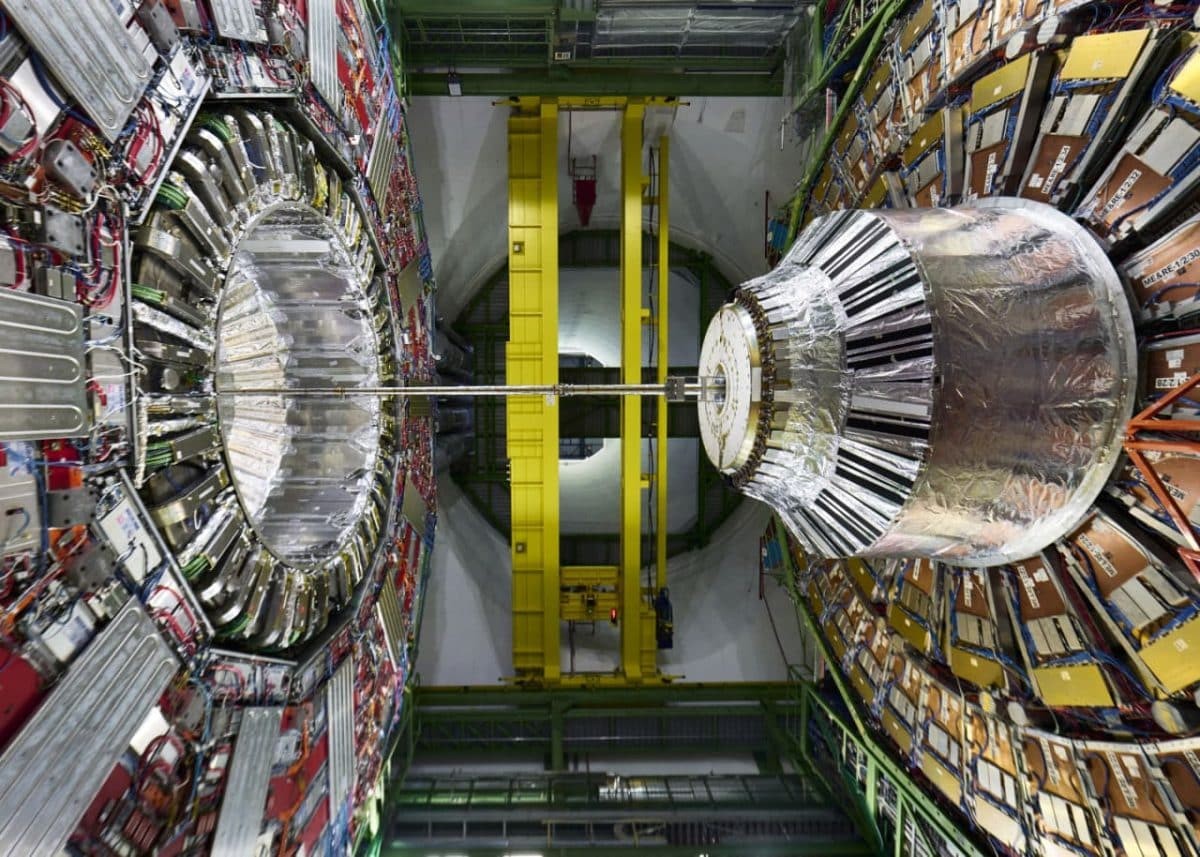
Physicists at the European Organization for Nuclear Research (CERN), analyzing a new batch of collision data from the CMS detector at the Large Hadron Collider, have found that oxygen and neon nuclei do not behave entirely as predicted by existing models in high-energy collisions. This result indicates that the scientific community's understanding of the shapes and internal structures of certain light nuclei still requires further refinement.
In high-energy nuclear collisions, a quark-gluon plasma is briefly formed in the collision region. This state of matter decays rapidly, but the collective flow characteristics of its particles can be used to infer the collision geometry and indirectly provide information about nuclear structure. Researchers believe that symmetric collisions of light ions help better control the initial collision conditions, making them suitable for studying collective responses in small systems.
This study focuses on oxygen-16 and neon-20 ions, which have similar masses. According to existing nuclear structure calculations, the oxygen-16 nucleus is believed to have an approximately tetrahedral structure, while the neon-20 nucleus is thought to resemble a "bowling pin" shape. Since the two ion species have similar masses, oxygen-oxygen and neon-neon collisions should exhibit similar hydrodynamic evolution; if differences in flow behavior emerge, they may reflect differences in collision geometry and nuclear structure between the two.
The research team processed particle collision data recorded by the CMS detector, with a total collision energy of 5.36 teraelectronvolts per nucleon pair, and compared the experimental results with hydrodynamic simulations incorporating modern nuclear structure calculations. The results show that both types of collisions exhibit significant elliptic flow and triangular flow, and that the flow patterns are closely related to the distance of the ion collision relative to the nucleus center, consistent with the characteristics of a liquid responding to collision geometry.
In the experiments, neon nuclei exhibited stronger elliptic flow signals than oxygen nuclei in most collisions. If neon nuclei are indeed more deformed from spherical symmetry, this phenomenon is consistent with expectations. However, the triangular flow results do not agree with model calculations, suggesting that existing models may not yet accurately describe the true structure or dynamic response of oxygen and neon nuclei in collisions.
The researchers stated that particle flow analysis can provide clues for inferring the structure of nuclei involved in collisions, but the current data and models are still insufficient to precisely determine the shape of the neon nucleus. Developing more refined theoretical models of accelerator collisions in the future may help explain the triangular flow discrepancy and further improve the understanding of light nuclear structure.
Disclaimer: Information republished from partner media, institutions or other websites is provided for reference and communication purposes only. It does not imply endorsement of its views or verification of its accuracy. Please contact us if any content infringes rights or requires correction.