
Korea Atomic Energy Research Institute and SK Hynix to Jointly Use Proton Accelerator and Other Facilities for Semiconductor Radiation Reliability Research
 Scan to share
The Korea Atomic Energy Research Institute announced on July 29 that its Proton Science Research Group has signed a mutual cooperation agreement with SK Hynix to jointly utilize research facilities such as the proton accelerator to advance research on semiconductor radiation reliability.
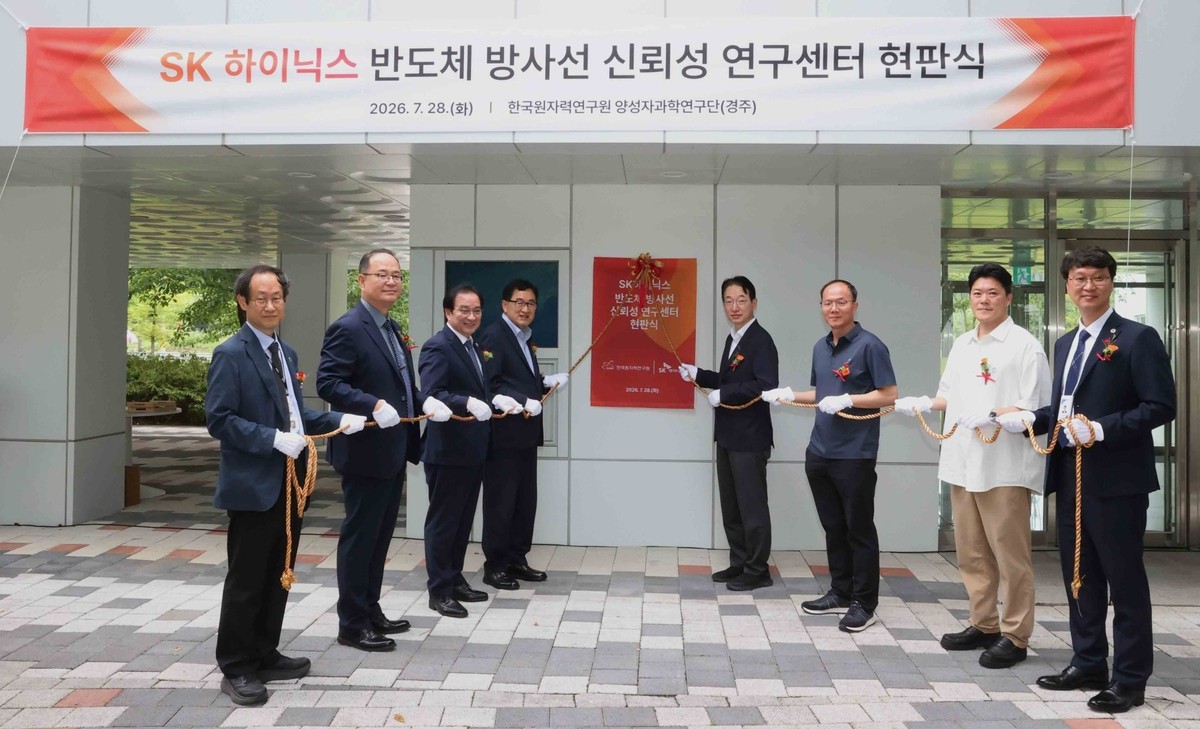
Korea Atomic Energy Research Institute
According to the agreement, the two parties will conduct joint research on proton beams and neutron beams generated by the proton accelerator and the "HANARO" research reactor, and explore methods to simulate real atmospheric and cosmic radiation environments using high-energy proton beams, gamma-ray beams, and neutron beams for radiation impact assessment of semiconductors and other products.
In outer space and high-altitude aircraft flight environments, the shielding effect of the atmosphere and magnetic field against cosmic radiation is relatively weakened. After being exposed to cosmic radiation, semiconductors may experience malfunctions or damage. Therefore, semiconductors used in mobile devices such as automobiles and satellites need to have their radiation resistance verified before being put into use.
The proton accelerator located in Gyeongju is a key facility in South Korea for proton beam research. It can simulate and evaluate the impact of cosmic rays and atmospheric radiation on ground-based semiconductors, and is also a critical device for conducting radiation resistance performance tests on semiconductors before they enter space or orbital environments.
The Korea Atomic Energy Research Institute and SK Hynix have been collaborating since 2018 using the Gyeongju proton accelerator. The Korea Atomic Energy Research Institute stated that this agreement will combine national-level large-scale research facilities with the research capabilities of semiconductor companies to further enhance the technical level of semiconductor radiation reliability assessment, and promote the application of facilities such as the proton accelerator and the HANARO research reactor in semiconductor and aerospace-related technologies.
Disclaimer: Information republished from partner media, institutions or other websites is provided for reference and communication purposes only. It does not imply endorsement of its views or verification of its accuracy. Please contact us if any content infringes rights or requires correction.