
Russian flaw detection robots to be deployed for the first time at Egypt's El Dabaa NPP
 Scan to share
Engineers from Russia's Ural Atomenergo and the Atomic Energy Non-Destructive Testing Center (NDTC) have developed an automated metal non-destructive testing system, which includes specialized inspection devices for reactor pressure vessel equipment. The system will be sent to Egypt's El Dabaa Nuclear Power Plant for related equipment inspection. This is also the first deployment of such a standardized system at a nuclear power project outside Russia.
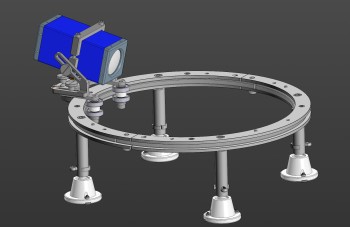
The system consists of multiple robotic arms and a magnetic wheeled robot, capable of delivering ultrasonic flaw detection sensors and measuring devices to positions that are difficult for humans to access. The developer stated that the main goal of the system is to replace manual operations in high-radiation areas, reducing the risk of personnel entering hazardous zones for inspection tasks.
The system design was completed using Russian-made computer-aided design software. To reduce design and manufacturing errors, the engineering team created multiple prototypes using different materials and separately tested the mechanical structure, electronic systems, and software.
Denis Chemrov, a first-level expert in the automation control department of the Atomic Energy Non-Destructive Testing Center, stated that the team includes both experienced engineers and young technicians, with different personnel proposing various design solutions for the system. The project team initially developed two prototype versions: one with a more traditional structure and the other adopting a more innovative approach. After comparative testing, the team developed a third final design, integrating the more effective engineering solutions from both versions.
According to the plan, the final design will be submitted to the production department in early August for metal component manufacturing. The developer stated that the project complies with relevant industry standards and meets the requirements for import substitution of similar foreign systems.
In recent years, Rosatom has prioritized enhancing technological self-sufficiency and developing digital technologies. In connection with relevant national digitalization projects, Rosatom has participated in federal projects such as "Advanced Research and Application Development" and "Local Solutions," undertaking part of the industrial software development tasks.
Disclaimer: Information republished from partner media, institutions or other websites is provided for reference and communication purposes only. It does not imply endorsement of its views or verification of its accuracy. Please contact us if any content infringes rights or requires correction.