
Factory Acceptance Test Completed for TM020 RF Cavity of Super Tau-Charm Facility
 Scan to share
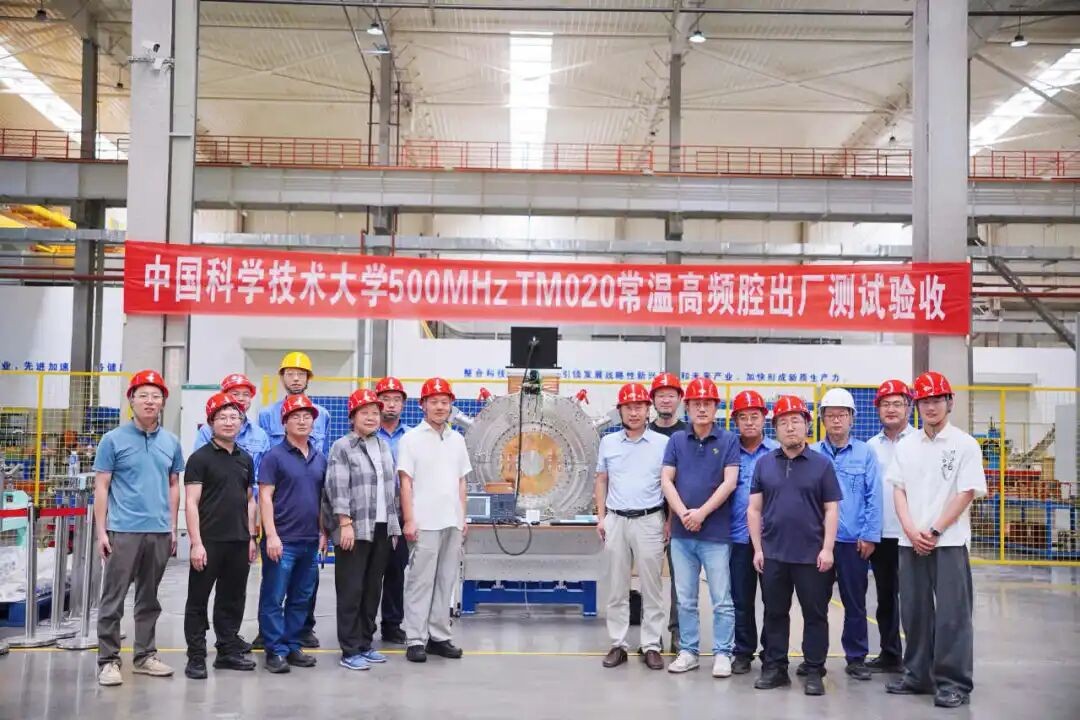
The 500MHz TM020 normal-conducting RF cavity, a key component of the STCF accelerator constructed by Lanzhou Taiji, passed its factory acceptance test on July 28, 2026. This marks a significant milestone in the key technology research project for the Super Tau-Charm Facility (STCF), a new-generation electron-positron collider led by the University of Science and Technology of China.
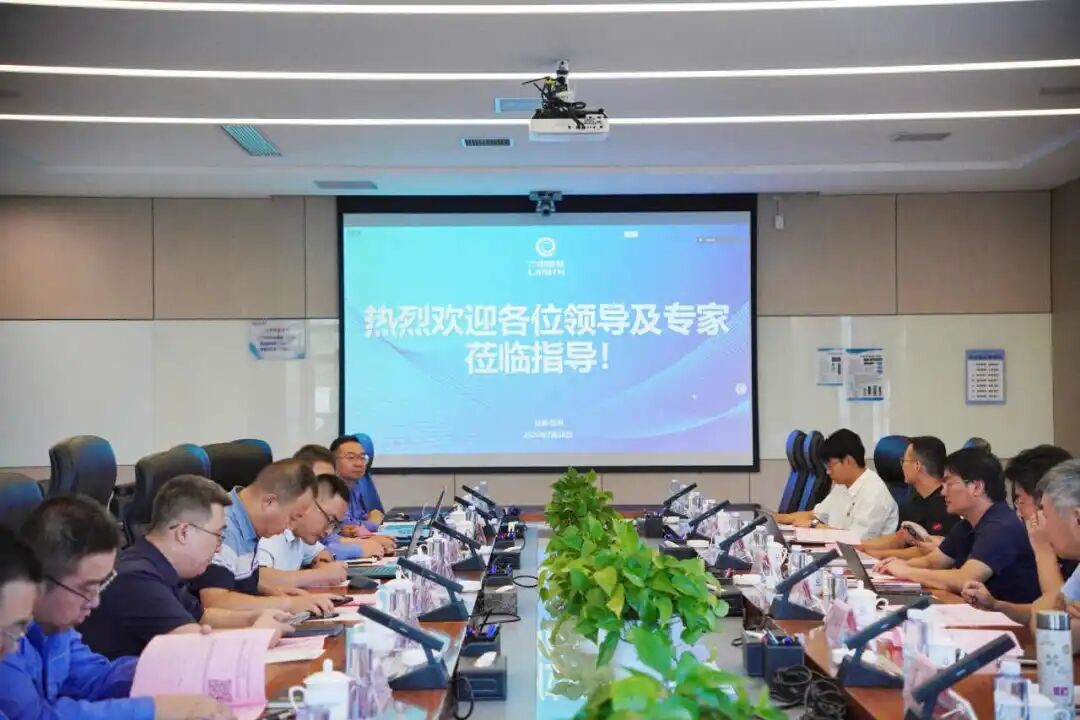
The review meeting brought together experts from the Institute of High Energy Physics of the Chinese Academy of Sciences, Shanghai Advanced Research Institute of the Chinese Academy of Sciences, Chongqing University, Tsinghua University, the University of Science and Technology of China, and Dongsheng Fusion (Shanghai) Technology Co., Ltd. The expert panel conducted a comprehensive and rigorous review of the RF cavity (a 1200mm large-diameter cavity), including its structural design, secondary vacuum brazing, precision machining methods, vacuum performance, and cold test results, and unanimously agreed that all indicators met the design requirements. The measured unloaded quality factor (Q₀) reached 56900 (design value 61500), placing its performance at a leading level among similar high-performance normal-conducting RF cavities in China.
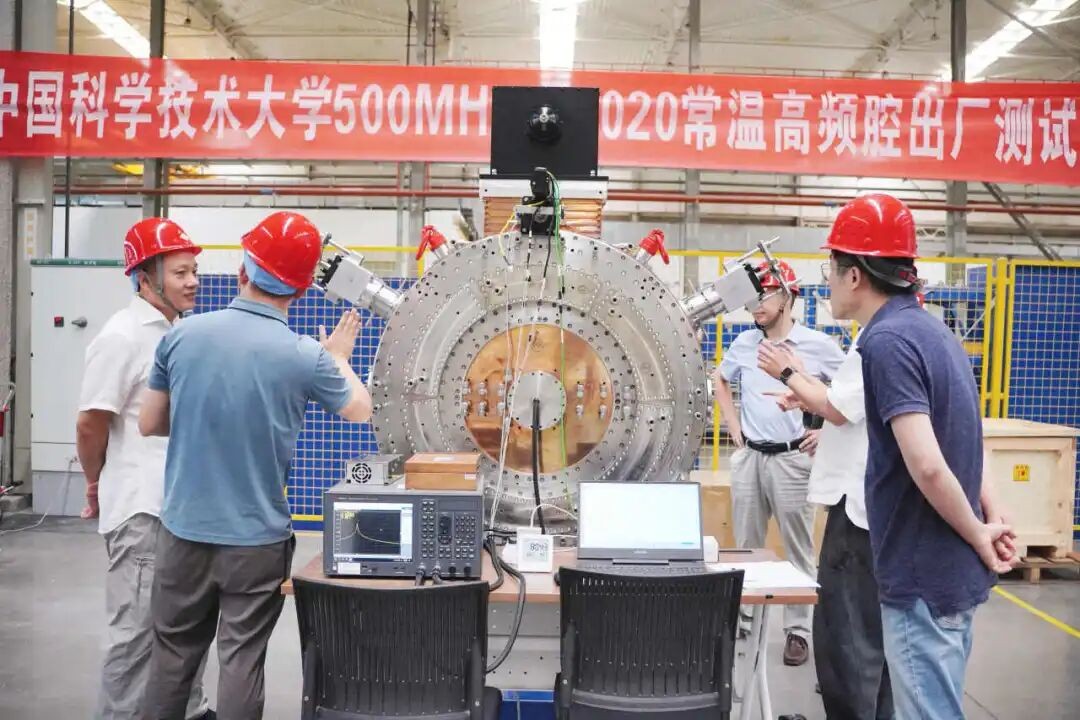
Compared to conventional TM010 cavities, this TM020 cavity, with its larger structural dimensions, higher operating voltage, higher unloaded quality factor (Q₀), and lower R/Q value, can effectively suppress beam instabilities. Additionally, its more compact longitudinal structure significantly optimizes the spatial layout of the collider ring. The technical design of this RF cavity was completed by the research team of Professor Wei Yelong from the University of Science and Technology of China, while the process design and manufacturing were carried out by Lanzhou Taiji.
With the guidance and support of the expert panel, Lanzhou Taiji iteratively optimized through repeated process tests and validations to form a complete set of process standards, machining plans, and full-sequence manufacturing procedures. The success of this project not only lays a solid technical foundation for the development of TM020 mode normal-conducting RF cavities in China but also cultivated a group of core process design personnel with strong technical capabilities.
Disclaimer: Information republished from partner media, institutions or other websites is provided for reference and communication purposes only. It does not imply endorsement of its views or verification of its accuracy. Please contact us if any content infringes rights or requires correction.