
Search Results
Keyword:electron-positron collider
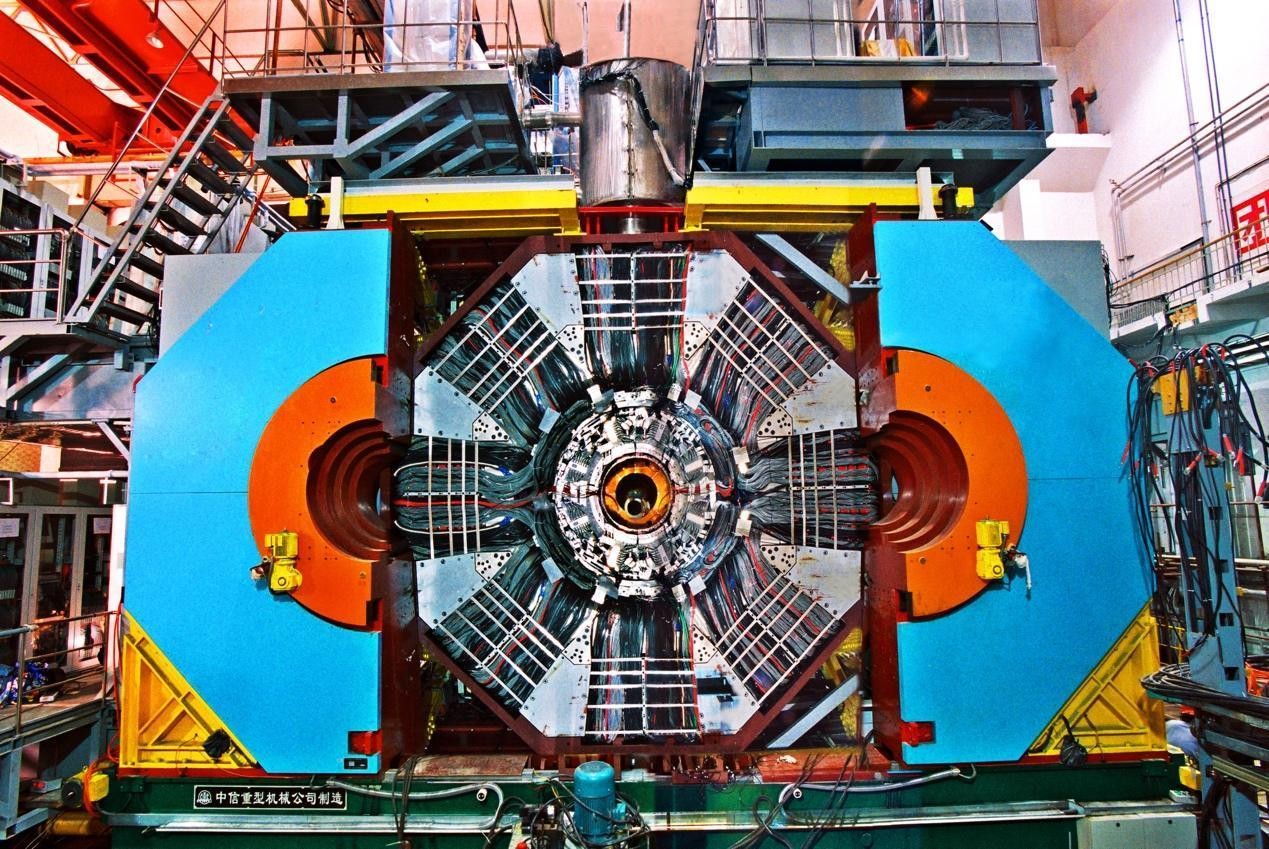
"Smashing Out" More New Particles Unknown to Humanity — Exploring the Upgraded Beijing Electron-Positron Collider After Its Second Renovation
Beside Yuquan Road in Beijing, beneath an ancient courtyard surrounded by lush greenery, lies a giant scientific facility shaped like a badminton racket — the Beijing Electron-Positron Collider. Inside this 240-meter-circumference ring-shaped device, electrons and positrons can be accelerated to near the speed of light and smashed head-on into each other. By studying the microscopic particles produced in these collisions, scientists explore the fundamental laws governing the microscopic world, verify existing physical theories, and search for unknown new particles. Recently, a reporter visited this facility to uncover the secrets of this national heavyweight that has just completed its second major upgrade. After this renovation, key indicators such as collision energy and collision luminosity have been significantly improved, achieving a historic breakthrough in core performance. Since its completion...
2026-08-11
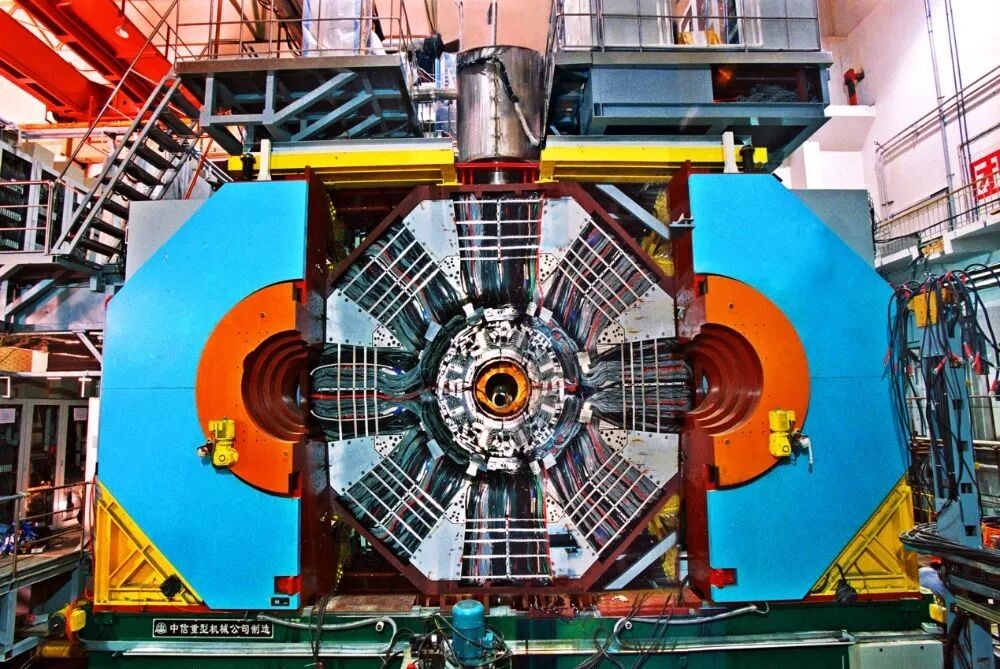
BESIII Experiment First Confirms the Existence of Glueballs
On August 6, Beijing time, the international collaboration of the Beijing Spectrometer III experiment (BESIII) at the Beijing Electron-Positron Collider announced at the International Conference on High Energy Physics (ICHEP 2026) held in Brazil, in the form of a special plenary report: after 15 years of sustained research, the BESIII experiment has established a complete chain of evidence proving the existence of glueballs, unraveling the mystery that has puzzled the academic community for nearly half a century. This discovery not only provides a decisive validation of the theory of quantum chromodynamics, but also demonstrates the existence of a completely new form of matter—matter composed purely of force. Atomic nuclei are composed of protons and neutrons, which in turn are composed of quarks. Gluons mediate the strong interaction between quarks...
2026-08-06
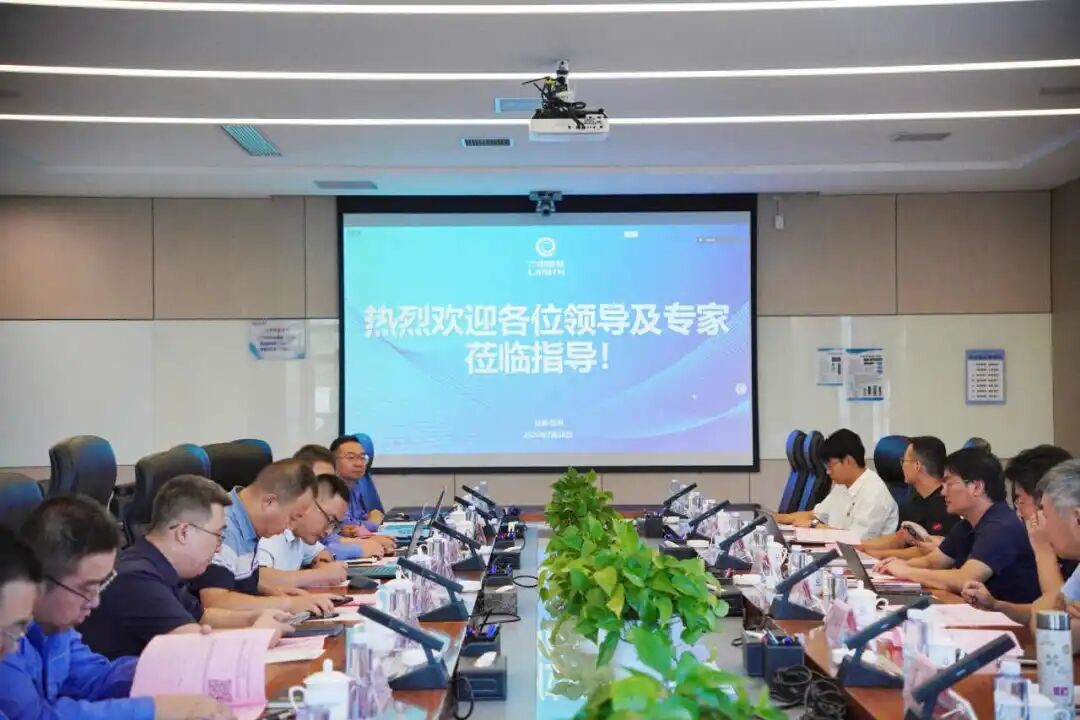
Factory Acceptance Test Completed for TM020 RF Cavity of Super Tau-Charm Facility
The 500MHz TM020 normal-conducting RF cavity, a key component of the STCF accelerator constructed by Lanzhou Taiji, passed its factory acceptance test on July 28, 2026. This marks a significant milestone in the key technology research project for the Super Tau-Charm Facility (STCF), a new-generation electron-positron collider led by the University of Science and Technology of China. The review meeting brought together experts from the Institute of High Energy Physics of the Chinese Academy of Sciences, Shanghai Advanced Research Institute of the Chinese Academy of Sciences, Chongqing University, Tsinghua University, the University of Science and Technology of China, and Dongsheng Fusion (Shanghai) Technology Co., Ltd. The expert panel conducted a comprehensive and rigorous review of the RF cavity (a 1200mm large-diameter cavity), including its structural design, secondary vacuum brazing, precision machining methods, vacuum performance, and cold test results, and unanimously agreed that all indicators met the design requirements. The measured unloaded quality factor (Q₀) reached 56900 (design value 61500), placing its performance at a leading level among similar high-performance normal-conducting RF cavities in China.
2026-07-31