
U.S. Idaho National Laboratory (INL) Develops New Vacuum Attachment for Nuclear Fallout Collection
 Scan to share
Nuclear nonproliferation researchers at Idaho National Laboratory (INL) have invented a specialized attachment compatible with commercial handheld vacuum cleaners, designed to safely and efficiently collect radioactive fallout generated after a nuclear explosion. The intense heat from a nuclear blast lifts ground debris into the atmosphere, where it melts and cools into radioactive glass beads less than 1 millimeter in diameter that fall back to the ground. In the past, nuclear experts undergoing training could only collect samples using brooms, dustpans, and ordinary household battery-powered vacuum cleaners, making manual containment difficult and posing extremely high radiation exposure risks. The INL team began producing prototypes with a thermoplastic 3D printer in 2017, and after multiple rounds of iteration, has now commissioned a company in American Falls, Idaho, to mass-produce the attachment using industrial-grade 3D printing, significantly improving durability.
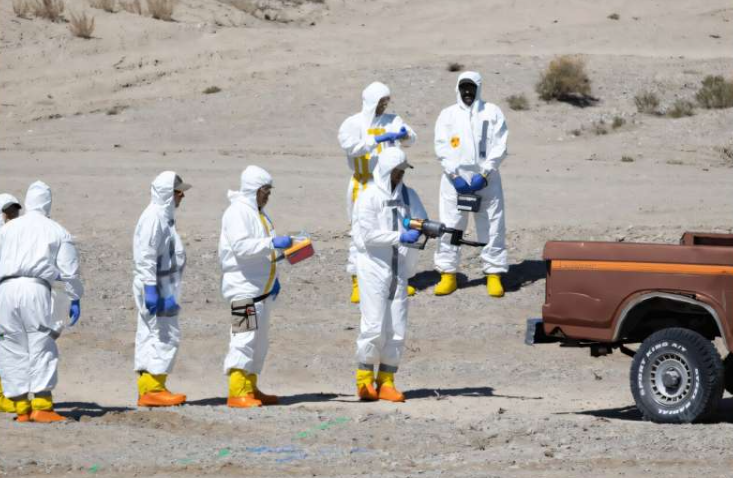
The attachment includes a detachable plastic specimen container and a particulate filter. Fallout particles enter the container through the attachment, and once the twist-on cap is sealed, the sample can be marked as evidence; the filter ensures airflow passes through while preventing radioactive material from entering the vacuum cleaner body, and the one-way valve and cyclone collection design minimize the loss of fine particles. In high-pressure scenarios where personnel wear full protective gear, collection operations that previously took 15 minutes have now been reduced to 5 minutes. The team continues to gather feedback through Department of Energy forensic operations training and conducts hands-on exercises at INL sites using short half-life radioactive simulant materials.
The U.S. nuclear forensics system involves coordination among multiple agencies, including the Department of Energy, the Department of Defense, the Office of the Director of National Intelligence, and the Federal Bureau of Investigation. In the event of a nuclear incident, decision-makers must immediately identify the responsible party. J'Tia Hart, director of INL's Nuclear Nonproliferation Division, noted that the ability to rapidly collect, analyze, and interpret data is critical to preventing subsequent attacks. The attachment is currently in its final refinement stage, with the team conducting additional field testing. Once feedback converges, small-batch production will be initiated to ensure the equipment can be deployed at any time when needed.
Disclaimer: Information republished from partner media, institutions or other websites is provided for reference and communication purposes only. It does not imply endorsement of its views or verification of its accuracy. Please contact us if any content infringes rights or requires correction.