
Unit 4 of Leningrad NPP Phase II completes installation of first major equipment
 Scan to share
Unit 4 of Russia's Leningrad NPP Phase II recently completed the installation of the core melt catcher vessel. This is the first major equipment of the unit to enter the installation stage, and also the first passive safety system equipment to be installed. The steel structure weighs 157 tonnes, and the installation was carried out using a heavy crawler crane, taking about one work shift of approximately 8 hours, nearly 3 months ahead of the original schedule.
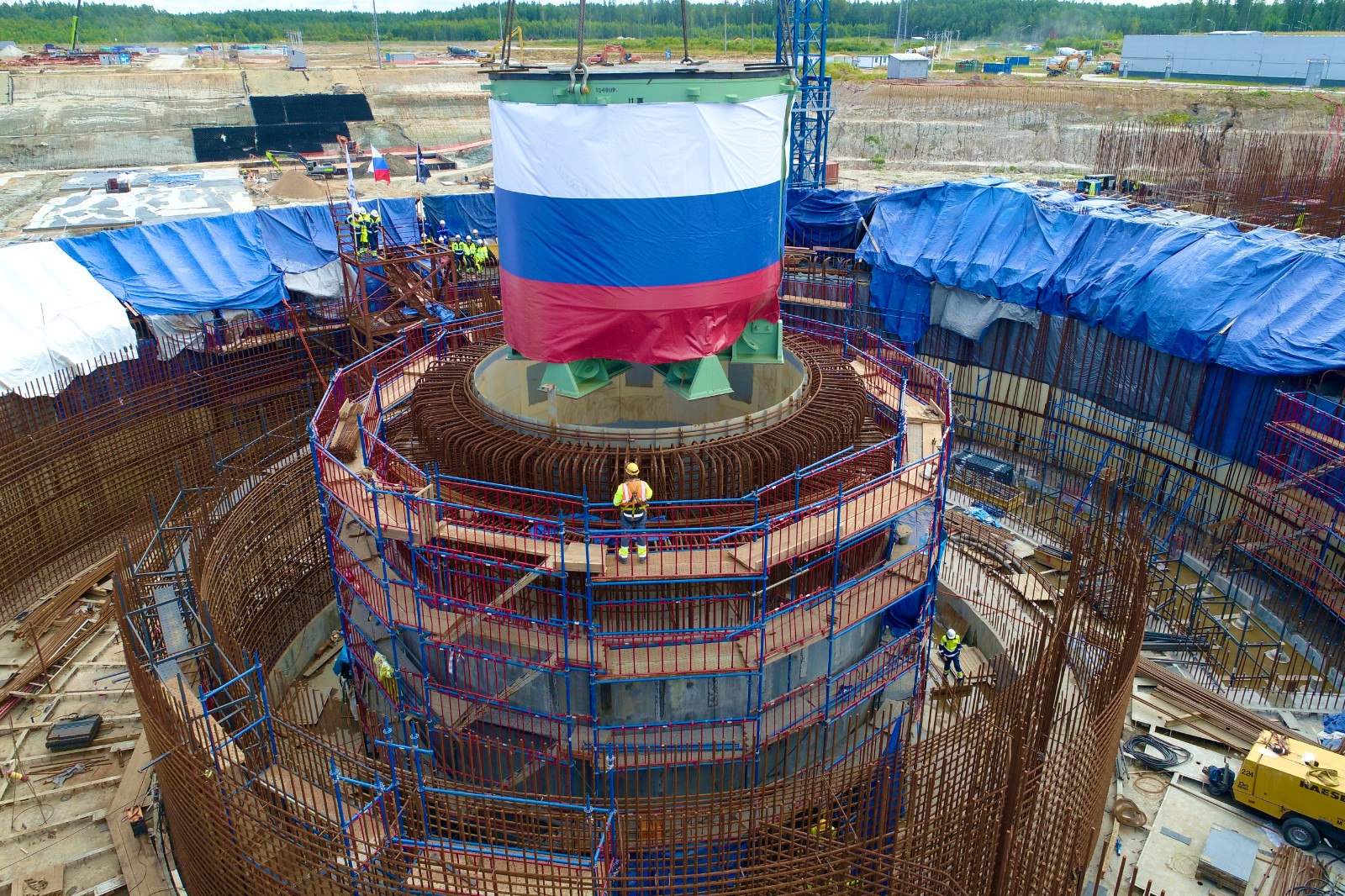
Valery Zhemchugov, Acting Director of Leningrad NPP, stated that the installation of the core melt catcher vessel is a key milestone in the construction of Unit 4, a VVER-1200 pressurized water reactor unit, and that the relevant work was completed in accordance with quality requirements, gaining more time for subsequent reactor building civil and installation works.
The core melt catcher is a multi-component system, and its installation is carried out in stages in line with the progress of the reactor shaft civil structure. In addition to the vessel installed this time, the project also requires the installation of auxiliary equipment including filler blocks, maintenance platforms, cantilever trusses, and bottom plates with a total weight of nearly 600 tonnes. These components have been delivered to the construction site and have passed incoming quality inspection, with all installation work scheduled for completion by 2027.
Konstantin Khudyakov, Head of the Leningrad NPP project at TITAN-2 Group, stated that the positioning of the catcher vessel is only the starting point for a series of subsequent complex installation operations. The company has previously carried out similar work at VVER-1200 units of Leningrad NPP and at relevant nuclear power projects in Turkey, and the installation procedures and key stages have all been refined and arranged in detail.
According to the subsequent construction plan, after the installation of all core melt catcher components is completed, the project team will prepare for the reactor pressure vessel installation in 2029. Construction personnel will also continue rebar tying and concrete pouring of the reactor shaft, install reactor supports and restraint equipment, and carry out construction of the double containment, floor slabs, and internal structures of the reactor building, while progressively installing process systems and safety system equipment. After Unit 4 completes its major construction phases, it will sequentially undergo pre-commissioning procedures such as component testing, commissioning, and trial operation.
Construction of Units 3 and 4 of Leningrad NPP with VVER-1200 reactors was launched in 2022, with the goal of replacing the capacity of the existing Units 3 and 4 with RBMK-1000 reactors. Currently, about 1,500 personnel are involved in the new construction project, and the number will further increase during the peak construction period. The project team estimates that after each VVER-1200 unit enters commercial operation, its annual electricity generation will exceed 8.5 billion kWh.
VVER-1200 belongs to Russia's Generation III pressurized water reactor technology line, with both active and passive safety systems incorporated into the design. The core melt catcher is used to receive, contain, and cool the molten material formed from core materials, reactor internals, and reactor pressure vessel materials under severe accident conditions until it is fully crystallized, making it an important safety equipment of VVER-1200 units. Leningrad NPP currently operates two RBMK-1000 units and two VVER-1200 units, while the decommissioned Units 1 and 2 with RBMK-1000 reactors are in the process of decommissioning.
Disclaimer: Information republished from partner media, institutions or other websites is provided for reference and communication purposes only. It does not imply endorsement of its views or verification of its accuracy. Please contact us if any content infringes rights or requires correction.