
Czech research team develops minimally invasive radiocarbon dating sampling method to aid dating of prehistoric rock art
 Scan to share
A research team at the Czech Radiocarbon Laboratory (CRL) of the Nuclear Physics Institute of the Czech Academy of Sciences has developed a minimally invasive sampling method for dating carbon-based rock art, enabling the acquisition of materials needed for radiocarbon dating with virtually no damage to the rock art's appearance. After sampling, the outline of the rock art remains intact, with only a slight lightening of color in the sampled area.
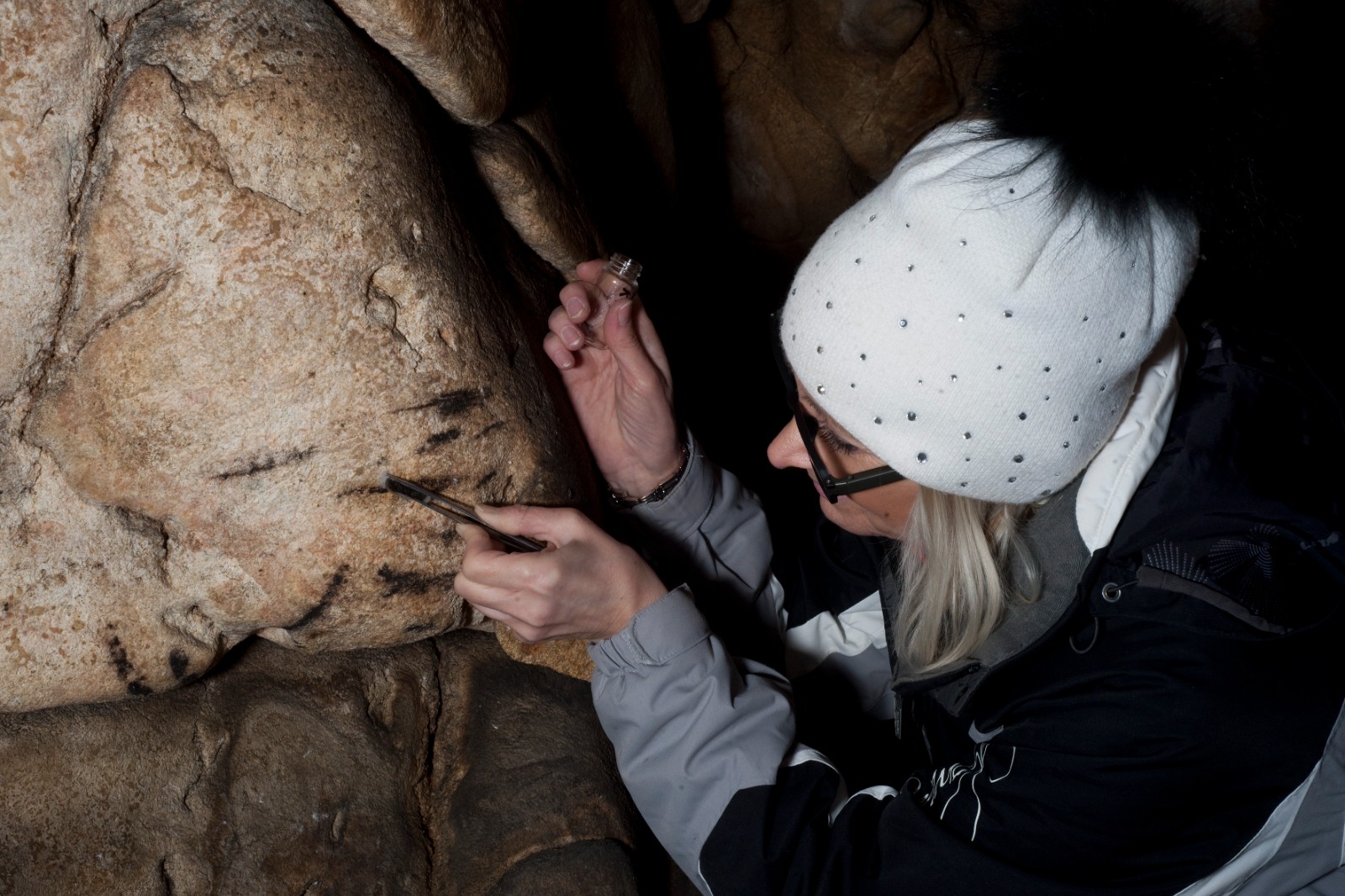
This method provides a new technical pathway for dating cave paintings of historical value. In the past, sampling of cave paintings was often strictly restricted for heritage conservation reasons, which also hindered related chronological determination efforts. The new method, through a gentler sampling approach, enhances the feasibility of dating carbon-based rock art while maximizing the preservation of its scientific and cultural value.
Using this method, CRL researchers, in collaboration with archaeologists and speleologists, analyzed carbon-based cave paintings in the Kateřinská Cave in the Moravian Karst region of the Czech Republic. Radiocarbon dating results indicate that these paintings are approximately 7,000 years old, making them among the oldest known carbon-based cave paintings in the Czech Republic, and providing new empirical evidence for studying early human artistic expression in the region.
As the findings have drawn attention from the academic community, CRL and the Czech Cave Administration will launch a certification course on cave painting sampling in 2026 for Czech and international archaeologists, aimed at helping professionals master safe sampling methods and minimize impacts on cultural heritage in the study of other significant archaeological sites.
Recently, special archaeological tours of the Kateřinská Cave have also brought this research back into the public eye. Visitors can learn about these early cave paintings on site, as well as how researchers determine their age through minimally invasive sampling and radiocarbon dating. CRL stated that this method is expected to be applied to the study of other European sites in the future, further advancing the identification, dating, and preservation of ancient rock art.
Disclaimer: Information republished from partner media, institutions or other websites is provided for reference and communication purposes only. It does not imply endorsement of its views or verification of its accuracy. Please contact us if any content infringes rights or requires correction.