
Germany's eROSITA Second Data Release Unveils Nearly Two Million X-ray Sources
 Scan to share
On July 31, the German eROSITA consortium, led by the Max Planck Institute for Extraterrestrial Physics with participation from the University of Bonn, released its second major public dataset, "eROSITA Data Release 2" (DR2). Built from the first three all-sky survey observations conducted by the eROSITA telescope aboard the Spectrum-Roentgen-Gamma (SRG) mission, this dataset is considered one of the most sensitive and comprehensive X-ray catalogs currently available to the public.
The DR2 main catalog covers the 0.2–2.3 kiloelectron-volt (keV) band in the western hemisphere, containing nearly two million X-ray sources. Among these, over 1.9 million are point-like sources, primarily consisting of stars and actively accreting supermassive black holes; approximately 64,000 are extended sources, including galaxy clusters, nearby galaxies, and supernova remnants. Compared to the first data release, the number of detected sources has roughly doubled, further revealing the distribution characteristics of various types of X-ray celestial objects, ranging from nearby stars to distant active galactic nuclei and giant galaxy clusters.
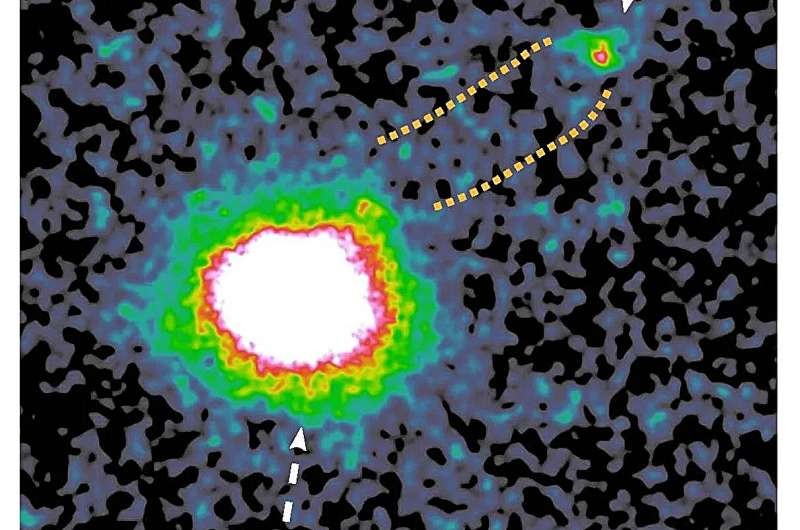
In conjunction with this data release, a research team from the Argelander Institute for Astronomy at the University of Bonn conducted an analysis of the massive galaxy cluster A3266. This cluster is bright in X-ray radiation and is connected to nearby galaxy groups through filamentary gas structures. The researchers focused on analyzing the weaker X-ray emission in the cluster's outskirts to observe the process of matter accreting onto the supermassive galaxy cluster along cosmic filaments.
The research team stated that the observations are broadly consistent with theoretical models of cosmic structure formation, though differences exist in detail. The analysis shows that the gas in the outskirts of A3266 and within its filaments is hotter and denser than expected, while containing relatively lower abundances of heavy elements. The researchers believe these discrepancies will help further test and refine theoretical models of large-scale structure formation in the universe.
The research findings, titled "A Study of Large-Scale Structure Formation in the Environment of A3266: Infalling Galaxy Groups, Filaments, and a Pre-Merger Cold Front," will be published in the journal Astronomy & Astrophysics.
Disclaimer: Information republished from partner media, institutions or other websites is provided for reference and communication purposes only. It does not imply endorsement of its views or verification of its accuracy. Please contact us if any content infringes rights or requires correction.