
Xinjiang's First Domestically Developed SPECT/CT Put into Operation at the First Affiliated Hospital of Shihezi University
 Scan to share
Recently, the mid-term summary meeting of the National Key R&D Program project "Research on Application Solutions for Domestically Developed Dual-Head Single-Photon Imaging Equipment (SPECT)" under the 14th Five-Year Plan, along with the SPECT/CT commissioning ceremony and academic seminar, was held at the First Affiliated Hospital of Shihezi University. The Insight four-dimensional quantitative SPECT/CT from Yongxin Medical was officially installed in Xinjiang, becoming the first domestically developed SPECT/CT system put into clinical use in the region.
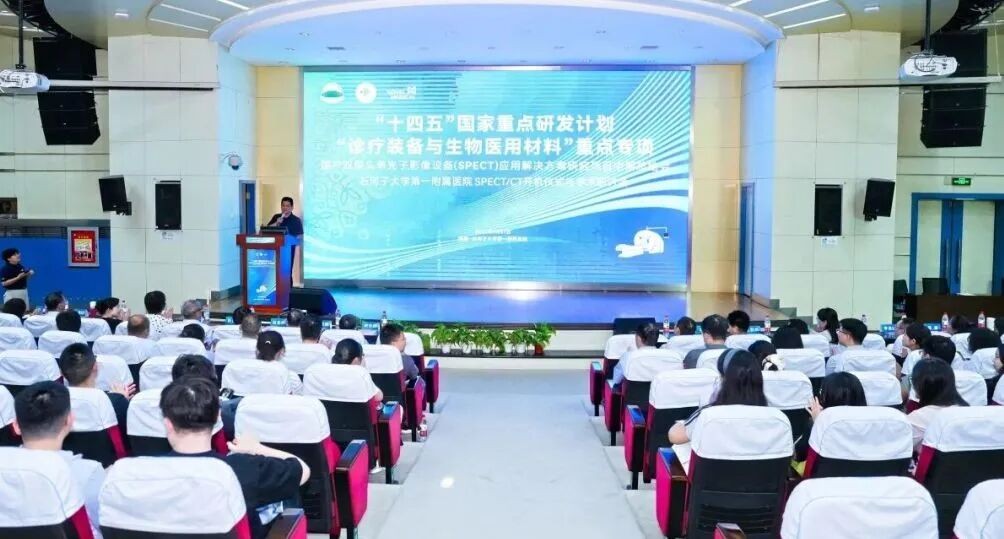
A representative from the First Affiliated Hospital of Shihezi University stated that the commissioning of the domestically developed SPECT/CT will help the hospital improve its precision diagnosis and treatment system in northern Xinjiang and enhance regional nuclear medicine service capabilities. Experts attending the meeting noted that the deployment of this system in clinical practice will help explore the standardized application pathways of SPECT/CT in primary hospitals and accumulate clinical experience in the use of nuclear medicine imaging equipment in western China.
It is understood that the Insight four-dimensional quantitative SPECT/CT is the result of industry-academia-research collaboration between Tsinghua University and Yongxin Medical, with fully independent intellectual property rights. Once operational, the system will serve the early and precise diagnosis of tumors, cardiovascular, urological, endocrine, respiratory, digestive, and skeletal system diseases, and is expected to reduce the burden of cross-regional medical visits for residents in northern Xinjiang.
Following the on-site commissioning ceremony, related academic seminars were held concurrently. Experts in nuclear medicine and medical physics exchanged views on myocardial perfusion imaging, renal dynamic imaging, nuclear medicine applications in thyroid diseases, bone metastasis imaging assessment, clinical experience in radionuclide theranostics, and key points for acceptance of the National Key R&D Program, with a focus on how primary hospitals can leverage the advantages of SPECT/CT technology to better serve clinical diagnosis and treatment.
During the mid-term summary session, the project team reported on its phased progress. Experts attending the meeting provided feedback on key project implementation priorities, clinical application solution research, and future directions. The commissioning of this system is regarded as an important step in the promotion and application of domestically developed high-end nuclear medicine imaging equipment in border regions, and it also lays new practical groundwork for the application of domestically developed SPECT/CT in regional medical institutions.
Disclaimer: Information republished from partner media, institutions or other websites is provided for reference and communication purposes only. It does not imply endorsement of its views or verification of its accuracy. Please contact us if any content infringes rights or requires correction.