
Search Results
Keyword:nuclear medicine imaging
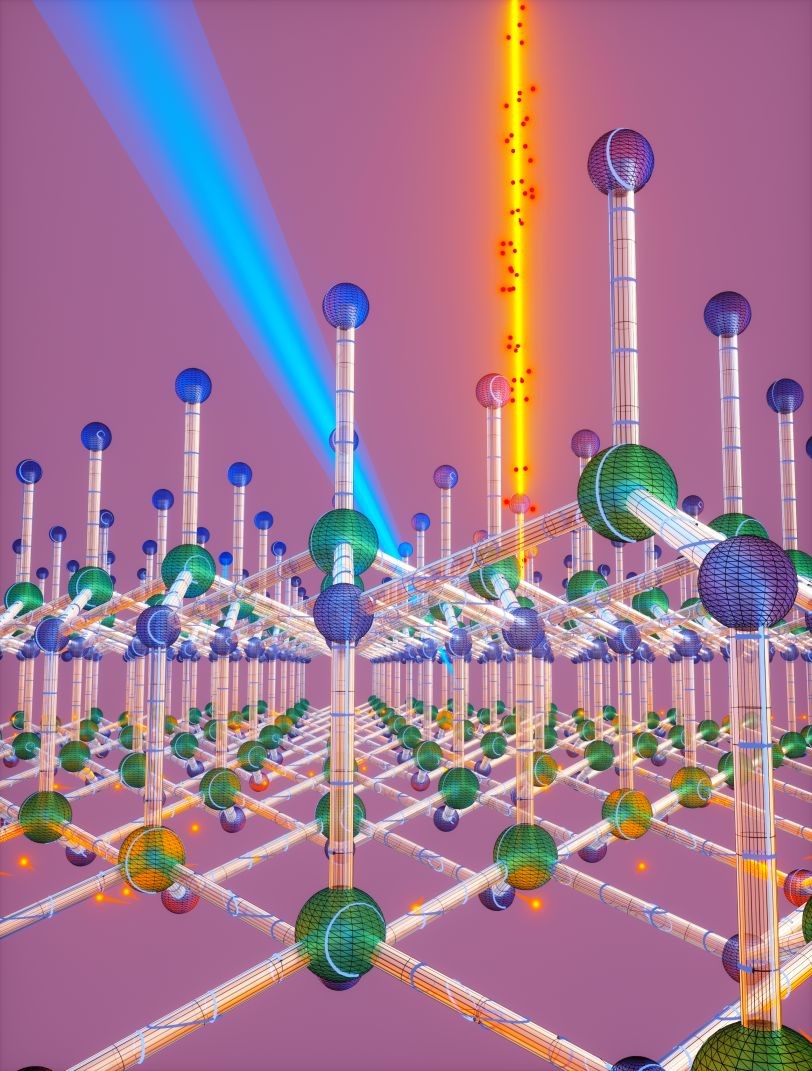
U.S. Research Team Discovers Strong Ultrafast Optical Response Induced by Ionizing Radiation, Potentially Advancing Medical Imaging and Sensing Technologies
September 3 news, Stanford University and the U.S. Department of Energy's SLAC National Accelerator Laboratory research team used ultrafast electron and laser pulses to observe a strong ultrafast optical response triggered by ionization processes in semiconductor materials. The related research has been published in Nature Photonics. The researchers believe this discovery could provide new insights for radiography and sensing technologies, and also offer experimental evidence for understanding the fundamental behavior of materials under high-energy particle interactions. Radiation detection is a key technology in particle accelerators, scientific instruments, medical imaging, and security screening equipment. Existing detectors typically face a trade-off between signal strength and response speed: processes with stronger signals tend to be slower, while those with faster response may produce weaker signals...
2026-09-08
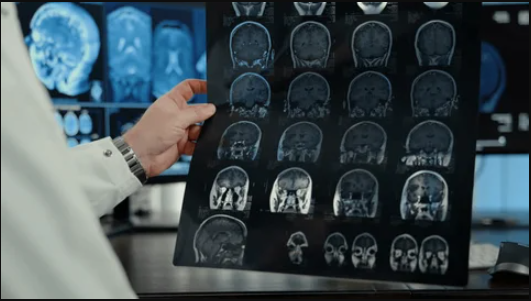
Decoding the Clinical-Radiological Paradox: Brain Network Mechanisms in Spinocerebellar Ataxia Type 3 Revealed
On August 17, the team of Professor Liu Chen and Professor Wang Jian from the Department of Radiology at Southwest Hospital of Army Medical University, in collaboration with Professor Long Zhiliang's team from the Faculty of Psychology at Southwest University, systematically revealed for the first time the micro-level molecular pathological mechanisms underlying macroscopic brain network decoupling in patients with spinocerebellar ataxia type 3 (SCA3) by integrating multimodal magnetic resonance imaging technology with high-resolution micro-biological atlases. This provides a novel perspective and objective imaging targets for resolving the clinical-radiological dissociation challenge in clinical diagnosis and treatment. The findings were published in the internationally leading journal in the field of movement disorders under the title "Putaminal Structure-Function Decoupling as an Early Candidate Imaging Biomarker for Motor Severity in Spinocerebellar Ataxia Type 3."
2026-08-18
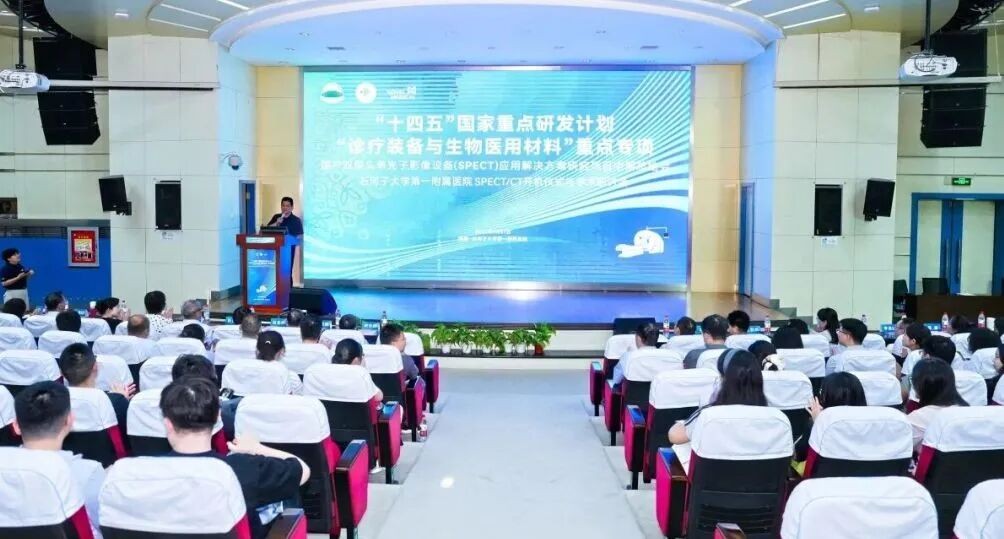
Xinjiang's First Domestically Developed SPECT/CT Put into Operation at the First Affiliated Hospital of Shihezi University
Recently, the mid-term summary meeting of the National Key R&D Program project "Research on Application Solutions for Domestically Developed Dual-Head Single-Photon Imaging Equipment (SPECT)" under the 14th Five-Year Plan, along with the SPECT/CT commissioning ceremony and academic seminar, was held at the First Affiliated Hospital of Shihezi University. The Insight four-dimensional quantitative SPECT/CT from永新医疗 (Yongxin Medical) was officially installed in Xinjiang, becoming the first domestically developed SPECT/CT system put into clinical use in the region. A representative from the First Affiliated Hospital of Shihezi University stated that the commissioning of the domestically developed SPECT/CT will help the hospital improve its precision diagnosis and treatment system in northern Xinjiang and enhance regional nuclear medicine service capabilities. Experts attending the meeting noted that the deployment of this system in clinical practice will help explore the standardized application pathways of SPECT/CT in primary hospitals and accumulate clinical experience in the use of nuclear medicine imaging equipment in western China.
2026-08-03