
Large Structure for CMS Future High-Granularity Calorimeter Passes Rigorous Cold Tests
 Scan to share
A key engineering test for the future High-Granularity Calorimeter (HGCAL) of the CMS experiment at CERN has recently made progress. One of the largest HGCAL structures has completed a series of rigorous cold tests, during which no overheating, condensation, or leakage was recorded on the outer panels, laying the groundwork for its future service at the High-Luminosity Large Hadron Collider (HL-LHC).
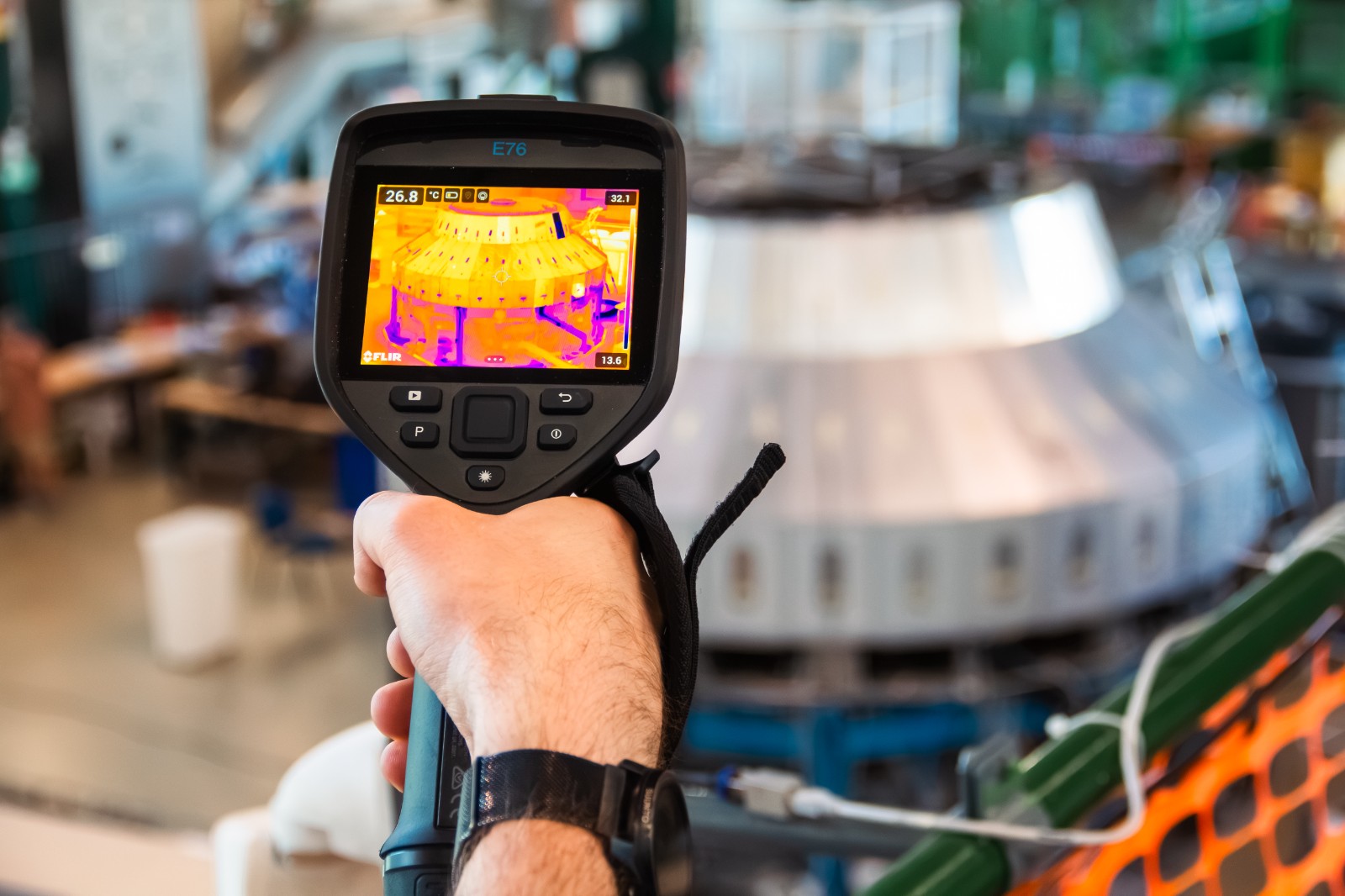
HGCAL will replace the existing endcap calorimeters of the CMS experiment to reconstruct particle showers with greater precision under HL-LHC operating conditions. The structure tested this time is the first of two large stainless steel absorber structures. By design, the active elements of HGCAL will be installed within the absorber structures and must maintain long-term stable performance in a cryogenic environment.
The cold test required the interior of the structure to be maintained at -35°C while the exterior remained near room temperature. To achieve localized temperature control, the outer surface of the structure was covered with 408 thermal insulation screens, each with independently adjustable temperature. During the test, the team deployed temperature and humidity sensors across the structure's surface to verify the operation of the insulation screens and the uniformity of overall cooling.
Cooling approximately 170 tons of steel to -35°C took more than four days. The coolant circulated through specially fabricated aluminum plates placed between the steel plates; the insulation screens consisted of aluminum plates, carbon fiber panels, and heating foils. Throughout the cooling process, the team continuously controlled and monitored the operation of each insulation screen, and after completing the assessment, allowed the absorber to warm up slowly.
To prevent condensation from forming inside the detector, extremely dry air was continuously flushed through the structure to maintain a low-humidity environment, protecting the sensitive electronic components within. The test was carried out by a team of 22 members working in shifts, and the measurement data will be compared against detailed computer simulations of the detector. The team stated that if the measured results match the model, it will further validate the reliability of HGCAL operating as intended.
Disclaimer: Information republished from partner media, institutions or other websites is provided for reference and communication purposes only. It does not imply endorsement of its views or verification of its accuracy. Please contact us if any content infringes rights or requires correction.