
German Science and Humanities Council Supports German Participation in the LEGEND-1000 Neutrinoless Double Beta Decay Experiment
 Scan to share
On July 27, 2026, the German Science and Humanities Council expressed its support for German participation in the LEGEND-1000 experiment. The project had previously passed scientific evaluation and was deemed significant for a broad research community in the fields of particle physics and nuclear physics.
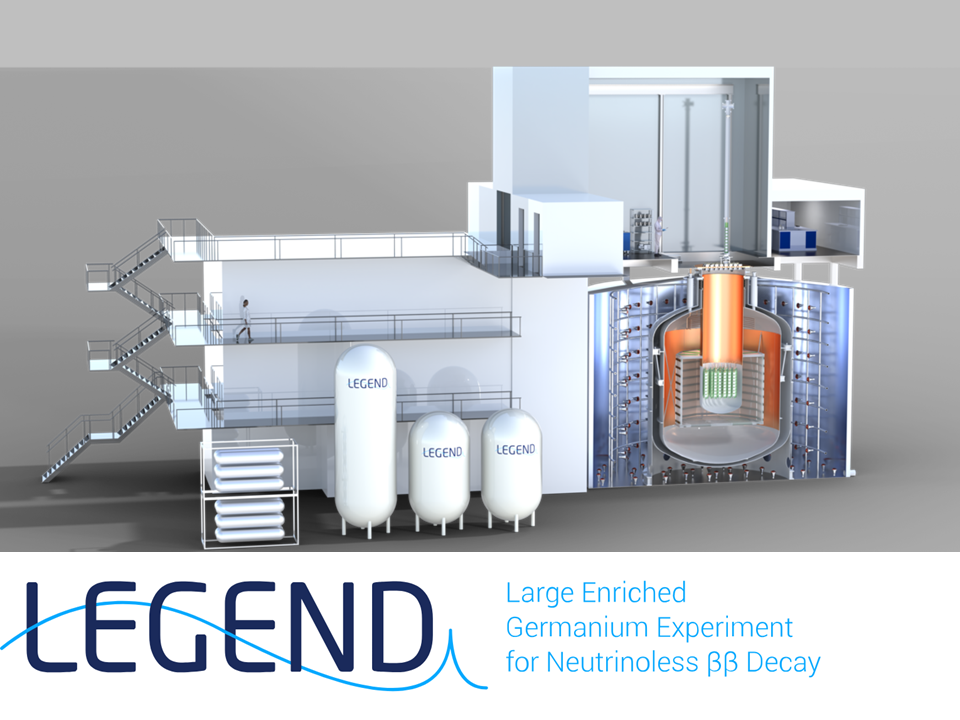
LEGEND-1000 is the next phase of the large-scale enriched germanium neutrinoless double β decay experiment, planned to be constructed by an international collaborative team at the underground laboratory of the Gran Sasso National Laboratory in Italy. German participating institutions include the Max Planck Institute for Nuclear Physics in Heidelberg and the Technical University of Munich, with project leaders being Professor Susanne Mertens and Professor Stefan Schönert, respectively.
According to the project plan, LEGEND-1000 will use a total of approximately 1,000 kilograms of high-sensitivity germanium detectors, with a primary focus on searching for neutrinoless double β decay signals from germanium-76. If this decay process is confirmed, it would indicate that neutrinos may be their own antiparticles and would help explain fundamental scientific questions such as the asymmetry between matter and antimatter in the universe.
In addition to its core research objectives, LEGEND-1000 will also be used to explore dark matter, astrophysical neutrinos, rare decay processes, and other physical phenomena that may lie beyond the Standard Model. The project builds upon the LEGEND-200 and GERDA experiments, the construction and development of which received significant support from German research teams.
In its statement, the German Science and Humanities Council noted that the LEGEND-1000 experimental facility will drive the development of key technologies such as high-sensitivity detectors, cryogenic systems, and low-radiation materials. These technologies hold potential applications in areas including environmental monitoring, radiation detection, medical imaging, and quantum computing in the future. Several German and European companies are already involved in the development and installation of this research infrastructure.
Disclaimer: Information republished from partner media, institutions or other websites is provided for reference and communication purposes only. It does not imply endorsement of its views or verification of its accuracy. Please contact us if any content infringes rights or requires correction.