
Busan Gijang Southeast Radiation Medical Science Industrial Complex Simultaneously Advances Proton and Heavy Ion Therapy Centers
 Scan to share
Within the Southeast Atomic Energy Medical Institute (Southeast Atomic Energy Medical Institute) in Gijang-gun, Busan, the proton therapy center and heavy ion therapy center projects are being advanced simultaneously, expected to form an “integrated cancer treatment hub”, alleviate medical concentration in the capital region, and attract patients from other regions and overseas.
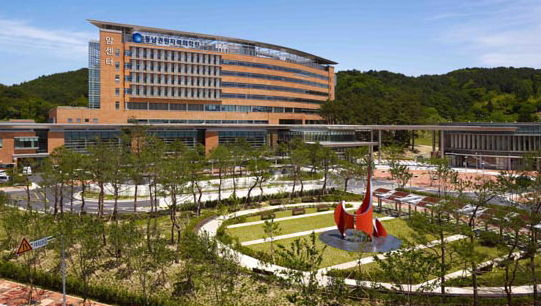
Busan's first proton accelerator project can also be used for industrial purposes, benefiting regional high-tech industries and investment attraction. According to Busan City and the Busan Institute of Science and Technology Advancement (BISTEP) on August 2, the Southeast Proton Therapy Center construction project will officially break ground in the second half of this year; BISTEP recently completed the commissioned study on “Establishment Strategy and Implementation Plan for the Southeast Proton Therapy Center” (executed by the Southeast Atomic Energy Medical Institute), and the city and BISTEP envision locating the center within the Southeast Atomic Energy Medical Institute in Gijang-gun. Proton therapy is effective for pediatric cancer, head and neck cancer, and recurrent cancer, as it can concentrate radiation on the lesion with minimal residual exposure behind it, helping reduce long-term side effects and the risk of secondary cancers decades later; in 2024, 99,833 cancer patients from non-capital regions sought treatment in the capital region, a significant increase from 67,242 in 2014, and despite a population decline of approximately 400,000 in the Southeast region over the same period, “medical migration” to the capital region has risen.
Under the public platform concept, the Southeast proton accelerator (equipment within the treatment center) can be deployed for domestic aerospace and semiconductor sector validation: Sacheon Aerospace Administration, Korea Aerospace Industries, and Changwon Hanwha Aerospace can conduct ground-based space radiation validation nearby; power semiconductor companies clustered in Gijang, as well as Samsung Electronics and SK Hynix, can also complete internal radiation validation without going overseas. The project is divided into Phase 1 (years 1–3) and Phase 2 (years 4–7). Gijang-gun and the Busan mayor have long prepared the general medical science industrial complex, attracting power semiconductor companies and establishing the Southeast Atomic Energy Medical Institute, leveraging the heavy ion and proton centers to yield greater results in investment attraction.
According to Busan City and Seoul National University Hospital, the Seoul National University Hospital Gijang Heavy Ion Therapy Center (adjacent to the Southeast Atomic Energy Medical Institute) targets operation by the end of next year (2027); total project cost is 292.6 billion KRW (139.3 billion national funds, 38.4 billion city funds, 38.4 billion county funds, 76.5 billion from Seoul National University Hospital), on a site of 81,735 m² with a building area of 13,657 m² (2 basement levels–2 above-ground levels). The nation's first heavy ion center was pioneered by Yonsei Severance Hospital, currently operating one fixed-type and one rotating-type unit, with an 11-month waitlist for prostate cancer and 9 months for pancreatic, liver, and lung cancer; Severance plans to add one rotating-type unit. Once the Gijang center opens, it can attract patients waiting in the capital region; heavy ion and proton therapies are complementary and can be utilized in an integrated manner. Southeast Atomic Energy Medical Institute Director Jeong Seung-pil stated that with both centers in place, Gijang will become one of the few locations globally operating proton and heavy ion therapy at the same site (currently only Japan, Germany, Italy, China, and Austria have such co-located operations, totaling five sites).
Disclaimer: Information republished from partner media, institutions or other websites is provided for reference and communication purposes only. It does not imply endorsement of its views or verification of its accuracy. Please contact us if any content infringes rights or requires correction.