
First H-mode plasma with ELMs achieved on WEST
 Scan to share
Recently, the C13 experimental campaign on the French tungsten tokamak WEST achieved a major breakthrough, successfully producing H-mode plasmas with Edge Localized Modes (ELMs). This is a key step in preparing for plasma scenarios relevant to the International Thermonuclear Experimental Reactor (ITER) and future fusion power plants.
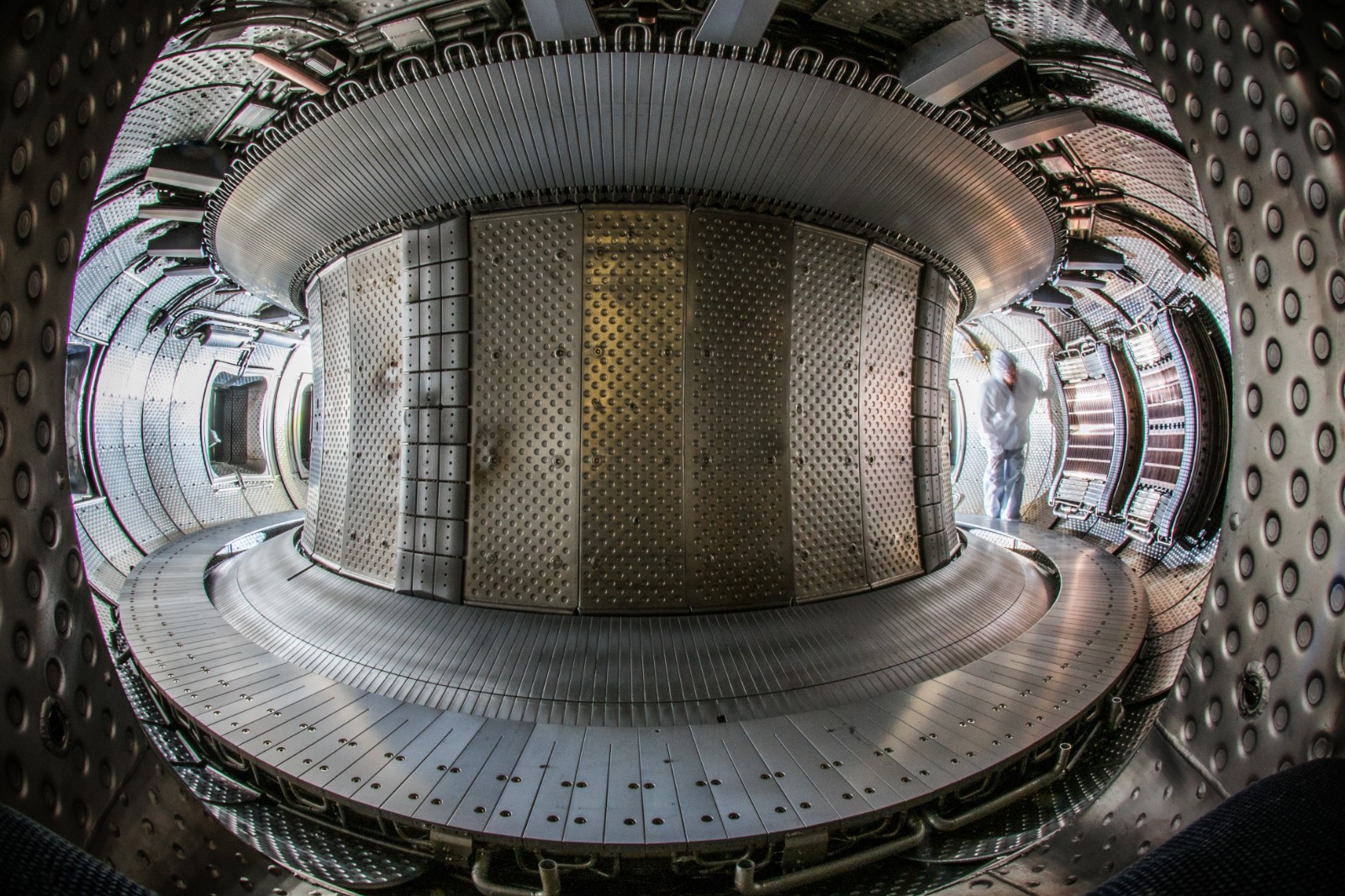
Over the past nearly three months, scientists, engineers, and technicians from the French Alternative Energies and Atomic Energy Commission (CEA) at Cadarache, together with international collaborators, conducted the C13 experimental campaign. This campaign aimed to address a series of key scientific and technical challenges in magnetic confinement fusion, covering the behavior of plasma-facing components and advanced plasma scenarios.
The experiments focused on exploring tungsten plasma-wall interactions, radiofrequency heating, heat fluxes on plasma-facing components, erosion processes, power balance, and plasma diagnostics. These research activities generated a large amount of data, which will be used to develop predictive models and prepare for ITER operation.
The key achievement of this campaign is the first successful production of H-mode plasmas with Edge Localized Modes (ELMs) on WEST. H-mode is the high-confinement operating regime set for ITER to achieve its fusion performance goals. While this regime significantly improves plasma confinement, it is also accompanied by the generation of ELMs—energy and particle pulses released at the plasma edge that impose severe heat loads on plasma-facing components.
Therefore, achieving this operating regime on WEST provides a valuable opportunity to study plasma-wall interactions under conditions closer to those expected in ITER. This achievement also lays the foundation for a key element of the WEST scientific program: long-duration transient heat flux testing of ITER divertor components in a tungsten environment similar to that of ITER. In the final phase of the experiments, H-mode plasmas were obtained with a power range of 3 to 3.8 megawatts and a line-averaged density range of 5.4 × 10¹⁹ to 7.2 × 10¹⁹ m⁻³. Researchers successfully observed and characterized Edge Localized Modes (ELMs) using various diagnostic methods, including interferometry, Langmuir probes, and high-speed visible and infrared cameras.
This milestone was made possible by extensive machine conditioning work carried out throughout the campaign, including determining the minimum wall boronization required for restart after venting, inter-pulse wall conditioning using Ion Cyclotron Resonance Heating (ICRH), and boronization using ICRH. These efforts collectively advanced WEST into a new operational phase and completed the planned scientific program.
Beyond the final results, the C13 campaign also demonstrated the strength of the WEST project as an international experimental platform, attracting researchers from CEA Cadarache and collaborating laboratories worldwide. The data obtained from this campaign will undergo detailed analysis, which is expected to contribute to future scientific publications, validate plasma-facing component performance, and fully prepare for ITER operation.
Disclaimer: Information republished from partner media, institutions or other websites is provided for reference and communication purposes only. It does not imply endorsement of its views or verification of its accuracy. Please contact us if any content infringes rights or requires correction.