
UK's MAST Upgrade sets plasma pressure record in fifth experimental campaign
 Scan to share
The UK Atomic Energy Authority (UKAEA) has completed the fifth experimental campaign of its flagship fusion experiment, MAST Upgrade. The campaign, conducted between 2025 and 2026 at the Culham Campus in Oxfordshire, UK, produced over 1,100 plasma pulses and achieved the device's highest-ever plasma pressure while overcoming plasma instability issues.
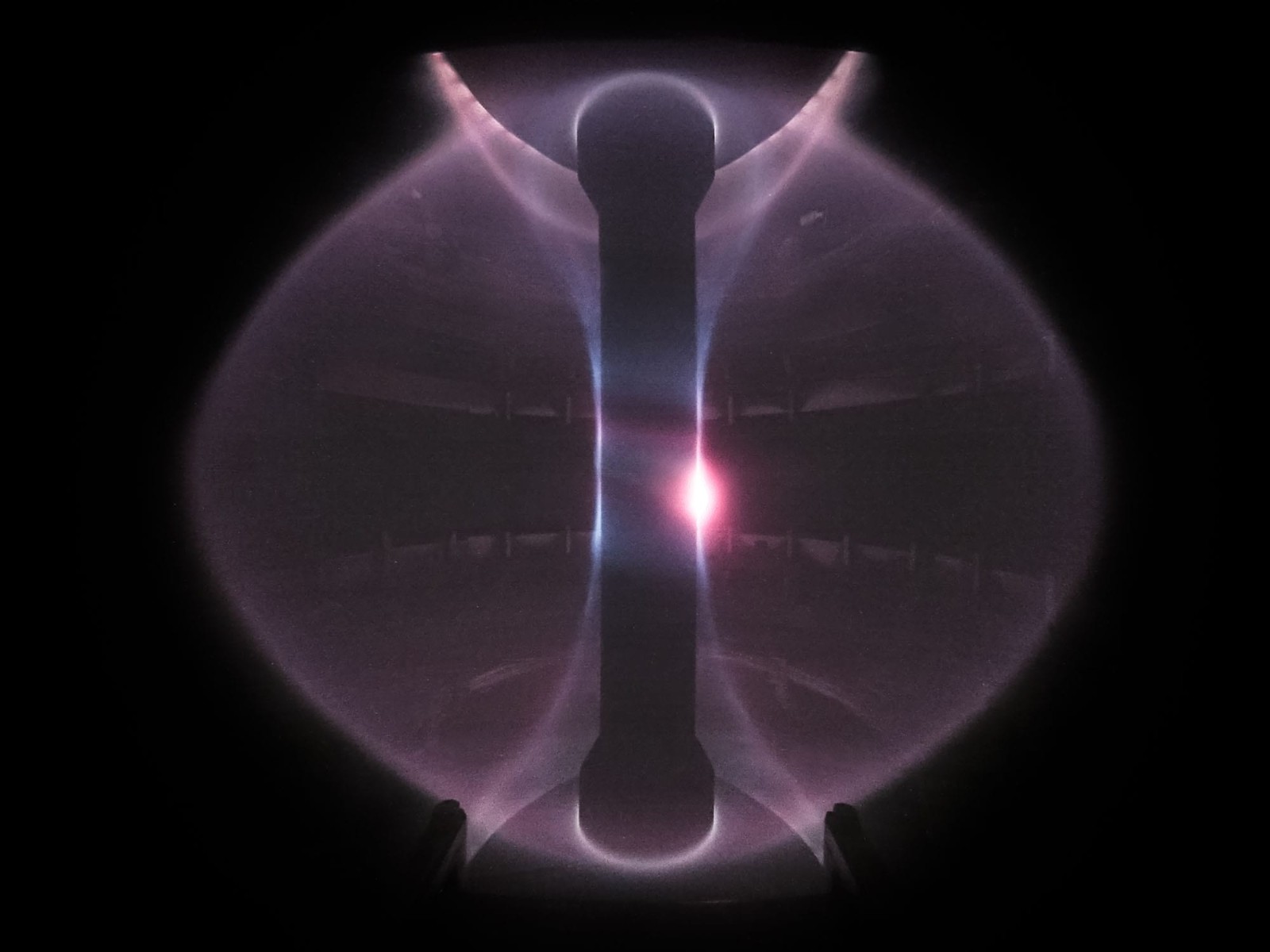
In fusion devices, hydrogen isotopes must be heated, compressed, and confined under extremely high temperatures and pressures. The higher the plasma density and temperature, the stronger the fusion reaction, and high-pressure plasmas are also closer to the operating conditions required for future commercial fusion power plants. UKAEA stated that the results of this campaign represent a key milestone in its 2026—2030 strategy, which aims to establish the scientific basis for fusion to become a deployable low-carbon energy source.
One of the core objectives of this campaign was to suppress "edge localized modes (ELM)" instabilities. ELMs are sudden burst phenomena at the plasma edge that can cause a drop in plasma pressure and release up to one-tenth of the stored energy in a single event, potentially damaging the vessel walls and exhaust components over time. If not effectively controlled, frequent wall damage would significantly increase the maintenance difficulty and cost of future fusion power plants.
Building on previous experiments, the MAST Upgrade team employed the quasi-continuous exhaust (QCE) regime and resonant magnetic perturbation (RMP) ELM suppression, applying three-dimensional magnetic fields via coils to reduce plasma edge pressure and maintain stability. The team also achieved two stable operating regimes: the quiescent H-mode (QH-mode) and the I-mode. These improved confinement regimes can enhance energy confinement performance while mitigating the impact of large ELMs.
The campaign also developed a plasma position control technique. Researchers identified minor positional imbalances in real time by measuring visible light emitted by deuterium in the device's upper and lower outer divertors, and used this information for control. UKAEA believes that such automated, real-time control methods are of significant importance for future fusion power plant operation, as plants will need to maintain stable operation with minimal continuous human intervention.
In terms of heat load control, the team used MAST Upgrade's Super-X divertor to study the management of high heat and particle exhaust. Experiments showed that injecting small amounts of nitrogen into the plasma edge allows the plasma to release most of the exhaust energy in the form of light, achieving volumetric dissipation before the heat reaches the vessel walls and divertor, thereby reducing peak heat flux and minimizing surface erosion. This research also represents the first detailed study of such interactions within a tightly baffled Super-X double-null geometry in a spherical tokamak.
This campaign also explored "negative triangularity" plasma shapes. This configuration can support high-power operation without ELMs and is currently attracting attention from the international fusion research community.
James Harrison, UKAEA's MAST Upgrade Science Lead, stated that the team achieved multiple stable high-performance plasma regimes, including QH-mode, QCE-mode, and I-mode, and adopted new plasma position control techniques, with results that will influence the design of future fusion power plants.
These experimental results were presented at the 2026 European Physical Society (EPS) Conference on Plasma Physics, hosted by UKAEA in Edinburgh, and are being shared with the international fusion community to support the design and operation of the UK's Spherical Tokamak for Energy Production (STEP) programme and the International Thermonuclear Experimental Reactor (ITER).
MAST Upgrade will continue to be enhanced this year, including the addition of two new neutral beam injectors, doubling neutral beam heating capability, and the installation of an electron Bernstein wave (EBW) system, adding 1.6 MW of heating power. The enhancement programme is expected to conclude in 2027, with the sixth experimental campaign planned for 2028, focusing on STEP-relevant research topics.
Disclaimer: Information republished from partner media, institutions or other websites is provided for reference and communication purposes only. It does not imply endorsement of its views or verification of its accuracy. Please contact us if any content infringes rights or requires correction.