
U.S. Enhances Virginia-Class Nuclear Submarines
 Scan to share
The recent U.S. efforts to enhance and reposition the Virginia-class nuclear submarines have focused primarily on expanding the platform's own capabilities. Certain batches of Virginia-class submarines are being reclassified from attack submarines (SSN) toward cruise missile submarines (SSGN), with the addition of the Virginia Payload Module (VPM) extending the hull and adding large-diameter vertical launch tubes, increasing the per-boat “Tomahawk” cruise missile payload from 12 to approximately 40, while also accommodating Conventional Prompt Strike hypersonic missiles and unmanned underwater vehicles.
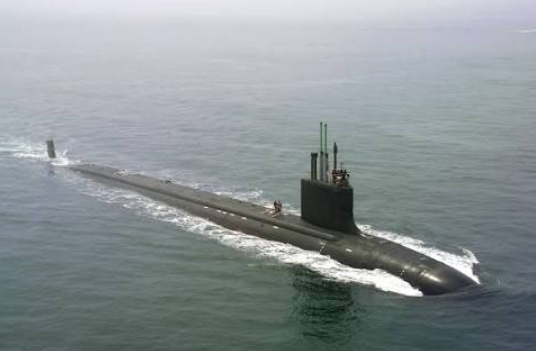
This modification directly fills the firepower gap left by the retiring Ohio-class SSGNs, positioning this submarine class as a covert, long-range conventional precision-strike node at sea. As nuclear-powered submarines, the Virginia class relies on the S9G pressurized water reactor for extended underwater endurance without the need for frequent surfacing to ventilate, and combined with quiet propulsion and hull stealth design, it offers high survivability and surprise capability.
At the nuclear strategy level, the recent discussions within the U.S. Department of Defense and Strategic Command on “reasonable nuclear options” involve inserting an intermediate tier between low-yield tactical nuclear weapons and existing strategic nuclear forces. The reclassification of the Virginia-class SSGN is incorporated into this capability spectrum: it integrates conventional precision strike, theater firepower projection, and potential limited nuclear engagement options onto the same class of platform, providing decision-makers with a continuous range of means—from non-nuclear conventional strikes to limited nuclear responses—at every stage of crisis escalation. What Strategic Command calls “escalation maneuver” refers to the design of a multi-layered response system covering non-kinetic means, conventional capabilities, constrained nuclear engagement, and high-intensity warfare.
Furthermore, the U.S. Navy is simultaneously advancing the integration of non-nuclear payloads (conventional strike munitions, reconnaissance unmanned vehicles) with the nuclear-powered platform itself, enabling the Virginia class not only to undertake traditional anti-submarine and land-attack missions but also to serve as a testbed for next-generation vertical launch systems, modular payloads, and command-and-control interfaces. Overall, the enhancement of this submarine class represents an equipment and doctrinal evolution that combines the nuclear-powered submarine platform, conventional firepower expansion, and the reinforcement of the intermediate tier in nuclear doctrine, with the focus on expanding the platform's own capability spectrum rather than external point-specific deployments.
Disclaimer: Information republished from partner media, institutions or other websites is provided for reference and communication purposes only. It does not imply endorsement of its views or verification of its accuracy. Please contact us if any content infringes rights or requires correction.