
DR Congo Government Responds to Research Allegations of "Uranium" in Cobalt Products, Announces Re-Testing and IAEA Consultations
 Scan to share
The government of the Democratic Republic of the Congo (DRC) has recently responded to a study suggesting that its cobalt products may contain traces of uranium. The study, published in the journal *Nature Communications* on July 30, 2026, reported the presence of uranium traces in some exported cobalt hydroxide products from the DRC. As cobalt is a critical raw material in the global new energy battery supply chain, this claim quickly drew external attention to mineral product safety, environmental risks, and supply chain credibility.
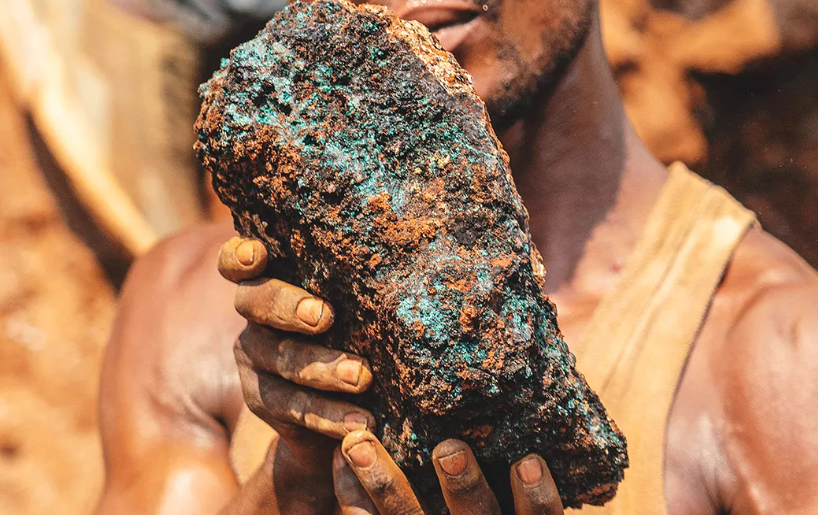
In an official statement released on August 7 by the Ministry of Communication and Media, the DRC government stated that the allegations should be understood within a scientific and geological context. The government emphasized that the natural co-occurrence of uranium in copper-cobalt deposits in Lualaba Province and Haut-Katanga Province is a geological phenomenon known for over a century, and is neither abnormal nor the result of artificial addition or deliberate manipulation. The government also noted that, under relevant International Atomic Energy Agency standards, if uranium exists only in trace amounts in ores or cobalt concentrates and is not specifically processed for uranium extraction, it should generally not be regarded as nuclear material.
In response to this sensitive issue, the DRC government announced that it will conduct counter-tests on representative samples of exported cobalt hydroxide. The relevant analyses will be carried out jointly by a domestic laboratory and a certified international laboratory to verify the reliability of the study's conclusions. Meanwhile, the government will establish a cross-ministerial working group to investigate the claims within 60 days, assess potential health and environmental risks, and propose corresponding measures.
The government also plans to initiate consultations with the International Atomic Energy Agency to secure technical support under existing cooperation mechanisms. The DRC has committed to publishing the investigation results in accordance with the law, emphasizing that transparency is crucial to maintaining the credibility of the country's mining supply chain. The government also believes that the study in question was not based on direct testing of export shipments but relied on theoretical model calculations, which carry significant uncertainty, and therefore independent and comparative scientific testing is necessary for verification.
In the statement, the DRC government reaffirmed its continued commitment to international obligations in the field of nuclear non-proliferation, and to prioritizing the protection of miners, communities around mining areas, and the environment. The government also stressed that the DRC exercises sovereignty over its natural resources, and that its cobalt resources will continue to be mined and exported in accordance with existing ethical, environmental, and safety standards. This response demonstrates the DRC's desire to stabilize international market confidence in its cobalt supply chain while safeguarding the country's mining interests.
Disclaimer: Information republished from partner media, institutions or other websites is provided for reference and communication purposes only. It does not imply endorsement of its views or verification of its accuracy. Please contact us if any content infringes rights or requires correction.