
Kenya seeks IAEA review support to advance nuclear power project by 2034
 Scan to share
Kenya is seeking a new round of review and expanded technical support from the International Atomic Energy Agency (IAEA) to advance its long-planned nuclear power program toward construction readiness by 2034.
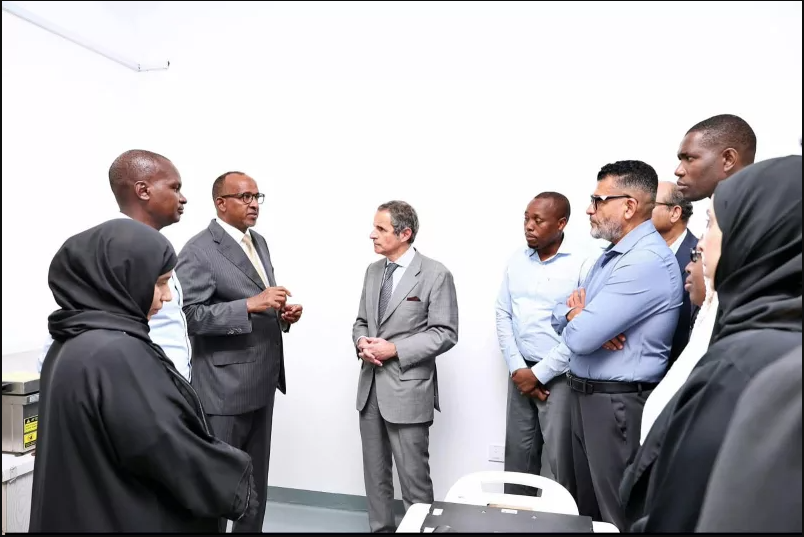
According to relevant meeting briefings, Kenya hopes the IAEA will conduct a Phase 2 Integrated Nuclear Infrastructure Review (INIR) mission in the fourth quarter of 2026, along with support in training nuclear engineers and nuclear scientists. Kenya also plans to leverage the IAEA's 70th General Conference, to be held in Vienna from September 14 to 18, to secure advisory services, skills training, and technical assistance for advancing its nuclear power project and nuclear research reactor construction.
Kenya is expected to send a high-level delegation of approximately 30 people to Austria for the conference, including cabinet ministers, members of relevant parliamentary committees, and technical officials from multiple sectors. Through this conference, the country hopes to transition its nuclear energy program from the institutional preparation phase to the project implementation phase, and further consolidate the institutional, regulatory, and technical foundations for its first nuclear power plant.
Under Kenya's current vision, the first nuclear power plant is planned to be commissioned in 2034. Earlier proposals have suggested building a nuclear power plant in Siaya with an investment of approximately 500 billion Kenyan shillings. Kenya underwent its first INIR review in 2015 and a follow-up review in 2021. The 2021 review found that Kenya had made progress in nuclear policy, legislation, regulatory body development, and coordination among relevant institutions.
Another IAEA mission in 2025 focused on the institutional arrangements for Kenya's first nuclear power plant and provided recommendations on identifying the owner and operator. Following the May 2025 Owner-Operator Mission, which provided advice on the responsibilities, roles, and organizational requirements of the future operator, Kenya decided to designate Kenya Electricity Generating Company (KenGen) as the owner and operator of its first nuclear power plant.
Over the past decade or more, Kenya has continuously built the institutional framework needed for nuclear energy development. The Nuclear Power and Energy Agency (NuPEA) was established in 2019 to implement the nuclear energy program; the Kenya Nuclear Regulatory Authority (KNRA) was also established that year to assume regulatory responsibilities; and KenGen was designated in 2025 to serve as the owner-operator of the first nuclear power plant.
The shortage of skilled personnel remains one of the main constraints facing Kenya's nuclear energy program. The briefing indicates that Kenya hopes the IAEA will continue to support capacity building to alleviate the shortage of nuclear engineers and scientists. Between 2016 and 2026, a total of 263 Kenyan personnel benefited from medium- and long-term technical capacity development programs, including 139 who participated in fellowship programs and 61 who undertook scientific visits.
Kenya and the IAEA signed a Memorandum of Understanding in May 2026, establishing a framework for cooperation in energy planning, modeling and monitoring, nuclear infrastructure development, and professional training. The agreement also includes capacity building around small modular reactor technology.
IAEA Director General Rafael Mariano Grossi stated that Kenya needs to select technologies and contractors suited to its needs that can support its long-term energy goals. He also invited Kenya's Cabinet Secretary for Energy and Petroleum, Opiyo Wandayi, to attend the International Ministerial Conference on Nuclear Energy, to be held in Incheon, South Korea, from October 27 to 29, 2026.
In addition to the nuclear power project, Kenya also plans to build a nuclear research reactor by 2030 and hopes to secure IAEA support in advisory services and capacity building. Kenya underwent an IAEA Research Reactor Infrastructure Mission in 2023, which found that the country had made notable progress in developing the relevant national infrastructure.
Kenya is also seeking additional support in nuclear technology applications. The country has received two linear accelerators under the "Rays of Hope" initiative for cancer treatment centers in Nakuru and Mombasa, with the equipment delivered in 2024 and commissioned in May 2026. Kenya now hopes to obtain five additional linear accelerators and to be recognized by the IAEA as a regional center for cancer diagnosis and treatment training.
Kenya also plans to build its first food irradiation facility to reduce post-harvest losses and enhance food security, and hopes to become a pilot country under the IAEA and Food and Agriculture Organization of the United Nations (FAO) "Atoms4Food" initiative.
Disclaimer: Information republished from partner media, institutions or other websites is provided for reference and communication purposes only. It does not imply endorsement of its views or verification of its accuracy. Please contact us if any content infringes rights or requires correction.