
Arab League Holds Second Technical Committee Meeting on Nuclear and Radiation Emergency Preparedness Roadmap, Focusing on Cross-Border Coordination and Alignment with IAEA Obligations
 Scan to share
The General Secretariat of the League of Arab States held its second open-ended technical committee meeting at its headquarters from August 9 to 10, focusing on following up on the implementation of the "Arab Cooperation Roadmap for Nuclear and Radiation Emergency Preparedness and Response." The meeting was attended by representatives of Arab member states, the Arab Atomic Energy Agency (AAEA), and relevant Arab and international organizations, indicating that this issue has risen from mere technical cooperation to an important component of regional security governance.
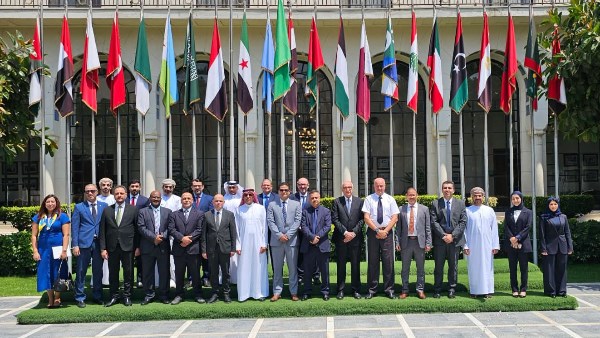
The core objective of the meeting is to enhance the coordination capacity and response capability of Arab countries in the face of nuclear accidents and radiological emergencies. As nuclear technology continues to expand in energy, medical, industrial, and scientific research applications, nuclear and radiation safety is no longer merely an internal affair of individual states but a public security issue with cross-border implications. By promoting a joint roadmap, the Arab League aims to reduce risks to people, the environment, and infrastructure posed by emergencies through experience sharing, information exchange, and institutional coordination.
Judging from the meeting agenda, food and water security received particular attention, indicating that nuclear and radiation emergency response has been incorporated into the broader framework of public livelihood security. In the event of a nuclear or radiological accident, contamination risks may affect drinking water, agricultural supply chains, and public health systems. Therefore, countries need not only monitoring and early warning capabilities but also mechanisms for emergency assessment, cross-sectoral response, and public communication. The meeting also discussed dispatching expert teams to assess the current preparedness levels of various countries, which helps identify capability gaps and provides a basis for subsequent technical assistance and capacity building.
The meeting also addressed the development of an electronic platform for the roadmap to support information exchange and sustained communication among competent authorities in member states. This arrangement has practical significance, as the efficiency of emergency response often depends on the speed of information transmission, the degree of data standardization, and the coordination capacity among various departments. Meanwhile, the holding of introductory workshops on international obligations also indicates that the Arab League hopes member states will form a more consistent action framework in fulfilling relevant international conventions, standards, and best practices.
The meeting is expected to adopt reports and recommendations that will provide further guidance for joint action by Arab countries in the field of nuclear and radiation emergency response. If the strategic partnership document can be implemented, the electronic platform improved, and expert assessments institutionalized in the future, the Arab League's coordinating role in this field will be strengthened, contributing to enhanced overall security resilience in the Arab region and more effective alignment with external mechanisms such as the International Atomic Energy Agency.
Disclaimer: Information republished from partner media, institutions or other websites is provided for reference and communication purposes only. It does not imply endorsement of its views or verification of its accuracy. Please contact us if any content infringes rights or requires correction.