
Korea's Naju Artificial Sun Research Facility Expected to Receive Preliminary Feasibility Study Results in September
 Scan to share
The project to build the Naju Artificial Sun research facility in Korea is expected to receive the results of the national preliminary feasibility study in September. With a total investment of approximately 1.2 trillion KRW, the project plans to construct large-scale nuclear fusion research and demonstration infrastructure in Wangok-myeon, Naju City, South Jeolla Province, and is regarded by local governments as a key pillar in the future industrial layout of the South Jeolla—Gwangju Integrated Special Zone.
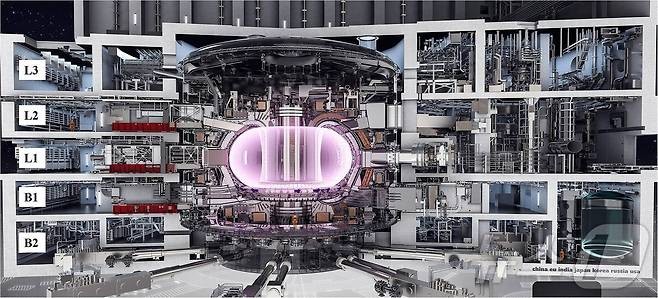
The Ministry of Science and ICT (MSIT) designated the "Nuclear Fusion Core Technology Development and Strategic Infrastructure Construction Project" as a national R&D project and included it in the preliminary feasibility study on January 30. According to the previous schedule, the evaluation period was approximately seven months. The results were originally expected to be announced in August, but the announcement has been rescheduled to September as the review is still underway.
According to current plans, the Naju Artificial Sun research facility is to be located in Wangok-myeon, Naju City, adjacent to the Naju National Energy Industrial Complex, covering an area of approximately 1.03 million square meters. If the project passes the preliminary feasibility study, construction is scheduled to begin in 2028 and be completed by 2036, with the project period spanning from 2027 to 2036, and construction costs to be borne by the state.
Nuclear fusion is often referred to as the "artificial sun," with the basic concept of simulating the energy generation process inside the sun on Earth by creating ultra-high-temperature plasma from hydrogen isotopes and triggering fusion reactions. Korea believes that nuclear fusion has the potential to become a next-generation energy technology supporting carbon reduction, and has put forward the energy potential statement that "1 gram of hydrogen can produce energy equivalent to 8 tons of petroleum."
The construction of this facility focuses not only on establishing a research institution but also on advancing seven core technologies for commercialization, including high-temperature plasma control and key fusion components, conducting validation in environments close to actual applications, and building a demonstration center for core nuclear fusion energy technologies to support corporate participation in technology development and commercialization linkage.
South Jeolla Province and Naju City plan to leverage Naju's existing energy industry base to attract nuclear fusion research institutions and enterprises around the facility, forming an ecosystem spanning from R&D and demonstration to industrialization. Naju is also home to the Bitgaram Innovation City, where energy public institutions such as the Korea Electric Power Corporation (KEPCO) and the Korea Institute of Energy Technology (KENTECH) are concentrated, which is considered by local stakeholders to provide a foundation for coordinated development in research, education, and industry.
Naju City recently held a final report meeting on the strategic consulting for the Energy R&D Special Zone, proposing measures to attract nuclear fusion research institutions and enterprises, promote technology commercialization, and foster related businesses. The related research recommends utilizing the special provisions on R&D special zone designation under the South Jeolla—Gwangju Integration Special Act to improve the industry-academia-research cooperation system and attract key nuclear fusion institutions and enterprises.
South Jeolla Province previously projected that the establishment of the Artificial Sun research facility could generate approximately 10 trillion KRW in economic benefits and create around 10,000 jobs. The South Jeolla—Gwangju Integrated Special Zone and Naju City stated that after the preliminary feasibility study results are announced, they will continue with follow-up procedures such as public briefing sessions and make preparations for power generation demonstration, special zone creation, and enterprise attraction.
Disclaimer: Information republished from partner media, institutions or other websites is provided for reference and communication purposes only. It does not imply endorsement of its views or verification of its accuracy. Please contact us if any content infringes rights or requires correction.