
Russia Approves Chinese Academy of Sciences' Accession to International Research Organization at PIK Reactor
 Scan to share
Mikhail Kovalchuk, Director of the Kurchatov Institute National Research Centre in Russia, recently stated that Russia has approved the Chinese Academy of Sciences' accession to the International Centre for Synchrotron Radiation, Neutron and Laser Research, which is being established around the PIK high-flux research reactor.
Speaking at a meeting of the Science and Education Committee held in Novosibirsk, Kovalchuk said that three Chinese institutions have successively submitted applications to join the international organization, with the application from the Chinese Academy of Sciences having completed review and received approval. In June of this year, he had indicated that the Chinese side was interested in participating in this international research cooperation mechanism.
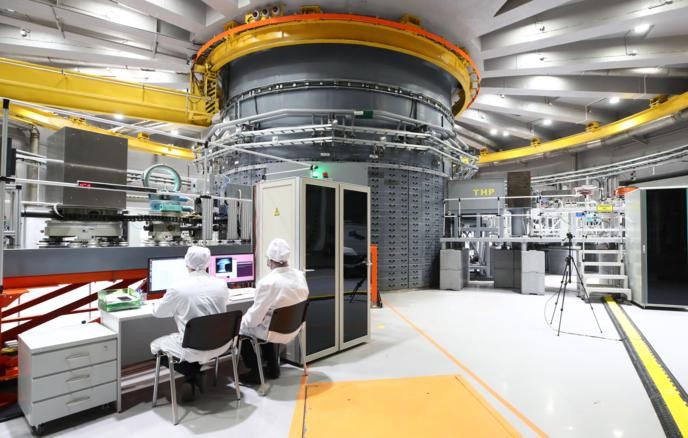
The PIK high-flux research reactor is located in Gatchina, Russia, and was developed by the Konstantinov Petersburg Nuclear Physics Institute. It is primarily used for neutron and neutron radiation research, probing microscopic objects, and a range of fundamental and applied scientific studies. The International Centre for Synchrotron Radiation, Neutron and Laser Research built around this facility has already seen participation from Belarus, Tajikistan, Uzbekistan, and Iran in related work.
At the same meeting, Alexey Likhachev, Director General of Rosatom, stated that the PIK reactor and the MBIR multi-purpose fast neutron research reactor are complementary, covering the full spectrum of neutron flux research. He noted that the coordinated use of these two major research facilities helps save resources and provides mutual support for related studies.
Kovalchuk also mentioned that the PIK reactor and its dozens of experimental stations are scheduled to complete commissioning by the end of the year, and proposed arranging a visit to the Gatchina facilities during the Young Scientists Congress to be held in St. Petersburg in December, including the PIK reactor neutron guide hall, 25 workstations, and the medical complex.
Disclaimer: Information republished from partner media, institutions or other websites is provided for reference and communication purposes only. It does not imply endorsement of its views or verification of its accuracy. Please contact us if any content infringes rights or requires correction.