
Kazakhstan's National Nuclear Center Advances Material Testing Research for Future Reactors
 Scan to share
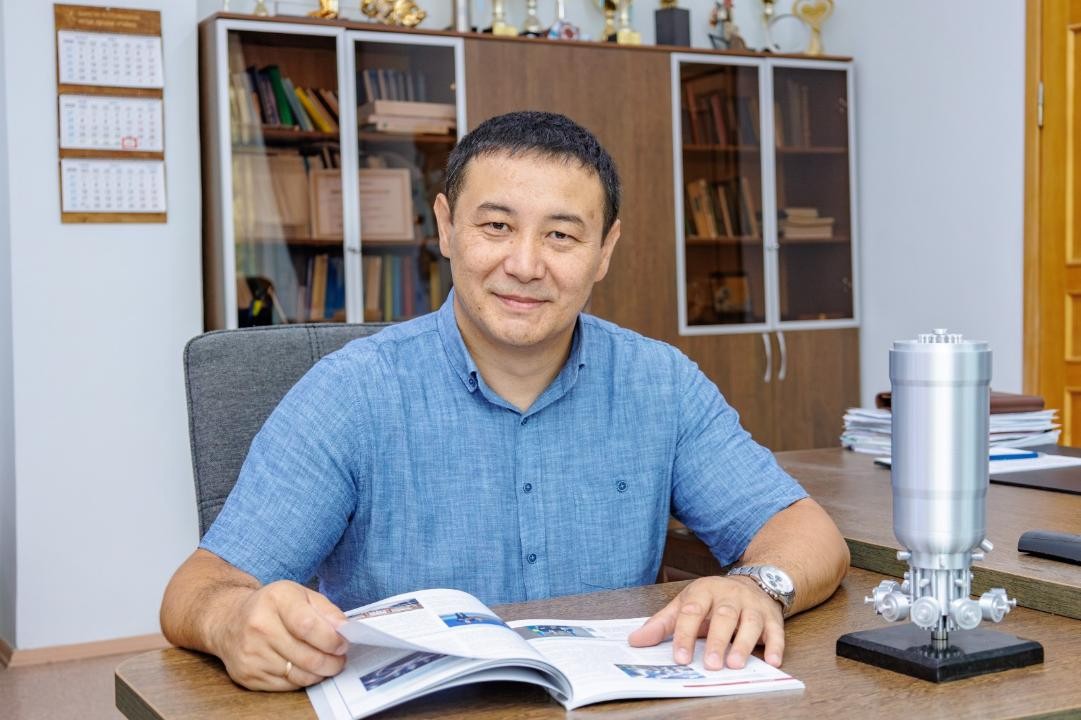
On August 11, the National Nuclear Center of the Republic of Kazakhstan presented its progress in research on structural materials for advanced reactors. Yerzhan Ernatuly Sapataev, head of the Radiation Materials Science Laboratory at the center's Institute of Atomic Energy, stated that the development of next-generation reactors and fusion technologies has imposed higher requirements on structural materials in terms of high-temperature resistance, radiation tolerance, and corrosion resistance, and that material reliability will directly determine the safety and service life of future nuclear energy systems.
Materials inside future reactors typically need to withstand multiple simultaneous loads, including temperatures ranging from 500°C to 1000°C or even higher, intense neutron irradiation, and more corrosive coolant environments. In next-generation reactors, coolants such as liquid sodium, lead-bismuth eutectic, or high-temperature helium gas may replace water, imposing more stringent demands on the stability of metallic materials. Neutron irradiation can also alter the microstructure of metals, causing swelling and degrading mechanical properties.
The National Nuclear Center of the Republic of Kazakhstan conducts comprehensive material testing for advanced nuclear energy systems, leveraging the research infrastructure established at the former Semipalatinsk Test Site. The center can simulate certain actual operating conditions of future reactors and obtain experimental data required for the development of new structural materials.
Among its facilities, the IVG.1M research reactor is used for in-reactor material testing. Experimental samples are encapsulated in dedicated ampoules and placed directly in the reactor core region to simultaneously receive irradiation from a real neutron spectrum and high thermal loads. Research subjects include modern ferritic-martensitic steels, austenitic steels, and oxide dispersion-strengthened materials considered as candidate structural materials for next-generation reactors.
The IGR pulsed graphite research reactor is primarily used to study the behavior of materials and structural components under transient and accident conditions. By means of short-duration high-power pulses, researchers can simulate rapid temperature changes and investigate the response of structural materials under severe accident scenarios, including those related to core melting, providing data to support improvements in reactor safety technology.
In terms of international cooperation, the center's material testing capabilities have been applied to research related to the International Thermonuclear Experimental Reactor (ITER). Researchers conduct tests on divertor components, which interact directly with high-temperature plasma during operation, at a dedicated vacuum test facility in Kurchatov, while also studying the interaction of materials with hydrogen and its isotopes deuterium and tritium, to assess hydrogen embrittlement effects and promote the development of hydrogen-embrittlement-resistant materials. In addition, relevant teams are conducting research on new steels for sodium-cooled fast reactors and lead-cooled reactors, as well as silicon carbide-based composite materials.
After prolonged irradiation, experimental samples become radioactive and must be transferred to hot cells for subsequent analysis. The hot cells are equipped with protective shielding windows and remote-handling equipment, ensuring the safe conduct of mechanical tests such as tensile, compression, impact toughness, creep, fatigue, and fracture toughness testing. Subsequently, researchers use electron microscopy to observe changes in the crystal structure of materials, identifying irradiation-induced voids, dislocations, and nano-scale microcracks, thereby assessing the performance retention of materials after irradiation.
According to reports, the development cycle for nuclear materials is relatively long: from development of a new structural material and completion of the full suite of tests to confirmation of its performance typically takes 10 to 15 years. The National Nuclear Center of the Republic of Kazakhstan currently possesses a complete materials science research chain, from irradiation testing in research reactors to post-irradiation fine analysis of samples, and its results can serve the development of materials for future reactors while providing an experimental basis for improving the reliability and safety of nuclear energy facilities.
Disclaimer: Information republished from partner media, institutions or other websites is provided for reference and communication purposes only. It does not imply endorsement of its views or verification of its accuracy. Please contact us if any content infringes rights or requires correction.