
Russia's SKIF Synchrotron Radiation Facility Hailed as a Milestone for Russian Science
 Scan to share
On August 13, Russian President Vladimir Putin visited the Koltsovo Science City in Novosibirsk to learn about the operating principles of the shared-use center "Siberian Circular Photon Source" (SKIF). This center is the first facility in a network of modern synchrotron radiation sources being built in Russia, with construction efforts incorporated into the national development program for synchrotron and neutron research and related research infrastructure, covering the period through 2030 and beyond.
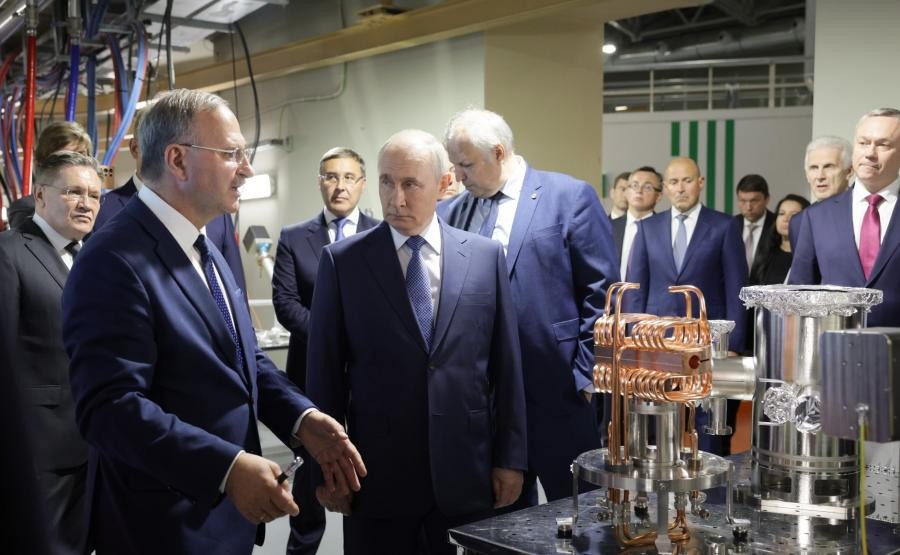
It was reported that SKIF, with its high-brightness, high-intensity X-ray beams, can serve high-level research in fields such as chemistry, physics, materials science, biology, geology, archaeology, and paleontology. Officials also noted that the facility is capable of detecting malicious micro-devices embedded in electronic equipment, which may evade detection by antivirus software. Putin stated that in the current environment, this capability is "extremely important."
Russian Minister of Science and Higher Education Valery Falkov stated that the SKIF shared-use center is expected to produce world-class scientific results and will provide conditions for undergraduate and graduate students to participate in cutting-edge research. He pointed out that the availability of modern scientific research infrastructure has become one of the key factors measuring a country's level of scientific development, and that building the fourth-generation+ synchrotron "Siberian Circular Photon Source" is of great significance to Russia.
Vladimir Shevchenko, Rector of the Moscow Engineering Physics Institute (MEPhI), stated that the commissioning of SKIF is a major event for the Russian scientific community. He said that after the relevant research stations become operational, MEPhI plans to participate in diagnostic research and new material development at the SKIF shared-use center, and expects its undergraduate and graduate students to use the specialized teaching and research stations being built within the SKIF complex.
The Moscow Engineering Physics Institute is currently involved in synchrotron and neutron research projects and trains personnel qualified for facilities like SKIF.
Disclaimer: Information republished from partner media, institutions or other websites is provided for reference and communication purposes only. It does not imply endorsement of its views or verification of its accuracy. Please contact us if any content infringes rights or requires correction.