
Russian Researchers Develop Highly Sensitive Radio Astronomy Sensor for Axion Dark Matter Detection
 Scan to share
Researchers from the Institute for Physics of Microstructures of the Russian Academy of Sciences and Nizhny Novgorod State Technical University have developed a radio astronomy sensor whose sensitivity is reportedly two to three times higher than that of existing international counterparts, and it has been granted a Russian patent. The device is designed for detecting weak electromagnetic radiation signals and can be used in frontier physics experiments such as cosmic microwave background radiation studies and axion dark matter searches.
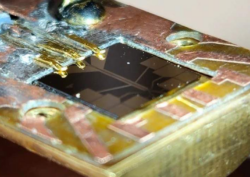
The researchers explain that this type of detector is essentially an electromagnetic radiation receiver. When electromagnetic radiation strikes the sensitive element, the electron temperature rises, thereby altering the recorded signal. To improve detection sensitivity, the research team introduced a thin hafnium layer into the structure, which acts as a thermal barrier, slowing the transfer of electron energy to the surrounding medium while reducing parasitic currents, thereby lowering the loss of useful signals.
An important application direction of the new sensor is observing cosmic microwave background radiation. This faint microwave background radiation is uniformly distributed throughout space, and researchers can obtain information about the early evolution of the universe after the Big Bang through relevant observations.
The device is also considered applicable to axion detection. The axion is a theoretical particle regarded as one of the possible components of dark matter. According to relevant hypotheses, axions interact extremely weakly with ordinary matter, making direct detection highly challenging; however, in the presence of a strong magnetic field, axions may convert into photons—electromagnetic radiation particles that can be detected by sensors.
The researchers state that if the existence of axions could be confirmed in the future and the conversion process from axions to photons could be controlled, the relevant electromagnetic radiation could theoretically be further converted into electrical energy. However, experts also emphasize that this remains a scientific hypothesis awaiting verification and cannot currently be regarded as a viable energy technology.
In addition to fundamental physics research, this type of detector may also serve as a receiver for millimeter-wave space observatories and ground-based astrophysical facilities. The relevant radio telescope is planned to be deployed in the Kholugaysha Mountain area of the Eastern Sayan Range in the Republic of Buryatia, at an altitude of approximately 2,800 meters, where the low atmospheric water vapor content is favorable for millimeter-wave and submillimeter-wave radiation observations.
Experts believe that the value of the new detector lies not only in improved sensitivity but also in its ability to record signals and accumulate statistical data, helping to identify faint signals previously difficult to distinguish from background noise. However, such devices still face challenges including high manufacturing costs, complex fabrication processes, and the need to operate in cryogenic environments cooled to tens of millikelvin. Regarding whether axions could become a nearly inexhaustible energy source, experts advise caution, but confirming or ruling out the existence of axions itself would still represent a significant advancement in fundamental science.
Disclaimer: Information republished from partner media, institutions or other websites is provided for reference and communication purposes only. It does not imply endorsement of its views or verification of its accuracy. Please contact us if any content infringes rights or requires correction.