
What "Hardcore" Technologies Lie Behind the Nuclear Power Plants Inspected by the Minister of Ecology and Environment?
 Scan to share
From August 14 to 15, Huang Runqiu, Minister of Ecology and Environment, conducted a research tour on ecological and environmental protection work in Lishui, Taizhou, and Ningbo cities of Zhejiang Province.
Actively, safely, and orderly developing nuclear power is an important measure for building a clean, low-carbon, safe, and efficient energy system and for achieving carbon peak and carbon neutrality. Huang Runqiu visited the Sanmen Nuclear Power Plant in Taizhou, going deep into the main control room of the operating unit and the nuclear island building of the unit under construction, to learn in detail about the operating status and construction progress of the nuclear power units, and to express gratitude to the on-site supervision personnel of the East China Nuclear and Radiation Safety Supervision Station.
Ensuring the construction quality of nuclear power units is crucial to enhancing the safety level of nuclear power plants. Huang Runqiu visited the nuclear island foundation area of the Jinqimen Nuclear Power Plant in Ningbo to inspect the construction status of the plant and engaged in on-site exchanges with nuclear safety supervision personnel.
What are the latest project developments at the Sanmen and Jinqimen Nuclear Power Plants inspected by the minister this time? What "hardcore" technologies are being applied?
Sanmen Nuclear Power: Setting the Benchmark as a "Lighthouse Factory" in the Nuclear Power Industry
Sanmen County, Taizhou City, Zhejiang Province, is nestled against Tiantai Mountain to the west, borders Sanmen Bay to the east, adjoins Ninghai County to the north, and faces Linhai City to the south. It not only boasts an advantageous geographical location but also enjoys exceptional natural conditions.
The Sanmen Nuclear Power Plant is located here, with superior natural site conditions—surrounded by the sea on three sides and a natural barrier formed by mountains on the west. The plant site has an elevation of 12 meters and covers an area of approximately 3,000 mu (about 200 hectares).
The Sanmen Nuclear Power Project plans to build six million-kilowatt-class nuclear power units, constructed in three phases.
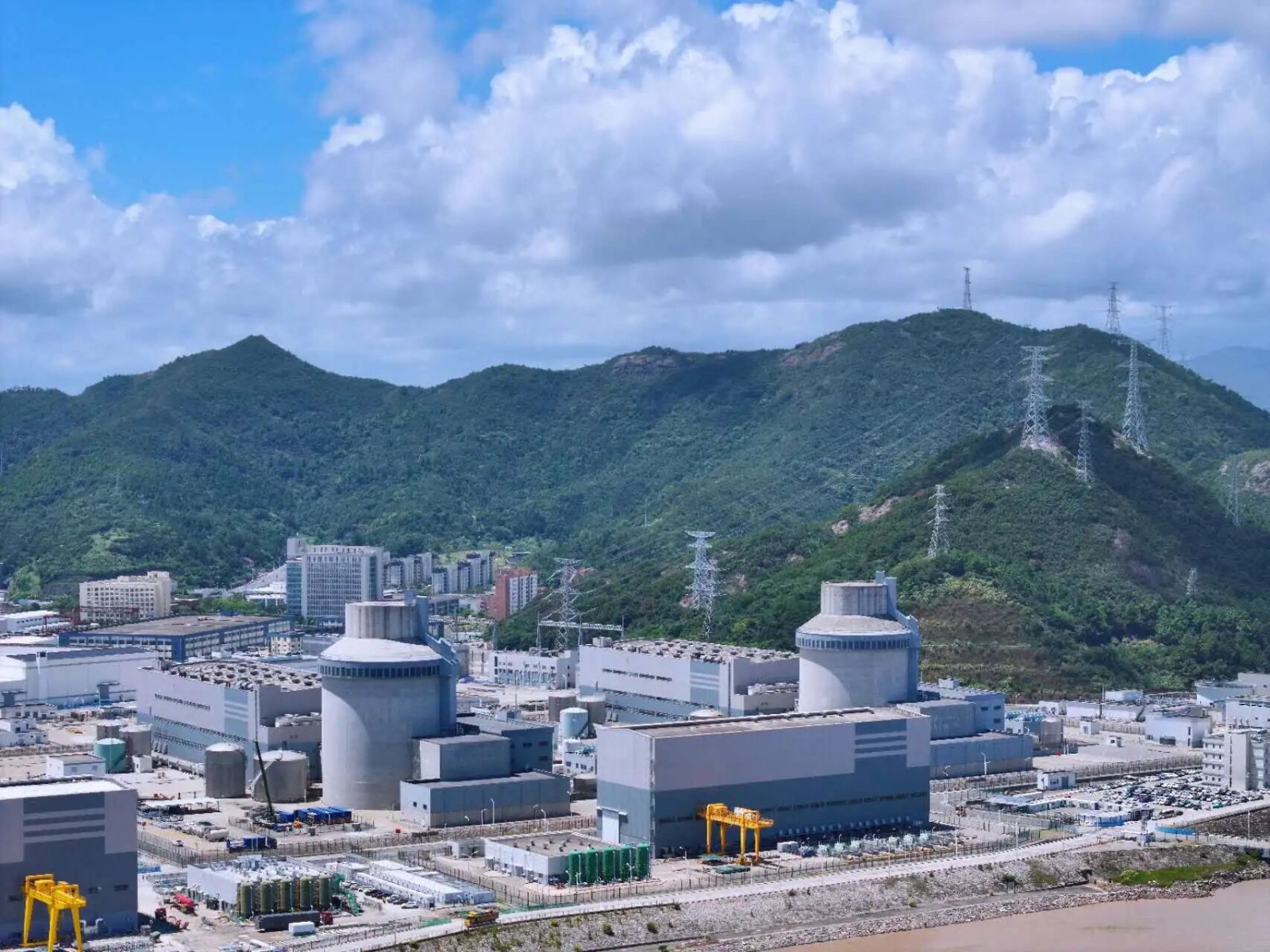
Phase I adopts AP1000 technology, with Units 1 and 2 commencing commercial operation on September 21, 2018, and November 5, 2018, respectively, of which Unit 1 is the world's first AP1000 unit. Phase II adopts CAP1000 technology, with Units 3 and 4 starting construction on June 28, 2022, and March 22, 2023, respectively. Phase III will adopt the third-generation nuclear power technology "Hualong One," which possesses completely independent intellectual property rights of China, and was approved by the State Council Executive Meeting on April 27, 2025.
Once all six units are completed, the total installed capacity of Sanmen Nuclear Power will exceed 7 million kilowatts, with an expected annual power generation of 60 billion kilowatt-hours, equivalent to an annual reduction of 45 million tons of carbon dioxide emissions. This will be a significant force in supporting Zhejiang Province's efforts to build a national clean energy demonstration province, safeguarding national energy security, and promoting carbon peak and carbon neutrality.
Innovation is the gene that Sanmen Nuclear Power upholds. As a pioneer in advanced nuclear power, Sanmen Nuclear Power has blazed a trail of self-reliance in third-generation nuclear power throughout its development journey, consistently empowering high-quality nuclear power development with technological innovation.
The two units of Phase I introduced advanced passive design concepts, bringing revolutionary changes to the plant's dedicated safety facilities compared to traditional plants, simplifying the design of main process systems, and improving the safety and economic efficiency of the units. Phase II adopts the CAP1000 reactor type, promoting the completion of the design of the CAP1400 brand with independent intellectual property rights, achieving an important leap in domestic nuclear power technology from second-generation to third-generation, and fulfilling the goals of introduction, digestion, absorption, and re-innovation.
Today's Sanmen Nuclear Power has a distinct digital and intelligent character. Thanks to numerous technological applications, on October 8, 2024, Sanmen Nuclear Power stood out among thousands of candidate factories worldwide, becoming the first enterprise in the global nuclear power industry to be recognized as a "Lighthouse Factory."
A "Lighthouse Factory" is a best-practice factory in global "Industry 4.0 technology application" and "digital manufacturing." Due to its stringent selection criteria, it is regarded as a leader of the Fourth Industrial Revolution and a byword for high technological content, strong innovation, high labor productivity, good economic benefits, and green, low-carbon development.
In the fields of cutting-edge technology and industrial transformation, Sanmen Nuclear Power is riding the wave. To create future technology application scenarios, it focuses on six smart themes—"smart engineering, smart operation, smart maintenance, smart equipment, smart management, and smart plant area"—and leverages digitalization of traditional business processes, comprehensive data governance and utilization, and new technology applications such as artificial intelligence to propel Sanmen Nuclear Power's digital and intelligent construction onto a fast track.
Jinqimen Nuclear Power: The "New-Quality Hualong" Sets Sail Here
Located in Hepu Town, Xiangshan County, Ningbo City, on the southern edge of Nantian Island and the northern shore of Maotouyang, the Jinqimen Nuclear Power Project is situated here.
The Jinqimen Nuclear Power Project plans to build six million-kilowatt-class pressurized water reactor nuclear power units, planned as a whole and constructed in batches. Once fully completed, the installed capacity will reach approximately 7.2 million kilowatts, with an expected annual power generation of 55 billion kilowatt-hours, equivalent to nearly half of the total social electricity consumption of Ningbo City in 2025.
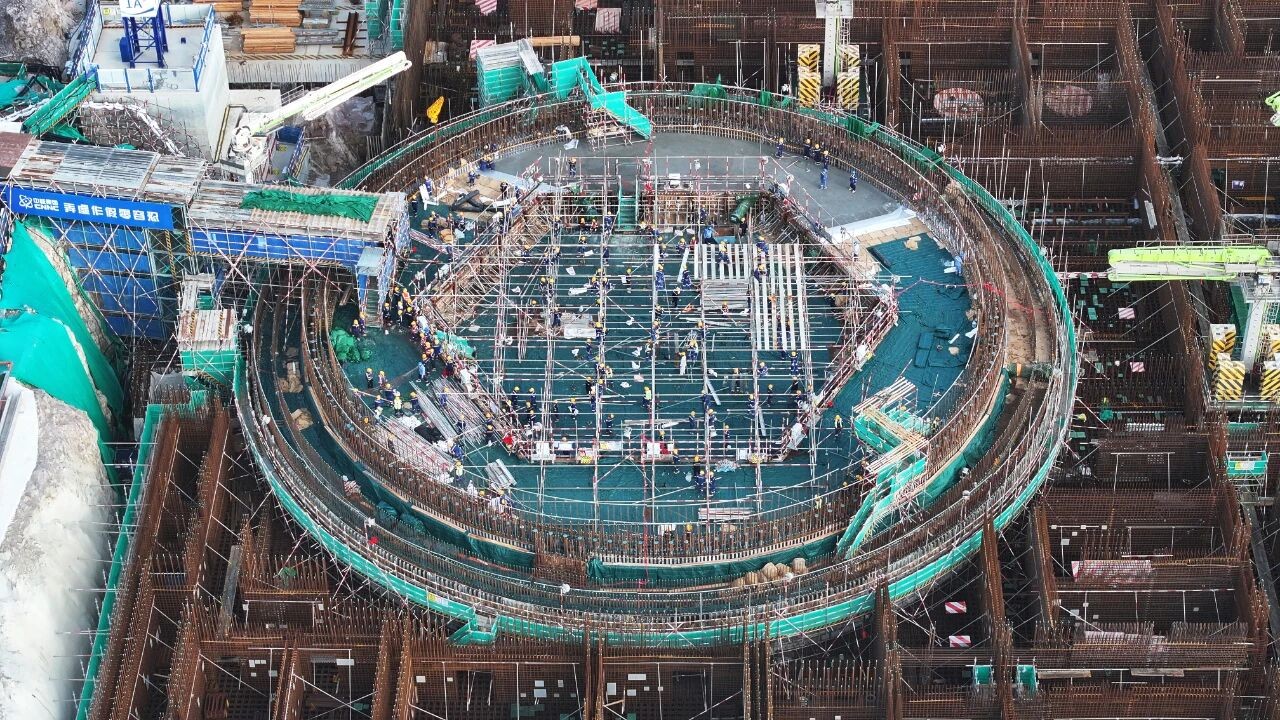
In December 2023, Phase I of the Jinqimen Nuclear Power Project was approved; in August 2025, the nuclear island concrete pouring for Unit 1 of Jinqimen Nuclear Power commenced; in April 2026, the nuclear island concrete pouring for Unit 2 of Jinqimen Nuclear Power commenced.
On July 31, the State Council Executive Meeting decided to approve four nuclear power projects, including the Phase I project of Liaoning Zhuanghe, and Phase II of the Jinqimen Nuclear Power Project was among them.
Notably, the approved Phase II of the Jinqimen Nuclear Power Project has been designated as the demonstration project for the Hualong One 2.0 version. The "New-Quality Hualong" sets sail from Jinqimen.
What innovations and upgrades does the Hualong One 2.0 demonstration project feature? In fact, the Hualong One 2.0 demonstration project is an advanced pressurized water reactor nuclear power technology of the "third-generation plus" category, developed by integrating feedback from the construction and operation of Hualong One, through independent innovation and overall collaboration.
This technology adopts Chinese standards, self-developed software, and optimized active and passive safety systems, and applies advanced technologies in intelligent control and modular construction, significantly reducing engineering workload while comprehensively enhancing safety, advancement, and economic efficiency, giving it stronger overall competitiveness.
During the construction of nuclear power units, Jinqimen is committed to building a full-lifecycle digital demonstration project.
As the first nuclear power project in China to establish a smart site framework before construction begins, Jinqimen Nuclear Power has a total of 86 smart site functional modules. To enhance on-site digital monitoring capabilities and reduce construction costs, the project adopts a remote panoramic monitoring system and an intelligent drone patrol system for full-scope surveillance and whole-process supervision of the construction site, enabling real-time dynamic scene storage, analysis, and remote safety supervision.
Digital planning and engineering construction will proceed in tandem. The Jinqimen Nuclear Power Project plans to achieve a replicable and scalable "Digital Hualong" construction model by 2028, providing a paradigm for high-quality development of nuclear power engineering construction both domestically and internationally, surging with innovation-driven momentum within the digital framework.
Disclaimer: Information republished from partner media, institutions or other websites is provided for reference and communication purposes only. It does not imply endorsement of its views or verification of its accuracy. Please contact us if any content infringes rights or requires correction.