
Korea Advances Construction of Temporary Spent Fuel Dry Storage Facility at Hanbit Nuclear Power Plant
 Scan to share
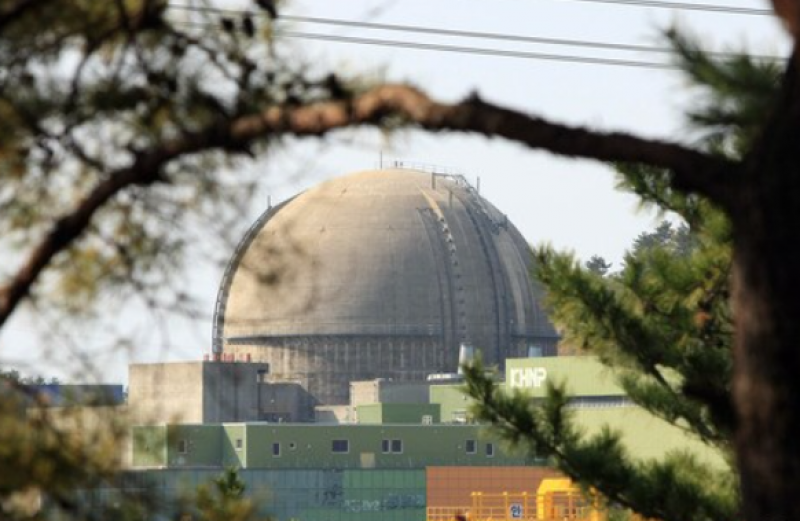
Korea Hydro & Nuclear Power (KHNP) is advancing the construction of a temporary spent fuel storage facility at the Hanbit nuclear power plant site. The company recently launched an information session process for local residents, planning to collect opinions through briefings and discussion meetings.
According to the schedule, three briefing sessions will be held on the 25th and 26th of this month in Yeonggwang County, South Jeolla Province. The first session is set for 2:00 PM on the 25th at the Hongnong Community Center, with the other two held at 10:00 AM and 3:00 PM on the 26th at the Gunam-myeon Multipurpose Center and Starlight Hotel, respectively.
Following the briefings, a discussion meeting will be held on the 1st of next month at 2:00 PM at the Starlight Hotel, with personnel from Korea Electric Power Corporation (KEPCO), experts, environmental groups, and resident representatives in attendance. Gochang County, North Jeolla Province, will also hold two briefing sessions on the 2nd and 3rd of next month, followed by a discussion meeting on the 4th, to further gather resident opinions.
In June of this year, KHNP submitted a draft plan for the temporary spent fuel storage facility to the Nuclear Safety and Security Commission, the Ministry of Climate and Energy, and Yeonggwang County. Spent fuel currently generated at the Hanbit nuclear power plant is primarily stored in on-site wet storage facilities, but existing facilities are expected to reach saturation around 2030, making the construction of additional storage capacity a priority.
Under the plan, KHNP intends to build a dry storage facility within the Hanbit nuclear power plant site. The facility will cover a land area of approximately 19,050 square meters with a building area of approximately 7,328 square meters, designed to store 4,810 spent fuel assemblies. Unlike the existing wet storage method, the proposed facility will adopt an indoor cask-based dry storage approach, in which spent fuel is loaded into dedicated containers and residual heat is removed through air circulation.
KHNP plans to advance the licensing process through briefing sessions, discussion meetings, and public hearings, with the goal of commencing construction in June 2028 and commencing operation in July 2030.
However, the project may still face controversy. Some local residents and environmental groups are concerned that the so-called temporary storage facility could evolve into a de facto permanent storage facility over long-term operation, especially as the site for South Korea's final high-level radioactive waste disposal facility has yet to be determined. A representative of an environmental organization in Yeonggwang County stated that even if a dry storage facility is built, residents should be informed of when, how, and where spent fuel will be transferred in the future, so that they can make judgments based on sufficient information.
Disclaimer: Information republished from partner media, institutions or other websites is provided for reference and communication purposes only. It does not imply endorsement of its views or verification of its accuracy. Please contact us if any content infringes rights or requires correction.