
22 Atmospheric Radiation Automatic Monitoring Stations in Shaanxi Operate Stably, with National-Controlled Stations Achieving 99.9% Data Acquisition Rate
 Scan to share
In recent years, Shaanxi Province has continuously strengthened the construction of its radiation environmental monitoring network. The 22 atmospheric radiation automatic monitoring stations across the province, including 12 national-controlled stations and 10 provincial-controlled stations, have maintained stable operation. These stations utilize high-pressure ionization chambers, ultra-high-flow aerosol samplers, gamma spectrometers, and other equipment to conduct continuous monitoring of atmospheric instantaneous gamma dose rates, aerosol samples, and gamma radionuclides. Relevant data are transmitted in real time to the system platform of the Shaanxi Provincial Nuclear and Radiation Safety Supervision Station.
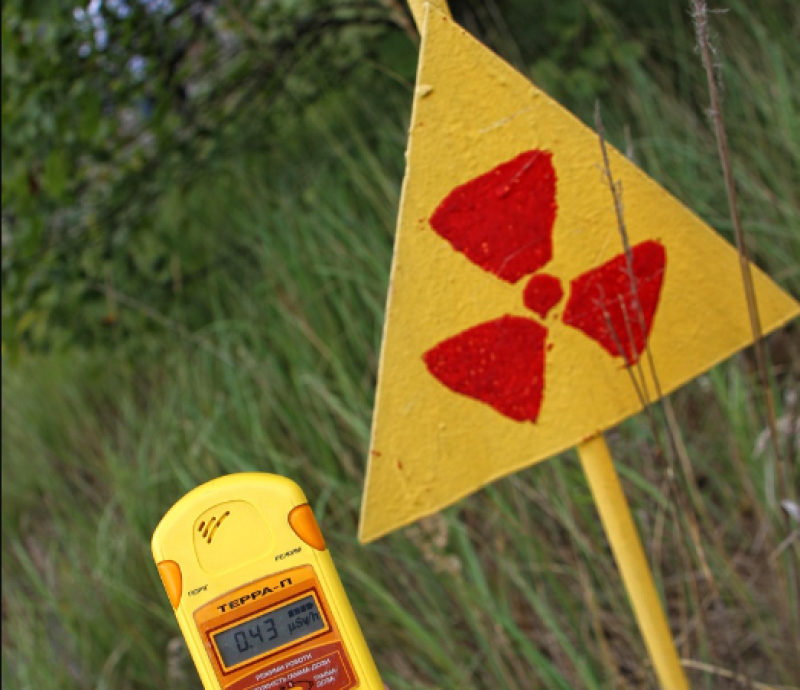
According to reports, Shaanxi has gradually established an automatic station operation and maintenance management system featuring "strong organization, closed-loop responsibility, funding guarantees, standardized procedures, and digital-intelligent empowerment." In 2023, the 5-minute data acquisition rate of Shaanxi's 12 national-controlled stations reached 99.9%, ranking third nationwide. Against the backdrop of a national average data acquisition rate of 99.25% for automatic stations in 2025, Shaanxi's relevant data have remained at a high and stable level.
Focusing on the operation and management of automatic stations, Shaanxi has established closed loops for both operation and maintenance and data management. In terms of operation and maintenance, the "inspection—maintenance—calibration—quality control—archiving" process clarifies personnel, timelines, and standards. In terms of data, the "automatic alert—manual review—anomaly tracing—data labeling—reporting and feedback" process enhances the authenticity, accuracy, and traceability of monitoring data. Some demonstration radiation automatic monitoring stations have also introduced electronic archives, conducting full-lifecycle management of equipment inventories, technical parameters, installation and commissioning, maintenance records, and calibration certificates, forming a "one station, one file" system.
In terms of funding guarantees, Shaanxi has incorporated automatic station operation and maintenance costs into provincial departmental budgets. From 2024 to 2025, Shaanxi applied for 5.8 million yuan in provincial special ecological environment funds to renovate aging automatic stations that have been in continuous operation for more than 15 years. In 2021 and 2022, more than 8 million yuan was invested in batches to build 10 new provincial-level atmospheric radiation automatic monitoring stations, densifying provincial-controlled stations on the basis of the national-controlled station layout, forming full coverage and a dual-backup pattern for both national- and provincial-controlled stations. At present, the number of radiation environmental monitoring points across Shaanxi Province has exceeded 490, achieving coverage of air, water, and soil radiation monitoring in all cities (districts).
In terms of standard development, Shaanxi, as the lead drafting unit, jointly with relevant institutions, published and implemented the "Calibration Specification for Fixed Ultra-High-Flow Aerosol Samplers" (JJF (Shaanxi) 148), which is used to standardize flow calibration and value traceability of aerosol samplers. According to available information, this specification fills a gap in relevant domestic metrological specifications. Since August 8, 2026, two ecological environment monitoring calibration specifications in Shaanxi have been officially implemented, further improving the value traceability system for radiation monitoring.
The Shaanxi Provincial Nuclear and Radiation Safety Supervision Station stated that in the next step, it will continue to promote the intelligent renovation of aging stations, deepen the application of big-data early warning, and strengthen cross-regional coordination and emergency linkage to enhance the operational quality and efficiency of the radiation environmental monitoring network.
Disclaimer: Information republished from partner media, institutions or other websites is provided for reference and communication purposes only. It does not imply endorsement of its views or verification of its accuracy. Please contact us if any content infringes rights or requires correction.