
Indonesia Develops Cobalt-60 Gamma Irradiation Technology to Boost Biodiesel Production from Waste Cooking Oil
 Scan to share
The Indonesian Nuclear Technology Polytechnic, under the National Research and Innovation Agency (BRIN), has recently successfully developed cobalt-60 (Co-60) gamma irradiation technology and applied it to increase biodiesel production from waste cooking oil. The study aims to explore more efficient pathways for renewable energy production while providing a new solution for the resource utilization of waste cooking oil.
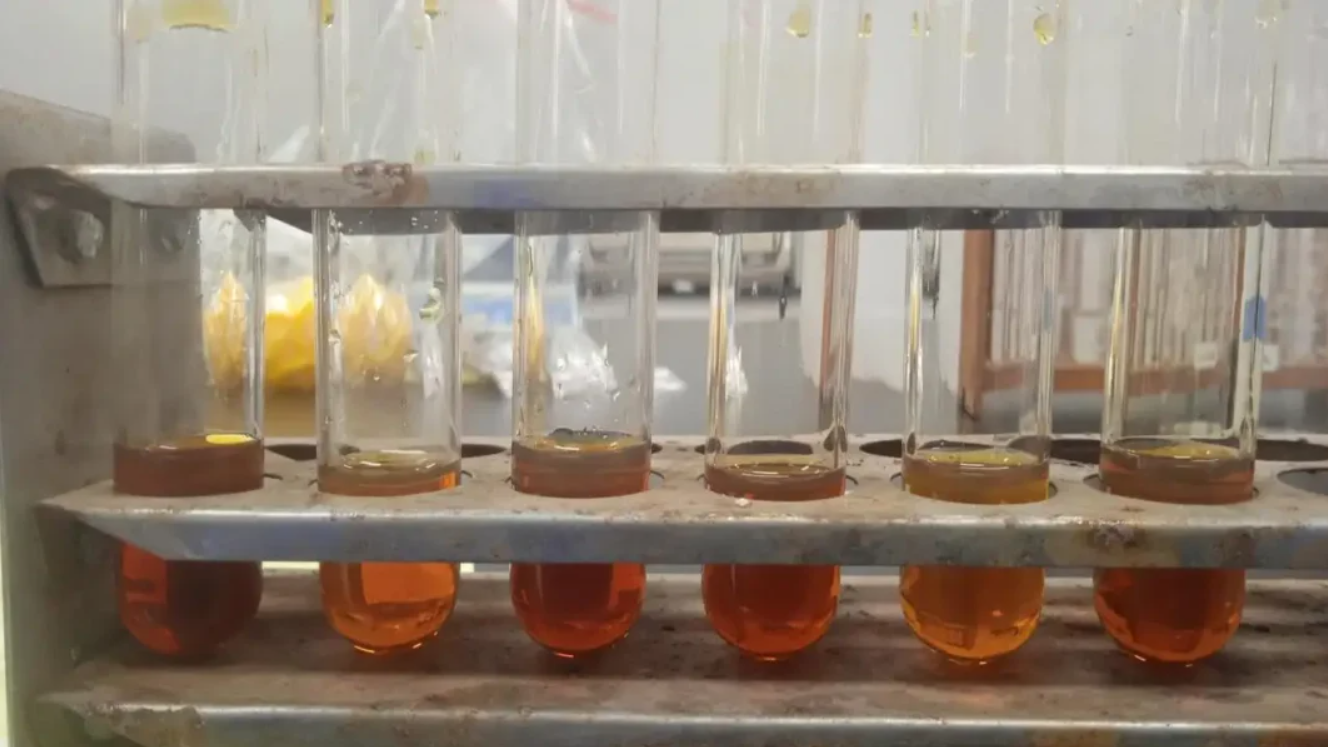
Dita Ariyanti, a lecturer at the Indonesian Nuclear Technology Polytechnic, stated that with continued growth in energy consumption and declining fossil fuel reserves, the need to develop alternative energy sources is becoming increasingly urgent. For Indonesia, rising energy demand and dependence on fossil fuels also pose challenges to greenhouse gas emission reduction. Waste cooking oil was previously mostly treated as household waste, and improper disposal could pollute the environment; converting it into biodiesel can reduce waste while obtaining renewable energy.
Dita explained that compared to fossil fuels, biodiesel features lower emissions and biodegradability, and also helps mitigate the impact of rising atmospheric carbon dioxide levels. The research team chose waste cooking oil as the feedstock precisely because it is relatively abundant, while the repeated use of cooking oil can also pose health risks.
Unlike traditional biodiesel production processes, this study employs gamma rays generated by the radioisotope cobalt-60 for irradiation treatment. Gamma irradiation can produce free radicals that enhance molecular reactivity, thereby making the biodiesel production process faster and more efficient, without the need to add new chemical substances.
The results showed that biodiesel yield continued to increase with rising irradiation doses. Based on an initial feedstock volume of 150 ml, the highest biodiesel yield of 104.7 ml was achieved at an irradiation dose of 35 kGy. Fourier transform infrared spectroscopy (FTIR) analysis also confirmed the formation of ester functional groups, a key characteristic of biodiesel. At irradiation doses of 20 kGy and 35 kGy, the FTIR spectra showed more pronounced changes, with significant variations in the peak intensities of functional groups such as C—O, C=O, C—H, and O—H, along with slight peak shifts.
The researchers also emphasized that the results remain at a preliminary research stage, and the conclusion regarding radiation-promoted transesterification reactions requires further support from quantitative conversion rate data, such as verification through gas chromatography (GC) or proton nuclear magnetic resonance spectroscopy (H-NMR). Future research also plans to increase the irradiation dose above 35 kGy to determine the threshold of irradiation effectiveness, assess whether optimal benefits can still be maintained beyond that threshold, while avoiding any negative impact on biodiesel quality.
This study provides a new direction for nuclear technology to support Indonesia's clean energy transition. Treating waste cooking oil through gamma irradiation not only holds promise for improving waste disposal practices, but may also enhance biodiesel production efficiency, offering a supplementary pathway for eco-friendly fuel development.
The findings were published in 2025 in the Scientific Bulletin of UPB, Series B, Vol. 87, Issue 4, under the title "The Effect of 60Co Gamma Irradiation on the Formation of Alkyl Esters from Petroleum Waste: A Preliminary Study as a Biodiesel Candidate." The study was completed in collaboration between the BRIN Nuclear Technology Polytechnic, the Atomic Energy Agency of Uzbekistan, and the University of Maiduguri in Nigeria, with researchers from BRIN's laboratory management, research facilities, and science and technology management departments also providing supporting contributions.
Disclaimer: Information republished from partner media, institutions or other websites is provided for reference and communication purposes only. It does not imply endorsement of its views or verification of its accuracy. Please contact us if any content infringes rights or requires correction.