
Japanese Team Develops High-Temperature, High-Pressure Isotope Ratio Analysis Method for Tracing Halogenated Pollutants
 Scan to share
Researchers from Shibaura Institute of Technology and the National Institute of Advanced Industrial Science and Technology in Japan have collaboratively developed a customized high-temperature, high-pressure combustion interface for liquid chromatography-isotope ratio mass spectrometry (LC-IRMS), enabling carbon stable isotope ratio (δ¹³C) analysis of various halogenated organic compounds. The research findings were published online on August 2, 2026, and will appear in Volume 1421 of Analytica Chimica Acta, scheduled for release on November 1, 2026.
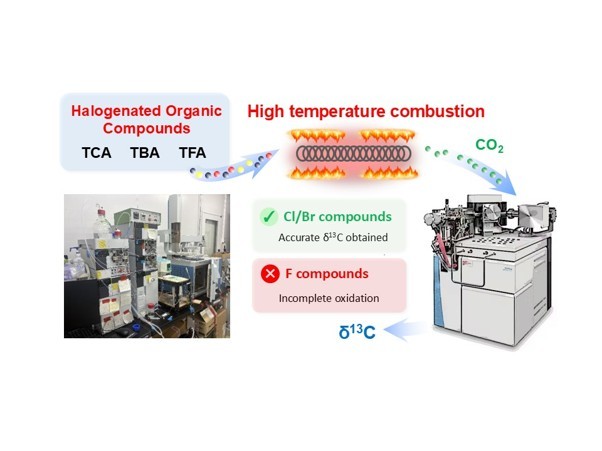
Source of the new high-temperature, high-pressure LC-IRMS system: Professor Hiroto Kawashima, SIT, Japan
Halogenated organic compounds are widely present in disinfection byproducts, pesticides, refrigerants, and industrial chemicals, some of which exhibit persistence, bioaccumulation, and toxicity. Traditional environmental monitoring primarily relies on concentration measurements, which makes it difficult to directly provide information on pollutant sources and environmental transformation processes. δ¹³C analysis can offer clues for studying chemical sources, production processes, and environmental fate, but organic pollutants containing strong carbon—chlorine or carbon—fluorine bonds are difficult to fully oxidize under conventional LC-IRMS combustion conditions, limiting the application of this technique.
To address this issue, the research team connected a liquid chromatography system equipped with a post-column pump to an isotope ratio mass spectrometer through a self-developed high-temperature, high-pressure combustion interface; they also improved the combustion heater and used a back-pressure regulator to maintain the flow path pressure at 5.2 MPa. In the experiments, sodium persulfate was used as an oxidant to promote combustion, and the combustion products were cooled before entering the isotope ratio measurement process.
Test results showed that the interface could successfully oxidize various chlorinated and brominated compounds, including trichloroacetic acid and tribromoacetic acid. Within the temperature range of 300—600°C, the recovery rates of the relevant compounds approached 100%, and the deviations of δ¹³C measurements from reference values were kept within 1‰. Based on these results, the research team determined 500°C as the optimal oxidation temperature for LC-IRMS. In contrast, due to the higher bond strength and thermal stability of carbon—fluorine bonds, the analytical precision and recovery rates for fluorinated compounds remained relatively lower; effective analysis was mainly limited to compounds containing only one carbon—fluorine bond.
The study also evaluated the influence of sample concentration on measurements. The results indicated that under the current test conditions, sample concentrations must reach at least 500 mg/L, and reliable isotope measurements typically require approximately 50—60 nanomoles or more of carbon. Since pollutant concentrations such as trichloroacetic acid in the environment may fall below the current requirements of this method, the researchers believe that further optimization through means such as sample preconcentration will be necessary in the future to advance its application to real environmental sample analysis.
The research team stated that this high-temperature, high-pressure LC-IRMS platform can provide a new technical foundation for environmental monitoring, pollutant source identification, source apportionment, and degradation studies of halogenated organic compounds. Since the combustion interface is self-developed and costs less than commercially available products, it may also help other laboratories expand their stable isotope analysis capabilities for halogenated compounds.
Disclaimer: Information republished from partner media, institutions or other websites is provided for reference and communication purposes only. It does not imply endorsement of its views or verification of its accuracy. Please contact us if any content infringes rights or requires correction.