
IAEA Technical Meeting on Indicators for the Management of Disused Ionizing Radiation Sources
 Scan to share
From 24 to 28 August 2026, a technical meeting was held at the IAEA headquarters, focusing on indicators for the status of disused ionizing radiation sources and their application in sustainable management. The meeting emphasized how these indicators can serve as measurement tools to support countries in the long-term, safe, and traceable management of disused radiation sources.
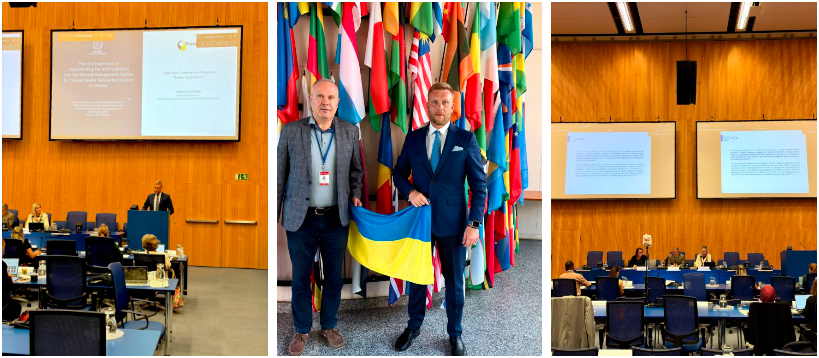
The Ukrainian delegation participated in the meeting, including Oleksii Zhyvotenko, Head of the Department for Production and Technical Issues and Radioactive Material Management at the "Radon" Association of the National Academy of Sciences of Ukraine, as well as representatives of the central nuclear power plant management. During the meeting, the Ukrainian side delivered a presentation titled "Practical Experience in Integrating Key IAEA Indicators into Ukraine's National Management System for Disused Ionizing Radiation Sources."
In its presentation, the Radon Association emphasized that the relevant IAEA indicators have practical application value and can serve as a strategic tool to support management decision-making at the national level, further strengthening sustainable management approaches for disused ionizing radiation sources.
The IAEA noted that Ukraine's report demonstrates the country has developed a well-established national system for the management of ionizing radiation sources and disused radiation sources. Its key foundations include a reliable regulatory framework, an effective radiation source tracking and accounting system, well-developed storage and disposal infrastructure, highly qualified personnel, and sustained national investment.
The meeting also presented Ukraine's practices in the registration and tracking of radioactive sources. The relevant system covers the entire lifecycle of radioactive sources, from their entry into operation in the country to their storage as radioactive waste after decommissioning, contributing to enhanced traceability and regulatory control throughout the full lifecycle of radioactive sources. The IAEA considers that such experience can serve as a reference for member states that have not yet fully established similar mechanisms, while also helping to prevent loss of control over radioactive sources and strengthen the overall safety and security framework.
Disclaimer: Information republished from partner media, institutions or other websites is provided for reference and communication purposes only. It does not imply endorsement of its views or verification of its accuracy. Please contact us if any content infringes rights or requires correction.