
Radioactivity Levels in Arctic Archipelagos Within Background Range, Russian Research Team Reports No Anomalies
 Scan to share
On August 13, Andrei Puchkov, senior researcher at the Environmental Radioactivity Laboratory of the N.P. Laverov Federal Arctic Integrated Research Center, Ural Branch of the Russian Academy of Sciences, stated that measurements taken during the 2026 "Arctic Floating University" expedition's landings on Novaya Zemlya and Franz Josef Land showed very low radioactivity levels, with no anomalies detected.
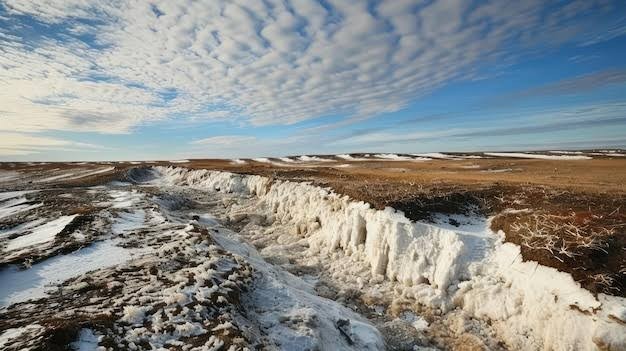
Puchkov noted that the expedition measured radon concentrations at all landing sites, with radon flux densities ranging from below 1 millibecquerel per square meter per second to 200 millibecquerels per square meter per second, all recorded values remaining within background levels. He stated that permafrost acts as a barrier and shield in the region, preventing radioactive gases from reaching the surface; relatively higher radon fluxes in some areas may be associated with geological features such as fault zones and fracture zones.
Radon is a naturally occurring radioactive gas formed by the decay of uranium. Researchers pointed out that Arctic warming and permafrost thawing may increase the risk of radon release to the surface, making continued monitoring of ongoing significance. A 2025 study had shown that, compared with 2024 observations, radon flux in the coastal area of Russkaya Gavan Bay on Novaya Zemlya had increased, but the current expedition recorded no anomalous radioactive changes.
In addition to radon measurements, the expedition also conducted alpha particle flux and gamma radiation measurements. The results showed that alpha particle flux was nearly zero, indicating extremely low alpha-emitting radionuclide activity in the near-surface soil layer; gamma radiation measurements also showed only background-level values.
Measurement sites included areas near the Tikhaya Bay polar station on Hooker Island, Heiss Island, Wilczek Island, and Georg Land in Franz Josef Land, as well as near the Russkaya Gavan polar station on the northern island of Novaya Zemlya. Researchers collected soil, moss, lichen, and vascular plant samples at each site.
In the northeastern Barents Sea, researchers also collected bottom sediment samples during transect surveys and at landing areas. Similar work was previously conducted in 2019 and 2024. The 2026 measurement results will be used to map temporal changes in the distribution of natural and anthropogenic radionuclide activity and to assess changes in anthropogenic load on Arctic ecosystems. Currently, the anthropogenic radioactive load in the region shows a declining trend, with no significant anthropogenic radiation sources identified.
Researchers also cautioned that monitoring must continue. As the climate warms, anthropogenic radionuclides previously deposited in glaciers may be re-released and redistributed within terrestrial ecosystems, potentially altering local environmental radioactivity conditions.
The 20th "Arctic Floating University" scientific and educational expedition took place from July 1 to 22, 2026, aboard the research vessel "Professor Molchanov," organized jointly by the Northern (Arctic) Federal University named after M.V. Lomonosov and the Northern Administration for Hydrometeorology and Environmental Monitoring.
Disclaimer: Information republished from partner media, institutions or other websites is provided for reference and communication purposes only. It does not imply endorsement of its views or verification of its accuracy. Please contact us if any content infringes rights or requires correction.