
UNESCO Expert Mission Inspects Environmental Remediation Project at Former Baikal Pulp and Paper Mill in Russia
 Scan to share
On August 19, 2026, a monitoring mission for the Lake Baikal World Heritage Site, comprising experts from UNESCO and the International Union for Conservation of Nature, inspected the cumulative environmental damage remediation work carried out by Federal Environmental Operator, a subsidiary of Rosatom, at the former Baikal Pulp and Paper Mill site.
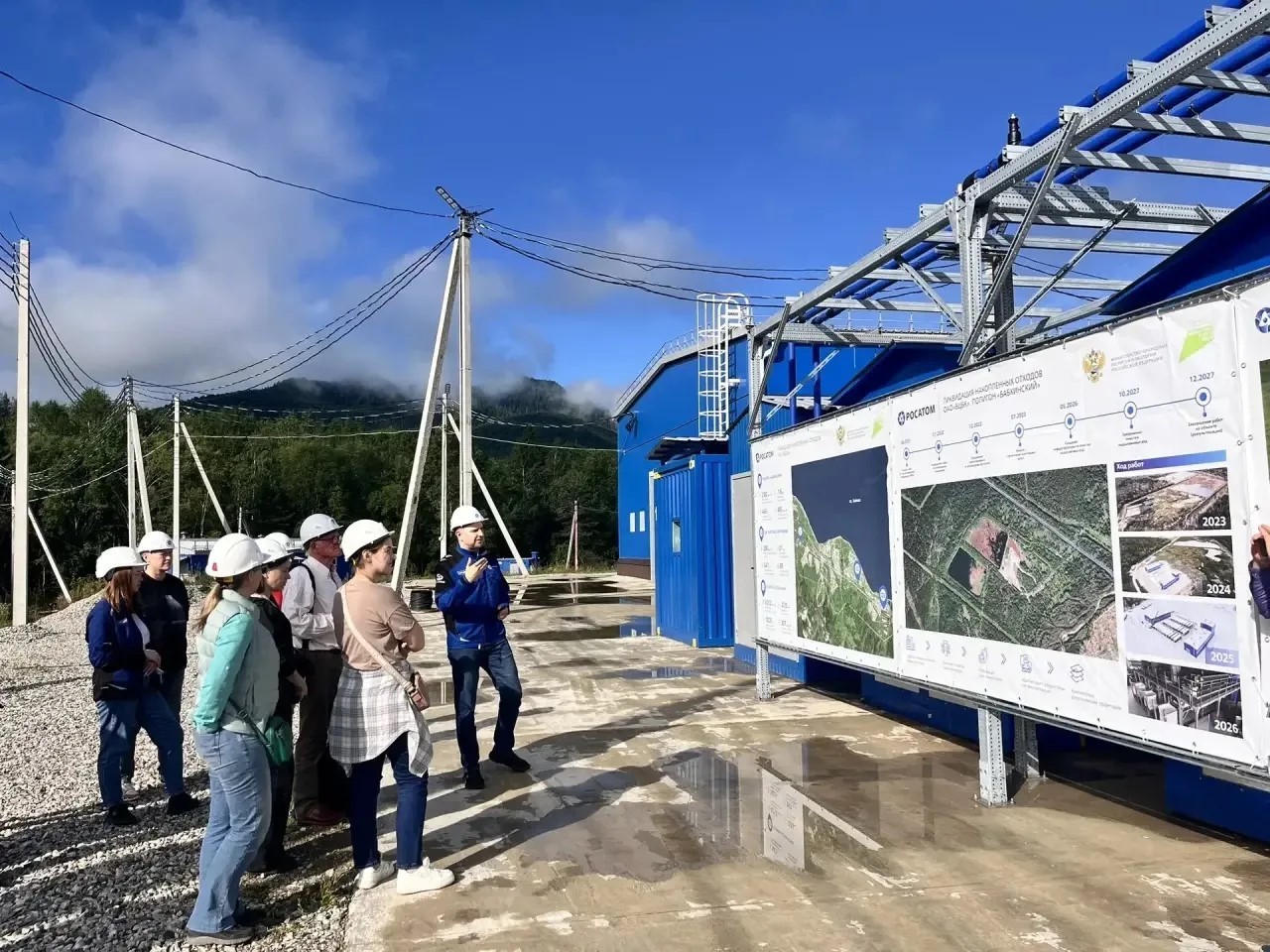
At the former plant area, the experts were briefed on progress in sludge treatment, alkaline wastewater treatment, and nature-based remediation technologies. The relevant projects primarily target historically accumulated pollution, with the goal of reducing the risk of pollutants entering Lake Baikal. During the visit, the infrastructure at the Babushinsky landfill and the former wastewater treatment plant had been completed and entered the commissioning phase. Once the facilities are operational, alkaline wastewater and sludge from storage ponds will be extracted and treated.
According to representatives of Federal Environmental Operator, the equipment used in the project was developed by engineering and research teams specifically for the pollutant characteristics, with treatment processes having undergone multi-stage testing and been adjusted to meet the requirements of the sensitive ecosystem of the Lake Baikal region. After multi-stage purification, the treated water quality is expected to comply with current Russian water quality standards, particularly the stricter standards applicable to the Baikal Nature Reserve.
According to the project schedule, upon completion of remediation at the former Baikal Pulp and Paper Mill site, the total area of land restoration will reach 101.2 hectares. The project operator stated that this will improve the living environment for approximately 13,000 residents of Baikalsk and, by reducing pollutant inflows into Lake Baikal, will have a positive impact on residents of the Baikal watershed.
The expert mission also inspected the Solzansky landfill. The site contains 10 storage ponds for sludge and lignin waste. Between 2021 and 2022, Federal Environmental Operator transferred relevant sludge wastewater to this landfill for treatment, reducing water volume by more than 110,000 cubic meters, and constructed supporting treatment facilities and infrastructure.
The visit also focused on nature-based remediation solutions. The Department of Chemistry at Lomonosov Moscow State University, in cooperation with several institutes of the Siberian Branch of the Russian Academy of Sciences, is developing nature-based technologies suitable for landfill remediation. Under the national "Ecological Well-Being" project, relevant pilot testing is planned for 2026–2028 at selected sites, with Federal Environmental Operator participating. The test results will be used to assess whether existing measures are sufficient or whether additional measures are needed to ensure the safety of the Lake Baikal ecosystem.
At the conclusion of the visit, the experts noted that all parties attach great importance to the protection of Lake Baikal, and their observations will be incorporated into the monitoring mission's final report. Rosatom stated that it will continue to advance the remediation of environmental damage left by the former Baikal Pulp and Paper Mill through the development of modern technological infrastructure.
Disclaimer: Information republished from partner media, institutions or other websites is provided for reference and communication purposes only. It does not imply endorsement of its views or verification of its accuracy. Please contact us if any content infringes rights or requires correction.