
Flammable Gas Analysis Completed for Legacy Transuranic Waste Containers at U.S. Savannah River Site
 Scan to share
AIKEN, South Carolina — The Solid Waste and Deactivation and Decommissioning team at Savannah River Nuclear Solutions (SRNS) recently completed a critical task, performing flammable gas analysis on multiple legacy high-dose-rate transuranic (TRU) waste containers. The results confirmed that these containers meet safety requirements for shipment to an underground waste disposal facility.
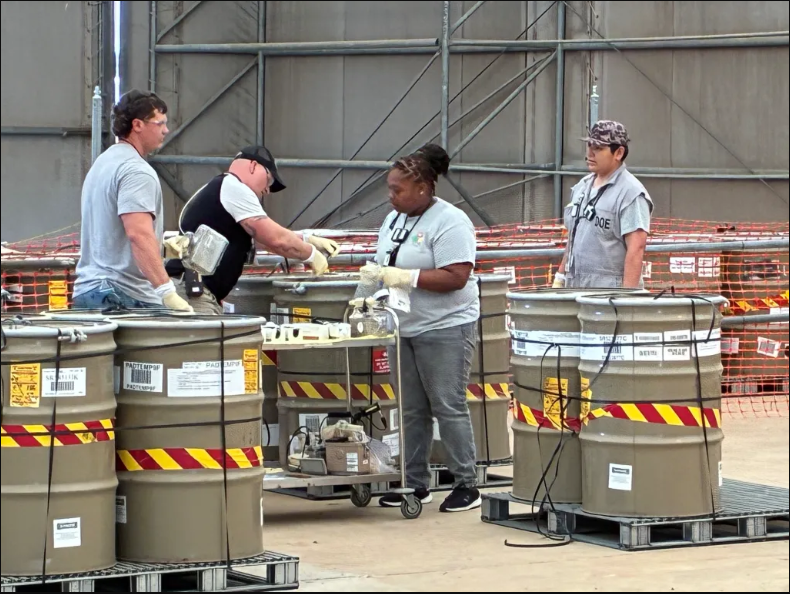
Following this analysis, the U.S. Department of Energy Office of Environmental Management will resume shipments of remote-handled transuranic waste drums from the Savannah River Site (SRS) to the Waste Isolation Pilot Plant (WIPP) in New Mexico for permanent disposal.
Flammable gas sampling is an important safety step prior to the transportation and disposal of transuranic waste. Workers assess the risk of combustion inside the containers by detecting gases that may be present, such as hydrogen, methane, and volatile organic compounds, and confirm their safety during subsequent transportation, receipt, and disposal operations.
This work is particularly critical for legacy waste drums that have been stored for many years. Due to age and contents, some waste drums may generate flammable gases; additionally, because some containers have high radiation levels, they must be handled using remote operations, further increasing the complexity of the task.
Transuranic waste generally refers to waste containing man-made radioactive elements heavier than uranium on the periodic table. Remote-handled transuranic waste has higher radioactivity levels than contact-handled transuranic waste and must be handled using specialized equipment to reduce worker exposure risk.
Anthony Carraway, SRNS Solid Waste and Deactivation and Decommissioning facility manager, stated that characterizing these containers is an indispensable step in safely, compliantly, and efficiently shipping transuranic waste to WIPP for permanent disposal. He said the team strictly follows applicable procedures and controls to ensure personnel safety and keep the mission moving forward.
In recent years, SRS has shipped most of the legacy transuranic waste on site to WIPP, with the remainder consisting largely of legacy waste drums that are more difficult to process and characterize. Despite this, the team has continued to exceed the goal of shipping 12 waste drums per year to WIPP: 18 drums were shipped last year and 24 the year before.
Since the SRNS contract began in 2008, the contractor has shipped a cumulative total of 929 transuranic waste shipments to WIPP. SRNS stated that the recently completed flammable gas analysis work helps advance legacy radioactive waste cleanup and supports the goal of safe, permanent disposal.
Disclaimer: Information republished from partner media, institutions or other websites is provided for reference and communication purposes only. It does not imply endorsement of its views or verification of its accuracy. Please contact us if any content infringes rights or requires correction.