
Russia Marks 81 Years Since the Birth of Its Nuclear Industry: From the Soviet Nuclear Program to Modern Nuclear Talent Development
 Scan to share
On August 20, 1945, the founding documents establishing the Special Committee and the First Main Directorate under the Council of People's Commissars of the USSR were officially signed, generally regarded as the starting point of the Soviet nuclear industry system. Eighty-one years later, Russia's nuclear energy community once again looks back at this historical milestone, linking it to nuclear science and technology development and talent cultivation.
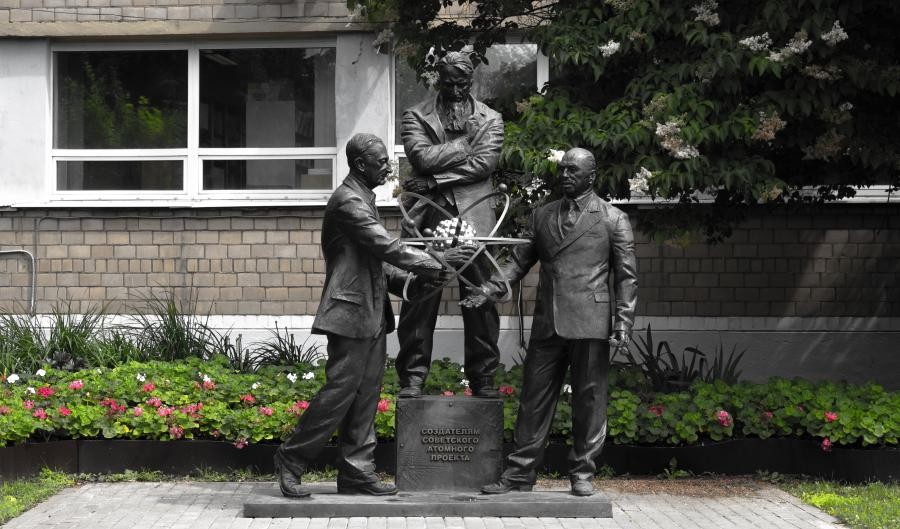
In August of that year, after the United States used atomic bombs on Hiroshima and Nagasaki, the Soviet Union accelerated the establishment of its own nuclear research and industrial system. On August 29, 1949, the Soviet Union completed the RDS-1 nuclear test. Thereafter, Soviet nuclear science gradually extended from military applications to peaceful uses, building the world's first grid-connected nuclear power plant and developing a fleet of nuclear-powered icebreakers.
The establishment of the nuclear industry system also drove the development of specialized talent. In November 1945, the Moscow Mechanical Institute established a Department of Engineering Physics, which later evolved into the National Research Nuclear University MEPhI (Moscow Engineering Physics Institute). The university has long been involved in cultivating talent in nuclear physics, nuclear engineering, and related high-technology fields, maintaining close ties with the development of Russia's nuclear industry.
Vladimir Shevchenko, Rector of the National Research Nuclear University MEPhI, previously stated while addressing personnel of Rosatom that the development of the nuclear industry reflects a concentrated breakthrough in scientific, engineering, and organizational capabilities. Shevchenko believes that high-level fundamental science education remains key to the continued development of the nuclear field.
Speaking at the International Youth Nuclear Forum held in Obninsk, he said that the future belongs to those who can master high technology, understand physics and other fundamental sciences, and translate ideas into engineering practice.
According to him, interest in nuclear energy education in Russia has rebounded in recent years. In 2025, the number of students taking the physics subject of the Unified State Exam increased by 24%, and enrollment in nuclear physics and technology programs has also drawn greater attention.
Shevchenko also mentioned that the nuclear industry faces several key tasks in the future, including ensuring talent for the nuclear weapons complex, developing synchrotron and quantum technologies, advancing the closed nuclear fuel cycle, and pursuing fusion energy research and development. He stated that these tasks must be carried forward by systematically trained engineering physics professionals.
Disclaimer: Information republished from partner media, institutions or other websites is provided for reference and communication purposes only. It does not imply endorsement of its views or verification of its accuracy. Please contact us if any content infringes rights or requires correction.