
Russian Scientists Propose New Scheme for Measuring Proton and Deuteron Electric Dipole Moments in a Single Storage Ring
 Scan to share
August 21 news, researchers from the Moscow Institute of Physics and Technology, the Institute for Nuclear Research of the Russian Academy of Sciences, the National Research Nuclear University MEPhI, and the Landau Institute for Theoretical Physics of the Russian Academy of Sciences have proposed a new experimental scheme to study the electric dipole moments of protons and deuterons in a single storage ring. The scheme can be implemented both in specially constructed new facilities and, potentially, in upgraded existing accelerator complexes.
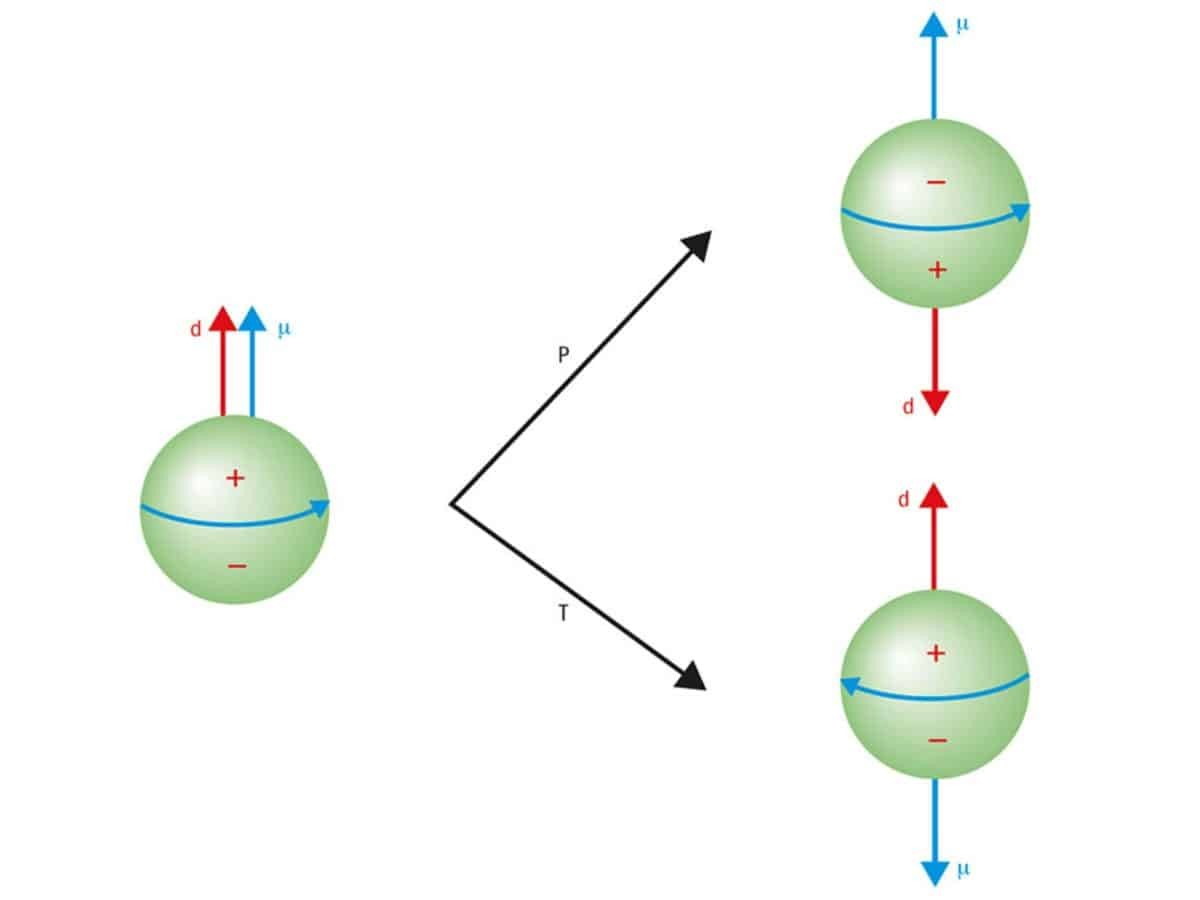
The electric dipole moments of protons and deuterons reflect the asymmetry of the internal charge distribution relative to the spin direction. According to Standard Model predictions, their values are non-zero but extremely small, on the order of 10⁻³¹ e·cm, far below current experimental sensitivity. If experiments can detect an electric dipole moment signal within the currently achievable precision range, it would provide important clues for exploring new physics beyond the Standard Model.
Such measurements are also closely related to the matter-antimatter asymmetry problem. Electric dipole moments are highly sensitive to CP violation, and experimental detection results can help test whether there are sources of CP violation beyond the known mechanisms in nature.
Since electric dipole moment signals are extremely weak, experiments typically require the use of storage rings, where polarized particle beams circulate along closed orbits multiple times, and polarimeters record changes in spin direction. The challenge is that the particle's magnetic dipole moment causes stronger spin precession, which can mask the electric dipole moment signal. Therefore, researchers need to keep the particle spin in a "frozen" or "quasi-frozen" state relative to the beam direction.
The traditional proton "frozen spin" scheme relies on a purely electrostatic storage ring, where at a specific energy the proton spin can be maintained aligned with the direction of motion. However, since the deuteron's anomalous magnetic moment has a different sign, the purely electrostatic scheme cannot be directly applied, and both electric and magnetic fields are typically required. This also means that, under traditional designs, proton and deuteron measurements often require accelerator rings of different configurations.
This study adopts the "quasi-frozen spin" approach: the spin is not fixed throughout the entire ring at all times, but rather, after being deflected in certain sections, the accumulated rotation is cancelled by compensating elements, bringing it close to its initial state after each repeating unit. The research team calculated the minimum length requirements for the compensating elements and compared the motion and spin behavior of protons and deuterons in the same ring structure.
In the proposed storage ring configuration, magnetic elements are responsible for maintaining the beam orbit, while compensators are placed in the straight sections to cancel the spin rotation accumulated as particles pass through the magnetic arcs. The researchers analyzed two compensator designs: one is a Wien filter that uses crossed electric and magnetic fields to adjust the spin direction; the other consists of electrostatic deflection elements designed to simultaneously affect beam deflection and spin state.
The calculation results show that this configuration is suitable for both deuterons and protons. When switching between different particle modes, the compensator polarity or orientation needs to be adjusted, and the beam energy must be changed. For deuterons, within 16 ring periods, approximately 99% of the effective signal can be retained compared to the ideal frozen spin state; for protons, the same structure can retain approximately 80% of the effective signal. The researchers believe this provides a reference for designing the number of repeating units and sensitivity in the storage ring for proton measurements.
However, the compensator length required for the proton beam at its optimal energy is nearly five times that for the deuteron beam. To perform measurements of both particle types in the same ring, the research team proposed reducing the proton energy to shorten the compensator length, but this would correspondingly reduce the sensitivity of proton measurements.
The researchers state that this method brings proton and deuteron electric dipole moment measurements closer to realistic experimental conditions, and can also be used for polarization control, higher-energy beam studies, and searches for axion-like particles. In the future, the relevant teams plan to validate the quasi-frozen spin method and achieve spin coherence times on the order of 1000 seconds. The NICA-Nuclotron facility in Russia is considered to have potential for conducting such research, and scientists are also discussing options such as building a dedicated storage ring.
Disclaimer: Information republished from partner media, institutions or other websites is provided for reference and communication purposes only. It does not imply endorsement of its views or verification of its accuracy. Please contact us if any content infringes rights or requires correction.