
Russia's SKIF "Microfocus" experimental station to conduct elemental and structural studies of ores
 Scan to share
The Microfocus station, the first experimental station of the Siberian Circular Photon Source (SKIF) Phase 1, will be used to study the elemental composition and structural characteristics of samples in fields such as geology, geophysics, microelectronics, and materials science. The station is being created and integrated by Tomsk Polytechnic University and will in the future serve the exploration and development of hard-to-recover gold, platinum, rare earth elements, and oil reserves.
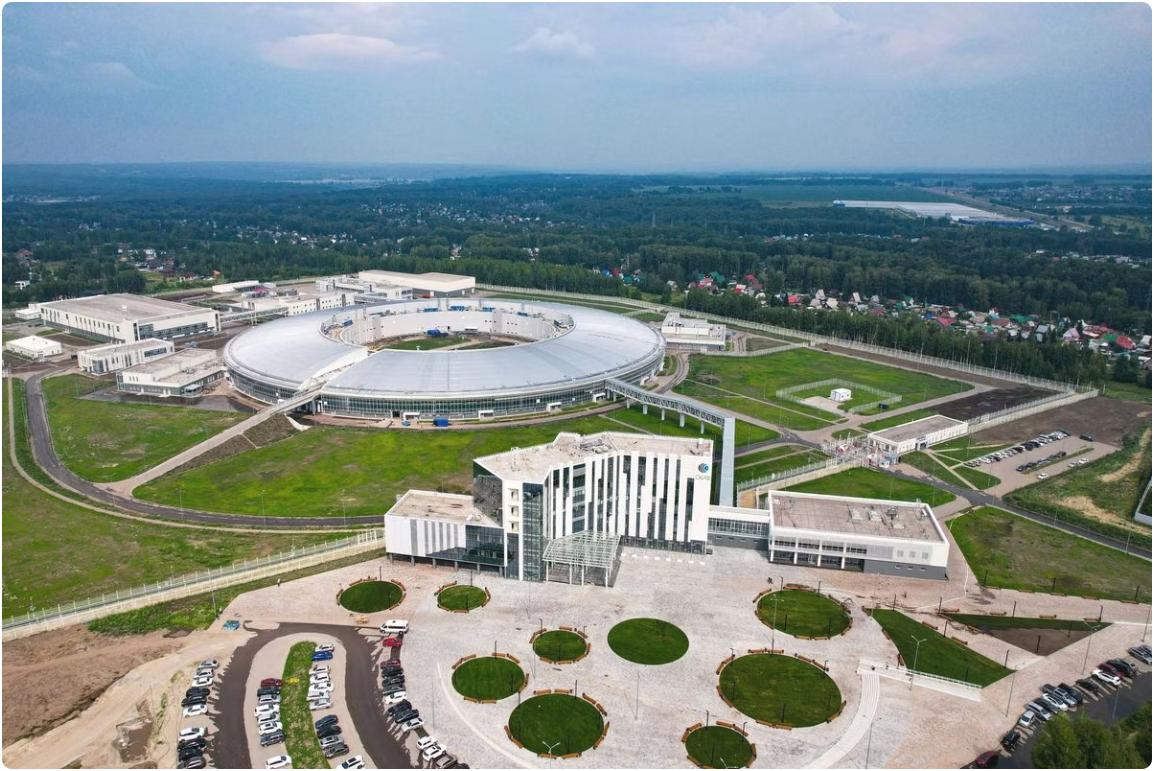
According to reports, the first experiments at the Microfocus station will focus on ore sample studies. Such research is an important step in the development of new deposits, helping researchers more accurately assess deposit reserves, select more suitable extraction methods, and identify promising areas for subsequent exploration.
The station employs synchrotron radiation X-ray fluorescence analysis (SRXRF), which allows the study of elemental composition without destroying samples. With this technique, researchers can detect valuable trace elements in rocks at concentrations not exceeding 1 mg/ton, identify key research areas, and build three-dimensional distribution maps of mineral content in ore deposit rock samples.
This capability is particularly critical for gold mining development. As placer gold resources are gradually depleted, the content of precious metals in some ores has dropped to about 1 to 0.7 grams per ton, placing higher demands on the identification of low-content elements and ore enrichment processes.
One of the first research targets of the Microfocus station will be core samples from the Sukhoi Log gold deposit. This deposit is considered one of the world's largest gold deposits, with estimated gold reserves exceeding 2,500 tons, but its resources are hosted in black shale formations with complex ore composition and diverse modes of gold occurrence, making it difficult to develop efficient enrichment solutions. Researchers indicate that detailed analysis using high-resolution synchrotron radiation methods is expected to identify previously undetected forms of gold occurrence, assess the role of organic matter in the redistribution and enrichment of gold, and provide a basis for optimizing ore enrichment schemes.
In addition to mineral research, the station is also planned for use in studying lake sediments in the Tunguska Nature Reserve. The relevant lakes are located approximately 30 to 40 kilometers from the epicenter of the 1908 Tunguska event, and anomalous sedimentary layers dating back to 1908–1909 have been found in sediment cores. Researchers hope to use the facility to search for possible extraterrestrial particles in the sedimentary layers and further analyze the associated geological records.
Tomsk Polytechnic University is the integration unit for two SKIF Phase 1 experimental stations — the Microfocus station and the Electronic Structure station. The university's researchers and engineers have participated in the design of the stations, the manufacturing of scientific equipment, and have coordinated experts from multiple Russian universities and research institutions of the Russian Academy of Sciences in completing the construction of related components.
The Microfocus technology can focus the intense X-ray beam produced by the synchrotron radiation source to a scale of about 200 nanometers, approximately one five-hundredth of the diameter of a human hair, and the focus size can be further reduced as needed. This enables researchers not only to obtain high-precision material data but also to observe internal processes in materials in real time. According to the project team, with this technology, relevant analysis cycles can be shortened to one week to one month, whereas similar studies previously often took more than a year.
Disclaimer: Information republished from partner media, institutions or other websites is provided for reference and communication purposes only. It does not imply endorsement of its views or verification of its accuracy. Please contact us if any content infringes rights or requires correction.