
Singapore Plans "Western Island"; Experts Say It Could Serve as a Study Subject for Future Nuclear Power Siting
 Scan to share
Singapore plans to integrate several outlying islands south of Jurong Island over the coming decades to build the "Western Island" (Western Island), which will support the development of new power generation infrastructure and other projects. Several experts interviewed believe that if Singapore decides to deploy nuclear energy in the future, the Western Island could become one of the potential sites requiring focused study, but it cannot yet be directly equated with a "nuclear island."
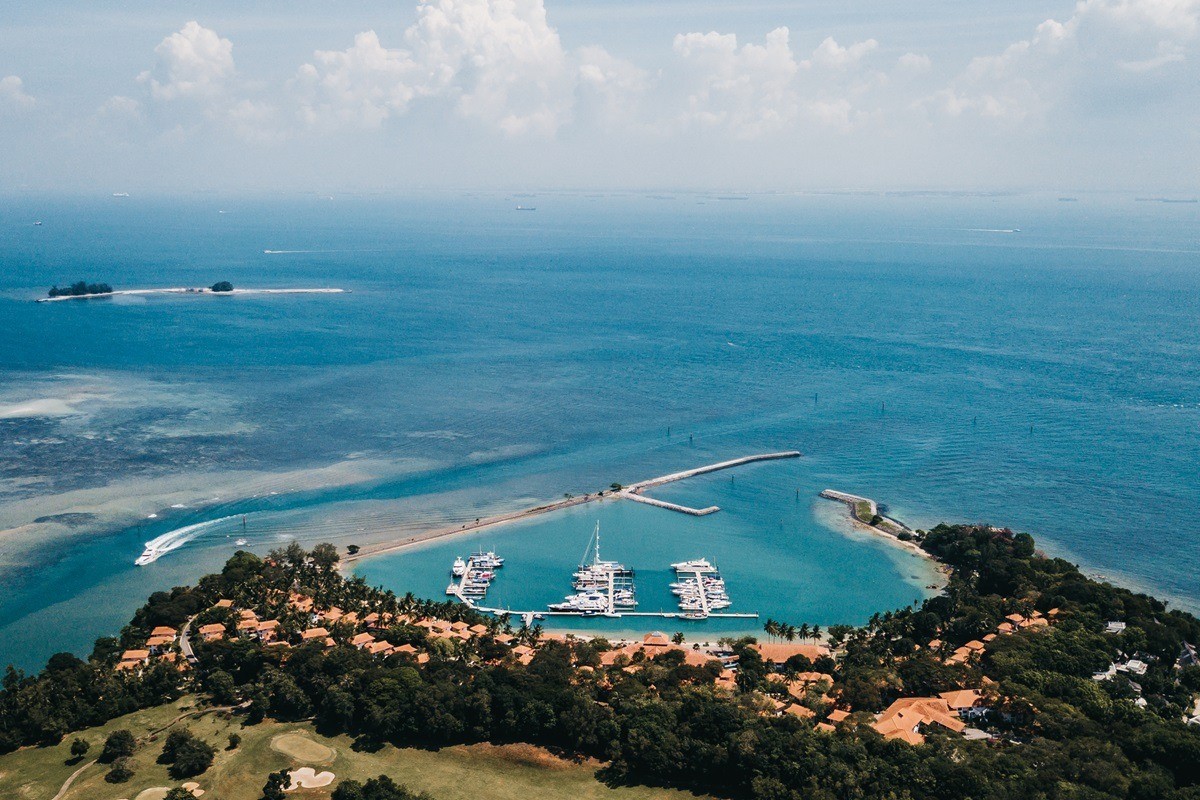
Singapore Prime Minister Lawrence Wong announced at the National Day Rally on August 23 that Singapore plans to consolidate the small islands south of Jurong Island, including Semakau, Pulau Bukom, and Pulau Sudong, into the Western Island to meet future energy and industrial development needs.
Dr. Nian Jiakang, co-founding chairman of an independent energy think tank, believes that Singapore's limited land and dense population make the integration of outlying islands conducive to expanding the research space for future nuclear siting. He said that if Singapore decides to develop nuclear energy, the Western Island should be included as a serious evaluation option, but this does not mean a conclusion has been reached on such deployment.
Professor Lee Poh Seng, Head of the Department of Mechanical Engineering at the National University of Singapore, also believes that the Western Island could become one of the candidate sites for nuclear facilities, but it is still too early to determine that it will necessarily be used for nuclear power. He noted that Singapore's existing power generation capacity remains relatively sufficient, but preparations must be made in advance for the energy mix of 2040 and even 2050. The significance of the Western Island lies in reserving space for rapidly developing energy technologies, giving the government flexibility in future energy decision-making.
Dr. Zhou Erbin, Senior Fellow at the S. Rajaratnam School of International Studies at Nanyang Technological University, believes that the farther the outlying islands are from the main island, the higher public acceptance of nuclear facilities typically becomes, but corresponding transmission losses and submarine cable costs would also increase.
Currently, Jurong Island is already connected to the Singapore mainland via a causeway, and a second connection link is planned for the future. Once the Western Island is completed, it will be linked to Jurong Island, thereby forming an indirect connection with the mainland. Zhou Erbin said that if nuclear facilities were located on the Western Island, the relevant access routes could facilitate the evacuation of personnel and the entry of emergency teams, helping to improve accident response efficiency.
Nian Jiakang also cautioned that locating a nuclear power plant on an outlying island does not equate to absolute safety assurance. Nuclear deployment also depends on multiple factors, including reactor design, geological and marine conditions, distance from densely populated areas, grid connection capacity, emergency planning, and regulatory systems. If Singapore decides to deploy nuclear energy, the relevant facilities would include not only reactors but also grid connections, cooling systems, safety and emergency devices, as well as nuclear fuel and radioactive waste management facilities.
Singapore has not yet decided whether to deploy nuclear energy. According to current plans, the International Atomic Energy Agency (IAEA) will conduct a Phase 1 assessment of Singapore next year to determine whether its capacity-building efforts for a potential future nuclear deployment are adequate. The final assessment report is expected to be released next year or the year after, along with recommendations for improvement.
The Singapore Nuclear Research and Safety Institute (SNRSI) stated that Singapore has not yet published any nuclear siting considerations or plans, and it is currently impossible to speculate on whether a nuclear power plant will be built on the Western Island. The institute believes that if advanced nuclear energy development can be integrated with an industrial ecosystem requiring industrial heat, higher efficiency could be achieved. If Singapore decides to deploy nuclear energy in the future, planners will also consider broader economic and industrial objectives in addition to ensuring compliance with nuclear safety requirements.
The institute also noted that locating a nuclear power plant in coastal or offshore areas could facilitate the use of seawater to meet related cooling needs, reducing reliance on Singapore's limited freshwater resources. Given that the Western Island will be built through land reclamation, if a nuclear power plant is to be sited on newly reclaimed land, a comprehensive safety assessment must be completed in advance.
The latest estimates from Singapore's Energy Market Authority show that the peak demand on Singapore's power system will grow at an annual rate of 2.4% to 4.8% over the next 10 years, potentially reaching 9.6 GW to 11.4 GW by 2031. Nian Jiakang believes that with approximately 95% of Singapore's power generation relying on imported natural gas, coupled with land scarcity, the Western Island will provide important flexibility for future energy deployment.
Lee Poh Seng believes that the Western Island should not be simply viewed as a "power generation island," but is better positioned as an integrated energy and industrial platform. With the development of industries such as artificial intelligence and digitalization, substantial resources including electricity, hydrogen, coolants, and steam will be needed in the future. Coordinating energy and industrial needs during the planning stage would help improve overall efficiency.
Disclaimer: Information republished from partner media, institutions or other websites is provided for reference and communication purposes only. It does not imply endorsement of its views or verification of its accuracy. Please contact us if any content infringes rights or requires correction.