
IAEA Director General Rafael Grossi: Urges Member States to Continue Firmly Supporting the Work of the International Atomic Energy Agency
 Scan to share
The 68th General Conference of the International Atomic Energy Agency (IAEA) officially opened in Vienna, Austria. This year's conference welcomed nearly 4,000 delegates, setting a record high for attendance. In his opening address, IAEA Director General Rafael·Grossi emphasized that despite current global tensions and numerous challenges, the international community's “shared commitment” to promoting the peaceful uses of nuclear technology and maintaining nuclear safety remains firm.
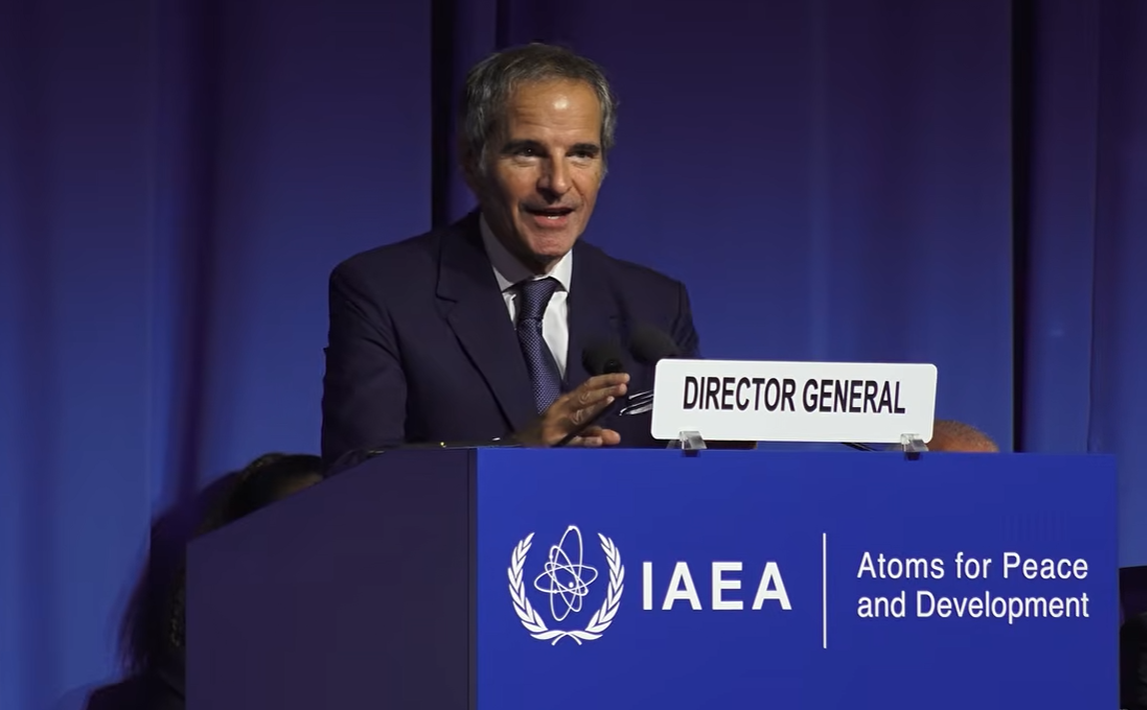
In his address, Grossi first extended a warm welcome to Timor-Leste, which newly joined the IAEA, bringing the agency's membership to 182. Grossi recalled that 70 years ago, when the IAEA was founded, it had only 56 member states, and today the agency has grown into a core multilateral platform for addressing global nuclear safety, nuclear non-proliferation, and nuclear technology applications.
Breakthrough Progress in Nuclear Non-Proliferation and Safeguards
In the field of nuclear non-proliferation and safeguards, Grossi announced a major development: the IAEA recently confirmed the resolution of Syria's long-standing safeguards non-compliance issue. Grossi stated that he had personally visited relevant sites in Syria, including Deir ez-Zor, a month earlier, and after fully obtaining the required information and access, successfully brought this long-standing issue back on track. He noted that this achievement fully demonstrates the critical role of multilateralism and the United Nations mechanism in resolving international security crises.
Regarding the Iranian nuclear issue, Grossi once again called on Iran to restore full cooperation with the IAEA. He emphasized that under the current backdrop of continued tensions in the Middle East, only through joint efforts can the necessary transparency and international confidence be provided regarding the exclusively peaceful nature of Iran's nuclear program.
Nuclear Safety and Non-Proliferation Principles on the Frontline
Regarding the severe safety threats facing Ukraine's Zaporizhzhia Nuclear Power Plant (ZNPP), Grossi revealed that the IAEA has successfully facilitated the 7th local ceasefire agreement between Ukraine and Russia on the frontline, in order to carry out emergency repairs on damaged external power lines and make every effort to prevent a radiological nuclear accident.
In addition, Grossi reaffirmed the cornerstone role of the Treaty on the Non-Proliferation of Nuclear Weapons (NPT), emphasizing the need to unswervingly consolidate the international nuclear non-proliferation regime and prevent the proliferation of nuclear weapons from bringing irreversible risks to global security.
Nuclear Renaissance: AI, SMRs, and Multilateral Financial Transformation
Facing the demands of global energy transition and economic development, Grossi pointed out that nuclear energy is ushering in unprecedented development opportunities. The IAEA predicts that by 2060, global nuclear power installed capacity is expected to reach three times the current level.
In terms of innovative applications, the conference focused on the following major emerging trends:
Artificial Intelligence and Data Centers: “Atoms for Algorithms” became a focal point, with nuclear energy being regarded as an ideal clean energy source to meet the enormous electricity demands of the digital economy and AI data centers.
Small Modular Reactors (SMRs): SMR technology is being promoted at an accelerated pace, and the IAEA is committed to ensuring that this technology can benefit developing countries broadly.
Maritime Nuclear Power Applications: The IAEA is working closely with the International Maritime Organization (IMO) and member states such as the United States to advance the development of regulations and safety standards for nuclear power technology in commercial shipping.
It is noteworthy that the field of nuclear energy financing has ushered in a historic transformation. Following the historic cooperation agreement with the World Bank, representatives from dozens of multilateral development banks, sovereign wealth funds, and financial institutions recently traveled to Vienna for training. The previous situation of prohibiting financial support for nuclear energy projects has been completely reversed, which will greatly assist developing countries in Africa, Latin America, and Asia in obtaining nuclear energy financing.
Nuclear Technology Benefiting Livelihoods and Health
In addition to the energy and security fields, Grossi also highlighted the remarkable achievements of nuclear technology in improving global livelihoods:
“Rays of Hope” Initiative: Aimed at addressing the unequal distribution of global cancer treatment resources. A scientific forum was held concurrently during this year's conference to accelerate the delivery of breast cancer screening equipment to developing countries (especially in Africa) and to assist in building cancer diagnosis and treatment centers.
Zoonotic Disease Integrated Action (ZODIAC): Utilizing nuclear technology for early detection of pathogens, currently equipping 63 laboratories in 71 countries, and assisting countries such as the Democratic Republic of the Congo in responding to outbreaks including Ebola.
Environmental Protection and Agriculture: Continuously promoting the use of the Sterile Insect Technique (SIT) to control pests and diseases, as well as applying nuclear technology to detect microplastics to protect the marine ecological environment.
In his address, Grossi called on member states to continue firmly supporting the work of the IAEA and to jointly promote nuclear energy and nuclear technology in playing a greater role in safeguarding world peace, addressing climate change, and enhancing human well-being.
Disclaimer: Information republished from partner media, institutions or other websites is provided for reference and communication purposes only. It does not imply endorsement of its views or verification of its accuracy. Please contact us if any content infringes rights or requires correction.