
Russian Research Team Proposes New Method for Studying Morphology of Flexible Crystals
 Scan to share
Experts from the Siberian Circular Photon Source Collaboration Center and the Institute of Solid State Chemistry and Mechanochemistry of the Siberian Branch of the Russian Academy of Sciences have proposed a comprehensive method for studying the morphology of flexible organic crystals. The method combines computational algorithms, laboratory microscopy techniques, and experimental diffraction studies, and can be used to more reliably determine crystal geometry and facet arrangement. The results have been published in the Journal of Applied Crystallography.
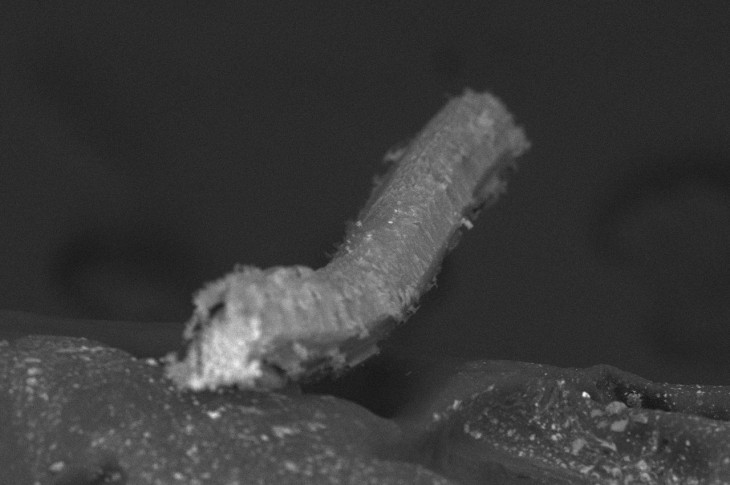
Flexible crystals are a relatively rare class of organic crystals that can bend under very small mechanical stress while maintaining lattice integrity. Researchers indicate that among compounds with determined crystal structures, the proportion exhibiting such properties is less than 0.01%. The molecular arrangement of these materials enables them to combine fracture resistance with bending capability under external stress, and they are therefore considered promising for the development of ultra-sensitive sensors, soft robotics, pharmaceuticals, and other flexible durable materials, with potential applications in electronics, optics, materials science, and pharmaceuticals.
However, the transition of flexible crystals from the laboratory to technological applications still faces fundamental challenges. When designing such materials, researchers need to accurately understand their three-dimensional structure, facet arrangement, and the facets along which bending may occur; otherwise, it is difficult to predict the extreme deformation capability of compound crystals. Relevant measurements typically require X-ray diffraction analysis using laboratory diffractometers or synchrotron radiation sources.
Denis Alexandrovich Rychkov, a participant in the study, stated that researchers need extensive sample data to determine whether crystals bend and along which facets they bend. Only on this basis can predictive models be established and new crystals with specific plastic or elastic deformation properties be further designed. Previously, due to the inherent deformability of flexible crystals and their complex growth characteristics, researchers often encountered difficulties in precisely determining facets on laboratory diffractometers, and different teams lacked unified measurement methods.
The core of the proposed comprehensive method lies in aggregating as much indirect data as possible on crystal morphology, facet arrangement, and interfacial angles. The research team combined computational prediction of crystal morphology, high-precision measurement of interfacial angles under optical microscopy or scanning electron microscopy, crystal structure analysis, and single-crystal mounting and orientation methods, followed by morphology determination through single-crystal X-ray diffraction imaging.
The researchers believe that this method has the potential to establish a common standard for flexible crystal research, gradually shifting related work from qualitative observation and empirical judgment toward a predictable and designable material development pathway. The relevant data can also be entered into databases, providing high-quality sources for neural network algorithm training.
According to the plan, after the launch of the Siberian Circular Photon Source, similar research will be conducted at the 1-2 "Structural Diagnostics" beamline and the 1-1 "Microfocus" beamline. The use of synchrotron radiation is expected to improve experimental efficiency, and the computing capabilities of the data processing center will also help researchers analyze more complex crystal structures that are currently difficult to process due to computational resource limitations. The study is supported by the Russian Science Foundation under project No. 23-73-10142.
Disclaimer: Information republished from partner media, institutions or other websites is provided for reference and communication purposes only. It does not imply endorsement of its views or verification of its accuracy. Please contact us if any content infringes rights or requires correction.