
Hualong One Pressurizer Electric Heaters Achieve Coverage of Two Major Technical Routes
 Scan to share
The pressurizer electric heater is an important safety-class component of the reactor coolant system (primary loop) in pressurized water reactor nuclear power plants, directly affecting unit pressure regulation and safe, stable operation. The localized pressurizer electric heater developed by Chuanyi Instrument Co., Ltd., a subsidiary of SINOMACH Instrumentation Group under SINOMACH Group, has been applied to China's self-developed Generation III nuclear power units such as "Hualong One."
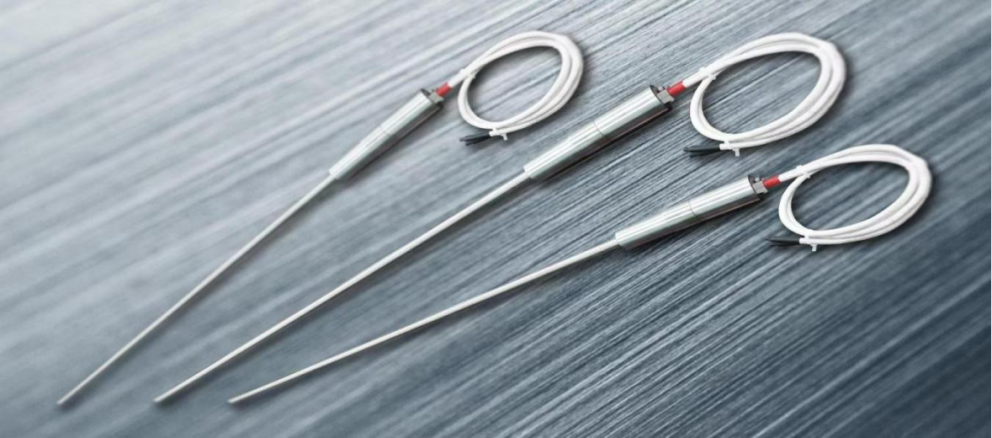
The photo shows the qualification prototype of the "Hualong One" pressurizer electric heater
With the batch construction of "Hualong One" units advancing, units adopting different technical routes have imposed new customized operating condition requirements on pressurizer electric heaters. In October 2019, Chuanyi Instrument, together with China General Nuclear Power Engineering Co., Ltd., initiated the development of the CGN-version "Hualong One" pressurizer electric heater. This equipment operates for extended periods in the high-temperature, high-pressure, and intense radiation environment of the primary loop, requiring both stable insulation performance and a cladding that, as part of the pressure boundary, must not suffer failures such as deformation or cracking.
The project's technical efforts focused on dedicated nuclear-grade cables, power cable connection structures, processing of long non-heating sections, and long-term cladding reliability. Among these, the dedicated nuclear-grade cables, responsible for power transmission, must maintain reliable power supply under both normal and accident conditions. Chuanyi Instrument, together with relevant organizations, jointly compiled the cable specification, and participated in the review of the manufacturing outline, quality plan, and qualification program. After 14 months of collaborative efforts, the dedicated nuclear-grade cables completed the full set of qualification tests in December 2020.
Regarding the cable connection device, the equipment's limited installation space necessitated a design that also satisfies requirements for detachable maintenance and electrical performance. The R&D team completed the design and verification of over ten structural schemes. After multiple rounds of review and drawing optimization, a connector scheme featuring a relatively simplified structure and high reliability was finalized and granted a national patent.
Compared with previous-generation products of the same type, the non-heating section of this equipment is 40% longer, imposing stricter requirements on the forming quality and geometric tolerance control of slender components. The project team stabilized key processes by optimizing the feed direction and adjusting the forming compression ratio, achieving consistent quality under batch production conditions. To address the mechanical strength requirements arising from the new single-baffle structure of the next-generation pressurizer, the team also independently developed test fixtures and prototypes, conducted mechanical vibration simulation tests, and inspected welds, tubing, and process procedures. After testing, the cladding underwent non-destructive testing and remained in intact condition overall.
After prototype manufacturing was completed, the equipment also had to pass nuclear-grade qualification. Since the original RCC-E specification originates from France, its test methods, equipment conditions, and acceptance criteria could not be directly applied to domestic equipment verification. The R&D team benchmarked each clause against the RCC-E specification, domestic nuclear power-related standards, GB/T 12727, and IEC international standards, organized expert reviews, and, after more than a year, developed a qualification implementation plan adapted to domestic test conditions. In August 2021, the full set of qualification tests was completed, with all performance indicators meeting design requirements; in September of the same year, the China Machinery Industry Federation organized an expert review, concluding that the product's performance indicators had reached the advanced level of similar international products.
After completing the development of supporting products for the CGN-version "Hualong One," Chuanyi Instrument continued advancing related technology R&D. In 2023, the team, together with the Nuclear Power Institute of China, initiated the development of the CNNC-version "Hualong One" pressurizer electric heater; in August 2025, the pressurizer electric heater adapted to the technical requirements of the CNNC-version "Hualong One" unit was successfully developed, achieving coverage of both major technical route models of "Hualong One."
At present, the localized pressurizer electric heater has been successively applied to mainstream Generation III nuclear power units in China and deployed at multiple key nuclear power bases. In April 2026, the first "Hualong One" unit in the Yangtze River Delta—Sanao Nuclear Power Unit 1—was put into commercial operation, with the unit's supporting localized pressurizer electric heater applied simultaneously. From R&D and design to batch manufacturing and engineering application, the related products have formed a relatively complete industrial chain, providing supporting capabilities for the self-reliance of China's Generation III nuclear power equipment.
Disclaimer: Information republished from partner media, institutions or other websites is provided for reference and communication purposes only. It does not imply endorsement of its views or verification of its accuracy. Please contact us if any content infringes rights or requires correction.