
Russia's EVRAZ Plans to Develop High-Performance Railway Rails Using SKIF Synchrotron Radiation Platform
 Scan to share
Russian railway infrastructure component manufacturer EVRAZ PJSC plans to cooperate with the SKIF Collective Use Center to develop new alloys and high-performance rails using synchrotron radiation experimental capabilities, aiming to improve the mechanical properties and operational reliability of rails.
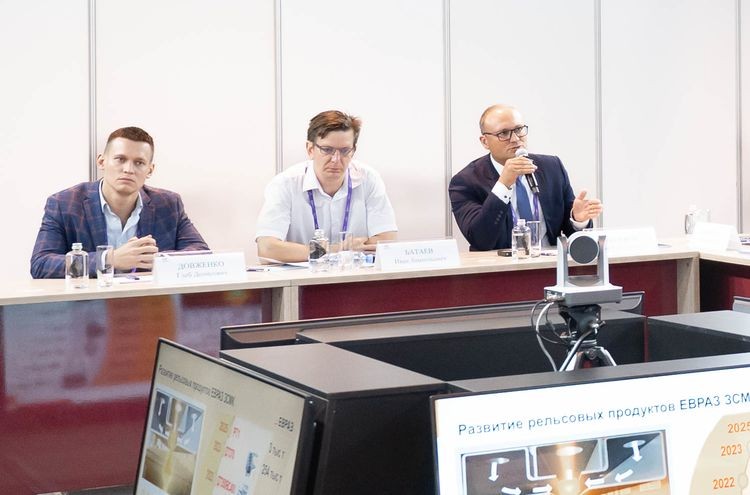
At a roundtable discussion on "Development of New Structural and Tool Materials and Mechanical Engineering Technologies Using Synchrotron Radiation" held during the Technoprom 2026 forum, participating experts discussed the application prospects of the SKIF Collective Use Center in the development of high-quality rolled metal products. EVRAZ stated that Russia's railway operating environment is complex, with long line distances, numerous mountain routes, prominent low-temperature conditions, coupled with growing freight volumes, placing higher requirements on the strength, stability, and durability of steel materials and rail products.
Yegor Polevoi, Director of the Research and Development Center at West Siberian Steel Plant (PJSC EVRAZ), stated that the company is cooperating with Russian research institutions to study structural changes and failure mechanisms of metal materials during operation, including rail wear, formation of contact fatigue defects, and development of brittle fracture. However, some key research has exceeded the capabilities of existing experimental tools. EVRAZ hopes that after SKIF becomes operational, it can conduct dynamic studies to observe in real time the structural evolution of materials during production processes, as well as changes occurring in materials under conditions close to actual operational loads.
According to available information, Russia is advancing the federal project "High-Speed Railway Development," planning to expand the high-speed railway network in multiple directions, with related infrastructure required to support train speeds of up to 400 km/h. This also means that research on rail materials, production processes, and service performance needs to be further upgraded.
As one of the proposed facilities in the second phase of the SKIF Collective Use Center, the "Engineering Materials Science" beamline 2-1 is considered an important platform for addressing the aforementioned issues. The beamline was initiated by Novosibirsk State Technical University, which also participates in the development of research projects. Ivan Batayev, Head of the Laboratory of Physicochemical Technologies and Functional Materials at Novosibirsk State Technical University, explained that the beamline can conduct X-ray irradiation studies on samples of relatively large sizes, reducing sample preparation requirements; tomography methods can be used to identify internal defects such as cracks and propagating non-metallic inclusions; internal stress analysis can help locate high-risk zones in rolled metals; and high-resolution spectral analysis can identify inhomogeneity in elemental composition.
In addition, the beamline will support in-situ studies of rail steel production processes, used to develop steel production modes and thermomechanical processing techniques to achieve target product properties. Experts believe that such synchrotron radiation methods have significant application demand in metallurgical enterprises and can provide more refined analytical tools for complex materials problems.
Gleb Dovzhenko, Senior Researcher at the SKIF Collective Use Center, stated that the beamline equipment can also reproduce rail operating conditions within the synchrotron radiation beam, simulating the pressure, friction, impact, and thermal loads generated by freight trains or high-speed trains passing through using specialized test devices. Synchrotron radiation methods can analyze compositional and structural changes in materials at the atomic scale under load, and observe the nucleation and propagation of defects through diffraction imaging techniques. This will help researchers further understand the mechanisms of material property formation and the key factors affecting rail service life.
Disclaimer: Information republished from partner media, institutions or other websites is provided for reference and communication purposes only. It does not imply endorsement of its views or verification of its accuracy. Please contact us if any content infringes rights or requires correction.