
Berkeley Lab Leads Development of Portable Active-Source Muon Imager
 Scan to share
The U.S. Department of Energy's Lawrence Berkeley National Laboratory and Ideon Technologies have received funding from the DOE's Advanced Research Projects Agency-Energy (ARPA-E) to jointly develop a field-deployable active-source muon imaging technology through the "Reliable Ore Characterization Using Cornerstone Sensing Technologies" (ROCKS) program. The three-year project aims to enhance the detection and characterization of underground critical mineral resources.
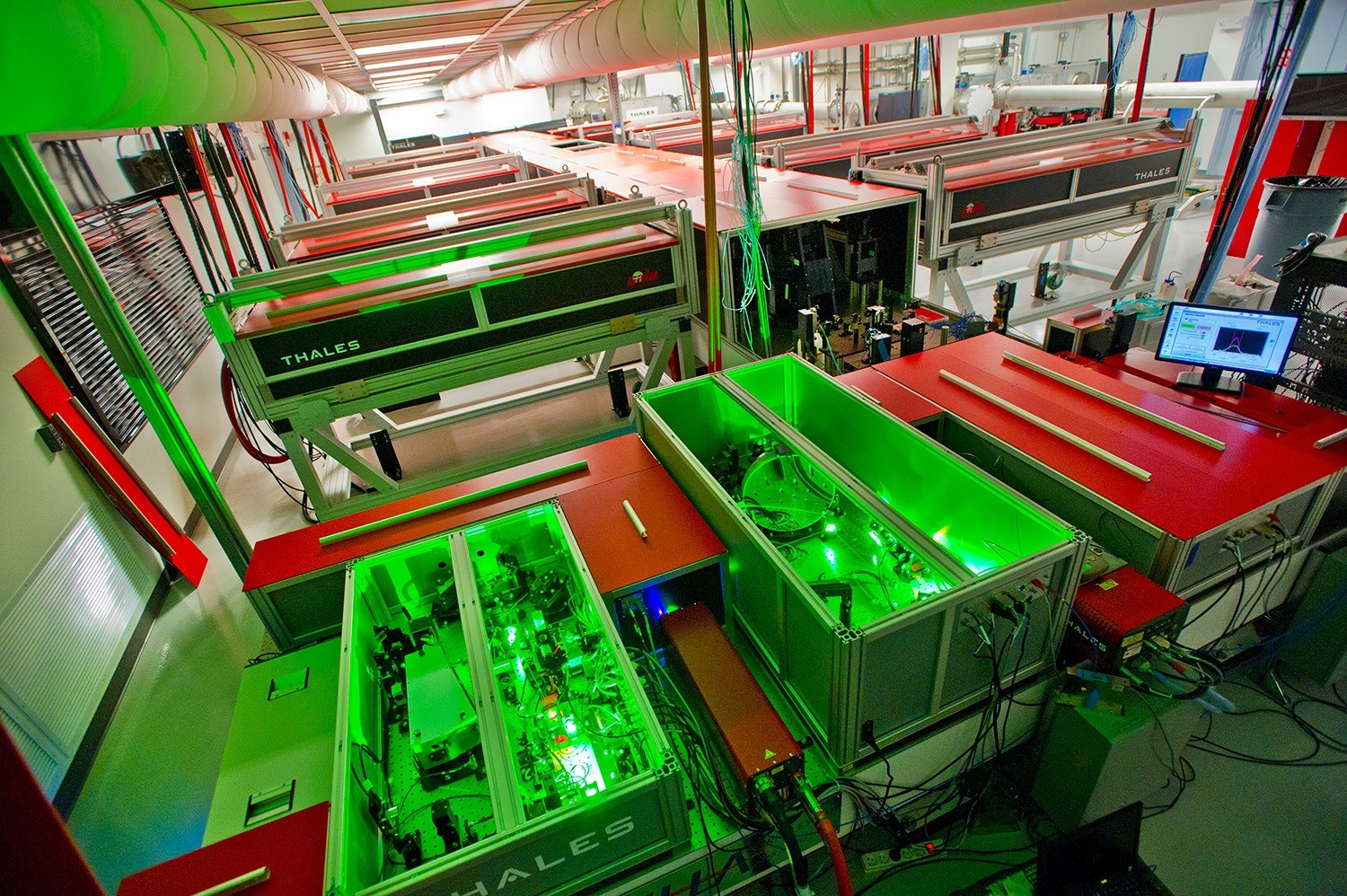
Image credit: Lawrence Berkeley National Laboratory
Muons are subatomic particles with strong penetrating capability. Previously, Ideon Technologies has used "passive" muons produced by cosmic rays in the atmosphere for ore body imaging in the mining sector, mapping mineral distributions and analyzing subsurface structures. However, passive muons primarily arrive from above, limiting detection angles; meanwhile, the natural flux is low—approximately one per square centimeter per minute—and imaging often requires days, weeks, or even months.
The "active" muon source proposed for development in this project will generate high-resolution three-dimensional images by directing high-flux muon beams at target areas such as ore bodies. The project team states that this technology could reduce the time required for mineral discovery and characterization from months to hours, thereby accelerating the process from exploration to development.
The technical approach leverages the laser plasma accelerator at the BELLA Center of Berkeley Lab's Accelerator Technology & Applied Physics Division. This type of accelerator uses high-intensity, ultra-short laser pulses to generate wakefields in plasma, accelerating electron beams to multi-gigaelectronvolt energies over centimeter-scale distances; the electron beams then strike a solid target, producing muon beams with intensities three to four orders of magnitude higher than natural flux.
According to the project lead, muons at approximately 10 GeV energy can penetrate rock, soil, and ore layers up to 20 meters thick; muons in the 30 to 100 GeV energy range can penetrate objects from 50 meters to over 100 meters thick. Berkeley Lab has previously demonstrated single-stage acceleration of 10 GeV electron beams over a 30-centimeter distance. This project plans to couple two approximately 6 GeV linear plasma accelerator stages to achieve acceleration exceeding 12 GeV, and to validate the technical pathway for subsequent 30 GeV and 100 GeV systems.
To achieve two-stage acceleration, the project will use active plasma lenses to refocus high-energy electron beams, paired with high-reflectivity plasma mirrors to preserve laser characteristics, enabling electron beams to be transferred between accelerator stages and continue gaining energy. This design is key to achieving higher-energy, more penetrating muon beams.
Under the division of work, Berkeley Lab's Accelerator Technology & Applied Physics Division is responsible for developing the hardware and the two-stage 12 GeV electron source; Ideon Technologies will provide muon tomography, detector array, physics simulation, and geological software capabilities; Berkeley Lab's Physics Division will provide muon instrumentation and particle tracking diagnostics to optimize the muon beam.
The project team believes that beyond critical mineral exploration, this technology can also be used to identify underground voids, fractures, and cavities, with potential applications in civil engineering, industrial safety, and critical infrastructure scenarios.
Disclaimer: Information republished from partner media, institutions or other websites is provided for reference and communication purposes only. It does not imply endorsement of its views or verification of its accuracy. Please contact us if any content infringes rights or requires correction.