
Rosatom Launches Full-Cycle Production of High-Purity Germanium Detectors
 Scan to share
Rosatom announced on September 9 that its subsidiary enterprises have begun producing detectors made of high-purity germanium and have established a complete domestic technology chain in Russia, from deep purification of germanium raw materials and detector manufacturing to the assembly of spectrometers and measurement instruments.
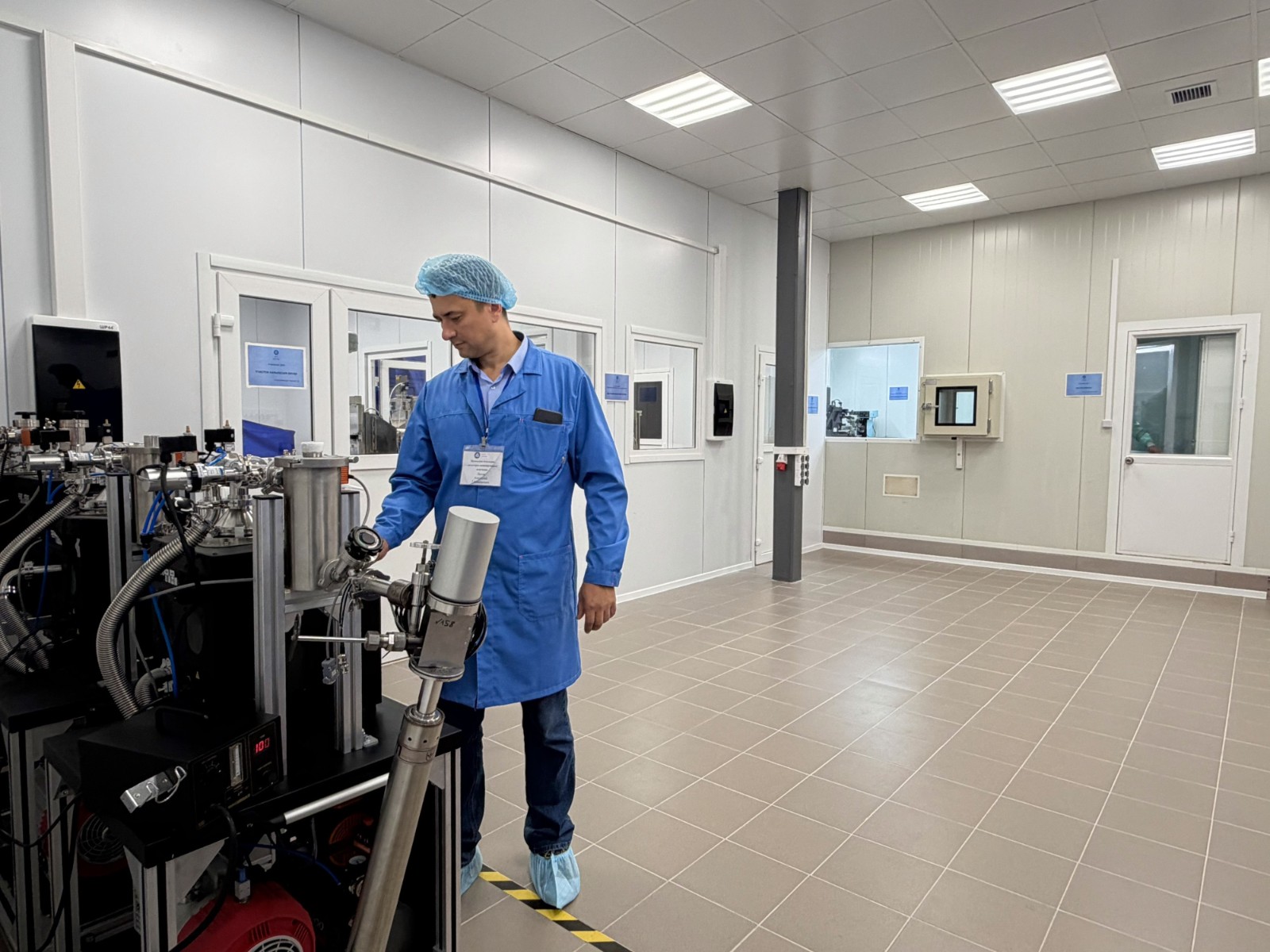
The final stage of this production chain is located at a new production facility of a plant under Rosatom's Automated Control Systems and Electrical Engineering Division. To meet the requirements for processing ultrapure materials, the facility has specially built a cleanroom compliant with ISO Class 8 standards to reduce contamination of germanium materials, improve product stability and extend equipment service life.
High-purity germanium detectors are key devices in precision gamma-ray measurement, capable of identifying specific radionuclides in the object being measured while detecting radiation. The related equipment can be used for isotope identification, spectral activation analysis of residual radiation in samples for NICA accelerator research, and can also serve scientific research tasks such as determining the composition of lunar soil, analyzing rare earth elements, and detecting ice reserves in lunar polar craters.
In this industrial collaboration, the Giredmet Institute under Rosatom's Chemical and Technology Cluster developed an experimental technology for producing ultrapure germanium and designed and manufactured experimental equipment for optimizing the production process of high-purity germanium single crystals. The institute has obtained the first batch of samples, verifying the role of the deep purification method in improving detector quality. According to reports, the purity of the relevant high-purity germanium single crystals reaches at least 7N grade, and the content of impurities affecting the electrophysical parameters of the crystals does not exceed one part per trillion. During operation, the crystals need to be cooled to approximately 77 K, i.e., the liquid nitrogen temperature of minus 196°C, to reduce the impact of thermal noise and ensure measurement accuracy.
Andrey Butko, General Director of Rosatom's Automated Control Systems and Electrical Engineering Division, stated that ultrapure germanium detectors represent one of the most complex and precise areas in Russia's nuclear instrumentation field, with extremely high requirements for material purity and process control. Currently, the entire process from raw materials to high-precision finished instruments has been completed domestically in Russia, which helps to develop task-specific solutions more quickly and to carry out maintenance services and plan for mass production. He also mentioned that the relevant team has developed 4 spectrometers, and the pilot products are being tested at the NICA accelerator complex.
In addition to large-scale scientific facilities, such equipment can also be used for coolant circuit monitoring at nuclear power plants, fuel cladding leak-tightness testing, environmental parameter monitoring, and on-site sample analysis at power plants. In industrial and security scenarios, high-purity germanium detectors can also provide high-precision measurement support for geological exploration of uranium ores and rare earth metals, incoming material inspection in metallurgy, and customs clearance.
Disclaimer: Information republished from partner media, institutions or other websites is provided for reference and communication purposes only. It does not imply endorsement of its views or verification of its accuracy. Please contact us if any content infringes rights or requires correction.