
Search Results
Keyword:muon imaging
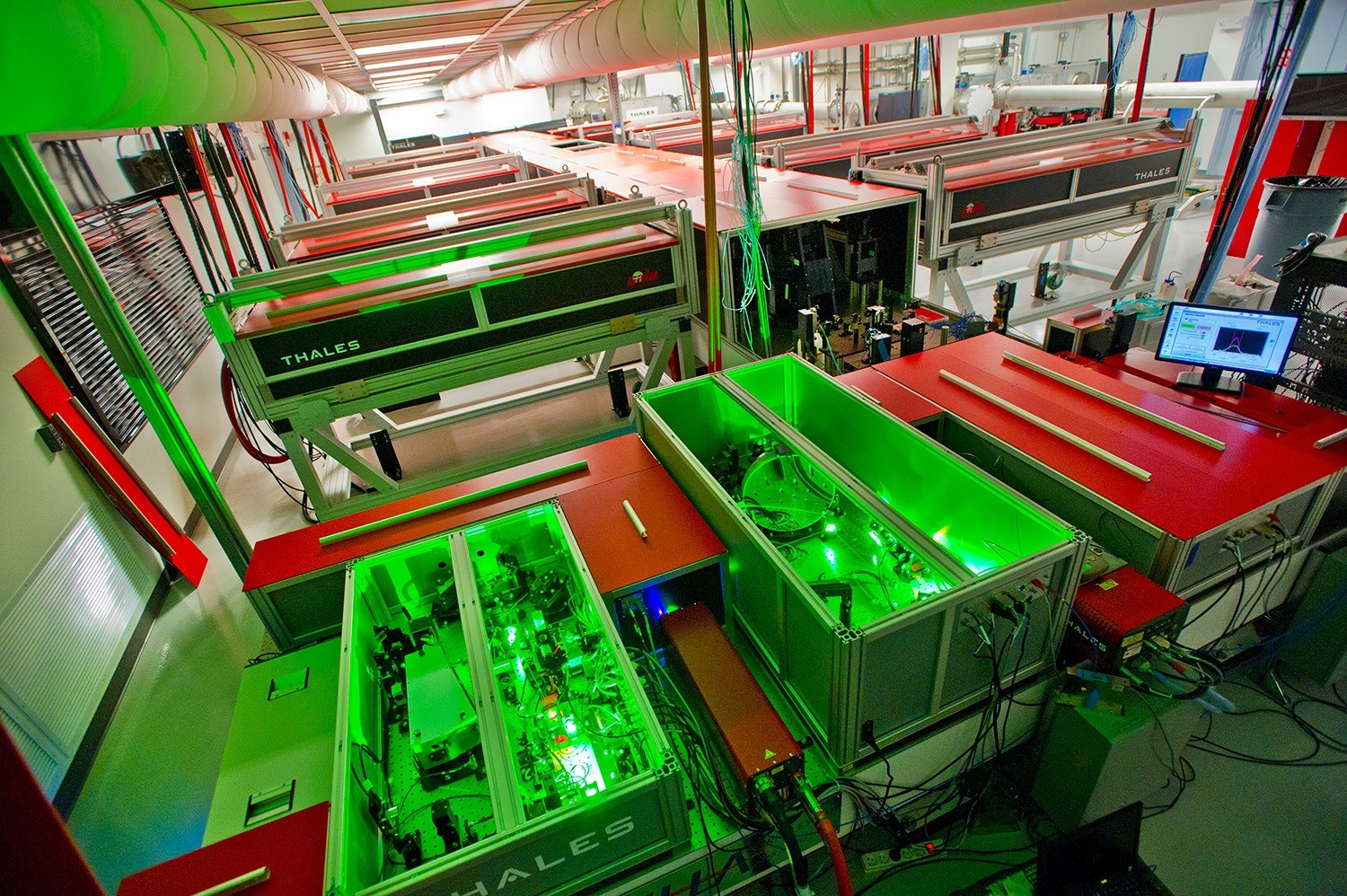
Berkeley Lab Leads Development of Portable Active-Source Muon Imager
The U.S. Department of Energy's Lawrence Berkeley National Laboratory and Ideon Technologies have received funding from the DOE's Advanced Research Projects Agency-Energy (ARPA-E) to jointly develop a field-deployable active-source muon imaging technology through the Reliable Ore Characterization Using Cornerstone Sensing Technologies (ROCKS) program. The three-year project aims to enhance the detection and characterization of underground critical mineral resources. Image credit: Lawrence Berkeley National Laboratory. Muons are subatomic particles with strong penetrating capability. Previously, Ideon Technologies has used passive muons produced by cosmic rays in the atmosphere for ore body imaging in the mining sector, mapping mineral deposits and analyzing subsurface structures. However, passive muons primarily arrive from above, limiting detection angles; additionally, the natural flux is low—approximately one per square centimeter per minute—and imaging often requires days, weeks, or even months.
2026-08-20
World's first laser plasma accelerator-driven high-resolution muon imaging experiment to launch in Romania
Ideon Technologies, a global subsurface detection muon tomography company, is participating in an international research consortium to conduct the world's first high-resolution muon imaging experiment driven entirely by a laser plasma accelerator. The experiment aims to use a compact accelerator to produce muon beams on demand for non-destructive high-resolution imaging, with applications targeting mineral production, critical infrastructure, cargo inspection, medical imaging, semiconductors, nuclear security, and space radiation testing. Consortium members include the University of Texas at Austin, the Extreme Light Infrastructure - Nuclear Physics (ELI-NP) facility team, Heinrich Heine University Düsseldorf, Helmholtz-Zentrum Dresden-Rossendorf, ELI-Beamlines, and Tau Systems.
2026-08-18